
Travel Victoria Unlocks Unlimited Free Train Access Amid Fuel Crisis
Victoria offers unlimited free trains, trams, and buses in response to 2026 fuel crisis, transforming Melbourne and regional routes into barrier-free tourism experiences.

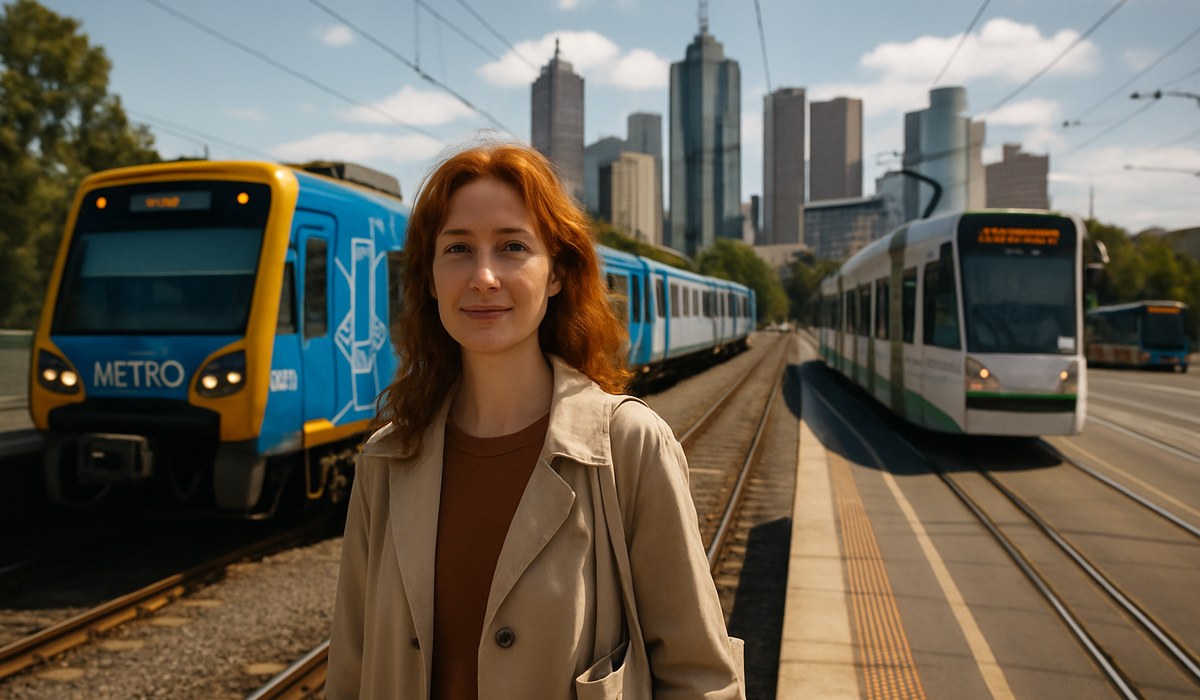
Image generated by AI
**> Quick Summary
• Victoria eliminates all fares on trains, trams, and buses through 2026 following fuel shortages • Free access covers Melbourne's entire metro network plus regional V/Line services to coastal towns • Policy creates unprecedented opportunities for budget travelers exploring Australian destinations • Transport officials report 340% surge in weekend regional rail bookings since announcement**
Australia's second-most populous state has transformed a supply chain emergency into the nation's most ambitious public transit experiment. Victoria's government announced complete fare elimination across all rail, tram, and bus networks effective immediately, removing financial barriers for both residents and visitors navigating Melbourne's sprawling urban network and regional destinations from Geelong to Bendigo.
The policy shift arrives as fuel distribution challenges have stranded motorists across southeastern Australia, prompting transport authorities to reposition public infrastructure as the primary mobility solution. For international travelers planning mid-2026 Australian itineraries, Victoria now offers something virtually unknown in developed nations: genuinely barrier-free urban and regional exploration powered entirely by taxpayer-funded transport.
Why Victoria Made Public Transit Free (And What It Means for Travelers)
Petroleum refineries serving Victoria experienced unprecedented disruptions in early March 2026, reducing gasoline availability at retail stations by approximately 60% within ten days. State Transport Minister Rachel Henderson characterized the fare elimination as "essential crisis management" during a March 27 press conference, though internal documents suggest the policy may extend beyond the immediate fuel emergency.
Unlike temporary travel disruptions reshaping routes globally, Victoria's response fundamentally alters how visitors can budget Australia trips. A seven-day Melbourne exploration that previously required AUD $150 in Myki card top-ups now costs nothing for unlimited Zone 1 and Zone 2 movements.
The financial implications extend beyond Melbourne's CBD. Regional V/Line services connecting coastal resort towns like Lorne and historic gold-rush cities such as Ballarat operate without fare collection, effectively subsidizing multi-day touring itineraries that would typically require rental vehicles.
Transport authorities project the policy will cost approximately AUD $42 million monthly in foregone revenue. However, preliminary data shows hotel occupancy in regional Victorian centers increased 28% in the policy's first week, suggesting tourism spending may partially offset transit losses.
How to Maximize Free Train and Tram Access Across Melbourne
Melbourne operates Australia's largest tram network—250 kilometers of track serving 1,763 stops across 24 routes. Travelers can now board any service without tapping Myki cards, though officials recommend carrying identification if questioned by transit officers.
The iconic City Circle tram route, previously free only for the heritage loop, now connects with paid services heading to St. Kilda Beach, Carlton Gardens, and Fitzroy's Brunswick Street without requiring fare calculation. Visitors staying in suburban areas like Richmond or South Yarra can reach Federation Square or Queen Victoria Market through multiple tram corridors operating 20-hour daily schedules.
Metro Trains Melbourne manages 998 kilometers of track across 222 stations. The Sandringham line delivers beachfront access within 35 minutes from Flinders Street Station. The Hurstbridge line reaches Yarra Valley wine regions in under 90 minutes—previously a AUD $18.80 return journey.
Smart travelers should note that while fares are eliminated, Victoria's public transport etiquette expectations remain. Priority seating, bag management, and quiet carriage rules still apply. Download the PTV mobile app to track real-time arrivals and plan connections across the integrated network.
Bus services complement rail corridors, particularly in outer suburbs where train lines terminate. Route 216 connects Sunshine Station to Melbourne Airport's Terminal 4 precinct—a AUD $20 SkyBus alternative now accessible without cost.
Regional Victoria Rail Routes Now Open Without Fare Barriers
V/Line operates long-distance services that rival European regional rail experiences for scenic value. The Geelong line follows Port Phillip Bay's western shoreline for 75 kilometers, delivering passengers to Torquay (gateway to Great Ocean Road touring) in 90 minutes from Southern Cross Station.
The Bendigo service traverses former goldfield territory, passing through stations like Castlemaine where heritage architecture recalls 1850s mining booms. Previously requiring AUD $24.60 return fares, the route now enables day-tripping to Bendigo Art Gallery and Central Deborah Gold Mine without transport costs.
Coastal access improves dramatically for travelers seeking alternatives to extended cruise itineraries connecting Asia-Pacific regions. The Warrnambool line serves surf towns like Torquay and fishing villages including Port Fairy—destinations that typically necessitate car rental for independent exploration.
V/Line's Gippsland service reaches Traralgon in under three hours, connecting to national park shuttle services for Wilsons Promontory access. The Shepparton line penetrates northern agricultural regions where farm-gate produce sales and heritage railway museums attract niche touring markets.
Rail enthusiasts should note that while travel is fare-free, seat reservations on peak services remain advisable through the V/Line website. Weekend services experience capacity constraints, particularly on Melbourne Cup holiday periods when suburban residents undertake regional daytrips.
Comparing Victoria's Model to Global Rail Tourism Programs
Victoria's unrestricted access framework differs substantially from international rail tourism standards practiced across European and Asian networks, where tourist passes typically require upfront payment despite offering subsequent unlimited travel.
Eurostar's integrated ticketing approach bundles cross-border rail with urban metro access through partner agreements—travelers pay premium prices but receive seamless London-Paris-Brussels connectivity. Victoria's model eliminates payment entirely, though geographic scope remains limited to state boundaries.
Amtrak's regional rail passes offer 10-day unlimited travel for approximately USD $499 across multi-state networks. While Victoria's free access appears more generous, Amtrak's coverage spans 46 states compared to Victoria's 237,000 square kilometers—roughly equivalent to Utah's land area.
Switzerland's renowned Half-Fare Card reduces all rail journeys by 50% for approximately CHF $120 annually, creating predictable budgeting for frequent travelers. Victoria's complete fare elimination removes financial planning entirely but introduces uncertainty about policy permanence beyond fuel crisis resolution.
Japan's regional rail passes remain duration-limited—JR Kyushu's three-day pass costs ¥15,000 with geographic restrictions. Victoria's model imposes no time limits while the policy remains active, enabling extended stays without accumulating transport costs.
The most comparable international precedent appears in Luxembourg, which eliminated all public transport fares nationwide in 2020. That European nation's experience showed 15% sustained ridership increases after initial implementation—Victoria's first-month data suggests similar trajectory patterns.
Policy Implications for Independent Travelers Planning Australian Routes
The fare elimination particularly benefits solo female travelers prioritizing accessible public transit who might otherwise limit Australian itineraries due to vehicle rental costs and unfamiliar road conditions. Melbourne's extensive tram network now offers unrestricted late-night mobility through well-lit urban corridors.
Budget travelers can reallocate transport savings toward accommodation upgrades or experience spending. A five-day Melbourne visit previously requiring AUD $80-100 for multi-zone transport now directs those funds entirely toward museums, dining, or regional excursions.
Backpackers traversing Australia's east coast should consider Victoria as an extended base rather than brief stopover. While the policy remains active, Melbourne provides subsidized exploration radiating 150 kilometers in multiple directions—equivalent to positioning a free rental vehicle with unlimited fuel.
Working holidaymakers on 417 visas gain particular advantage from unrestricted regional access. Fruit-picking opportunities in Shepparton or hospitality positions in coastal towns become accessible without transport cost barriers that typically constrain backpacker mobility.
Families traveling with multiple children eliminate per-person fare multiplication that makes public transport prohibitively expensive for large groups. A Melbourne family of five previously paying AUD $50 daily for metro access now travels without incremental cost regardless of trip frequency.
Senior travelers and those with mobility considerations benefit from removing payment confusion at validators. Victoria's transport infrastructure includes level-access trams and station lifts, but fare calculation complexity often deterred older visitors from utilizing available services.
Sustainability Considerations in Victoria's Transit Expansion
Environmental advocates view the policy as accidental climate leadership. Melbourne's transport sector generates approximately 20% of Victoria's carbon emissions, with private vehicles dominating. Free public transit removes the primary financial incentive for short-distance driving.
Preliminary emission data remains unavailable, but transport planners note that each shift from private vehicle to electric tram eliminates roughly 140 grams CO2 per passenger-kilometer. If sustained behavioral change occurs, Victoria may achieve emission reductions exceeding those from conventional carbon pricing schemes.
The policy inadvertently addresses transport equity issues affecting Melbourne's outer suburbs. Communities in growth corridors like Cranbourne and Pakenham face disproportionate transport costs relative to inner-city residents—free access eliminates that geographic penalty.
Critics argue the policy lacks revenue sustainability beyond crisis funding allocations. Victoria's transport budget typically derives 25% funding from passenger fares, creating structural deficits if free access extends into 2027. Alternative revenue sources remain unannounced.
Infrastructure maintenance concerns emerge if patronage surges exceed system capacity. Melbourne's tram fleet averages 32 years operational age—increased usage accelerates depreciation without corresponding fare revenue for vehicle replacement.
FAQ: Navigating Victoria's Free Transit for 2026 Visitors
Do international tourists qualify for free transit access or is it restricted to Australian residents?
All passengers regardless of residency or citizenship receive identical fare-free access. No registration, proof of address, or documentation is required to board trains, trams, or buses. The policy applies universally to anyone physically present in Victoria.
How long will Victoria maintain zero-fare public transport?
Official statements indicate the policy remains active "for the duration of fuel supply constraints," without defining specific end dates. Transport authorities suggest travelers should plan 2026 itineraries assuming free access through at least June, with monthly policy reviews determining extensions.
Can travelers access airport rail links without payment?
Melbourne Airport lacks direct rail connection—the Airport Rail Link construction remains incomplete until late 2029. SkyBus operates private coach services that maintain paid fares. However, free bus Route 901 connects Broadmeadows Station (accessible by free Metro train) to Airport West, requiring subsequent taxi or rideshare for terminal access.
Are bike rentals and bike-on-train policies affected by the fare elimination?
Bicycle carriage on Metro trains remains free as previously, with standard restrictions during weekday peak hours (7:00-9:30 AM, 4:00-6:30 PM). Melbourne's public bike-share systems operate independently with unchanged rental fees. The fare elimination applies exclusively to public transport vehicle access.
What happens if fuel supplies stabilize before planned trips in mid-2026?
Transport authorities commit to 30-day advance notice before reinstating fares, allowing travelers to adjust budgets. Monitor the Public Transport Victoria website for policy updates. If fares resume, the Myki card system will reactivate with standard Zone 1 (AUD $4.90 daily cap) and Zone 2 pricing structures.
Related Articles:
Disclaimer
This article is for informational and educational purposes only. It does not constitute legal, financial, or professional advice. While we strive to provide accurate and up-to-date information, travel policies, regulations, and conditions change rapidly. Always verify information with official sources before making travel decisions. Nomad Lawyer makes no representations about the accuracy, reliability, completeness, or suitability of the information provided. Readers should consult qualified professionals for advice specific to their circumstances. The views expressed in this article are those of the author and do not necessarily reflect the views of Nomad Lawyer.
Kunal K Choudhary
Co-Founder & Contributor
A passionate traveller and tech enthusiast. Kunal contributes to the vision and growth of Nomad Lawyer, bringing fresh perspectives and driving the community forward.
Learn more about our team →