
Great Vermont Corn Maze Guide 2026: North Danville Autumn Hiking and Agritourism
Covering 24 acres with 10-foot corn walls, 100 feet of bridges, and 32 feet of tunnels, North Danville's Great Vermont Corn Maze challenges over 7,000 autumn hikers in the Northeast Kingdom.

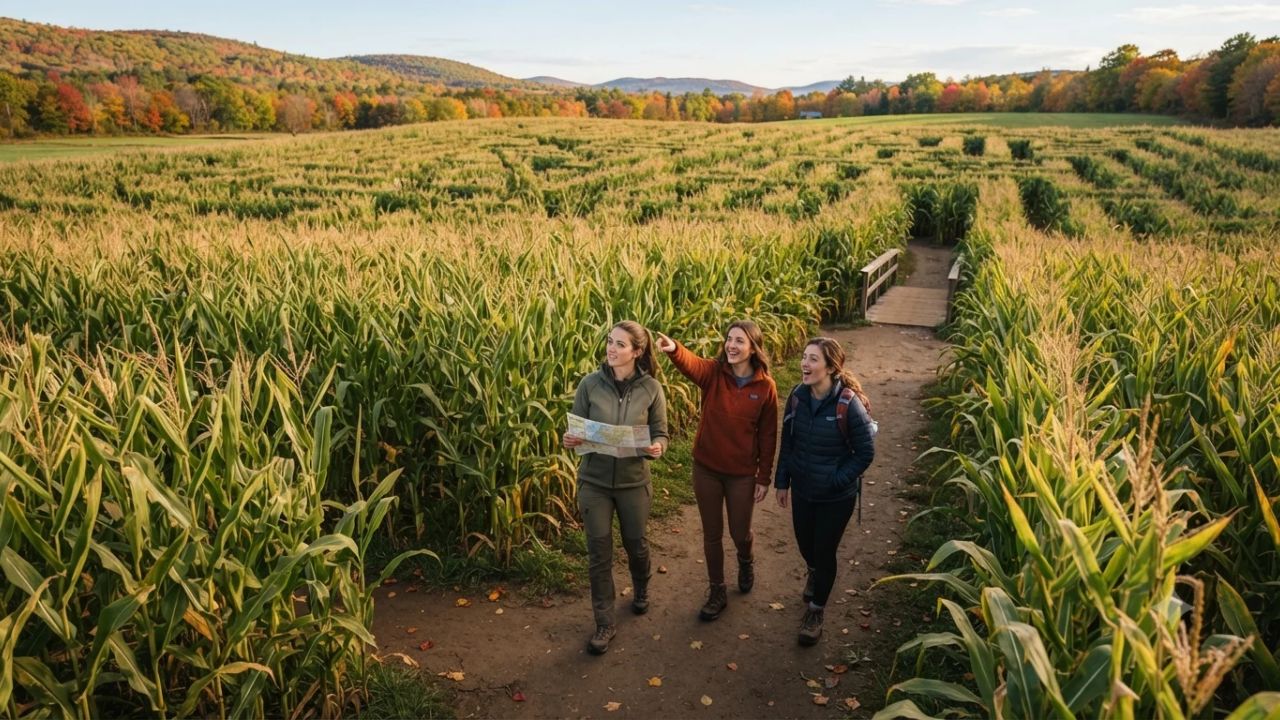
Spanning twenty-four continuous acres of rolling farmland with corn stalks rising ten feet into the autumn air, the Great Vermont Corn Maze in North Danville is not a casual family stroll but a rigorous three-to-four-hour wilderness puzzle that demands trail stamina and navigation skills. Operating continuously for nearly three decades in Caledonia County, this colossal living labyrinth draws upwards of 7,000 domestic and international adventurers every autumn. Celebrating the upcoming 250th anniversary of the United States through an intricate aerial layout honoring nineteenth-century Vermont photomicrography pioneer Wilson "Snowflake" Bentley, the course redefines New England agritourism by trading commercial photo booths for deep trail immersion, physical exertion, and unvarnished rural grit.
Hand-Drafted Geometry Across Twenty-Four Acres of Living Stalks
Unlike modern mazes generated via GPS algorithms, the North Danville course relies entirely on manual draftsmanship executed on quad-ruled graph paper each May. The field is divided into four distinct quadrants, intentionally engineered with blind loops, false corridors, and visual disruptions that prevent hikers from triangulating their position against the surrounding Northeast Kingdom hills.
Once spring seedlings reach barely one inch in height, the paths are mowed directly into the soil. By late summer, the green labyrinth reaches its full ten-foot canopy, reinforced by one hundred feet of elevated timber footbridges and thirty-two feet of underground tunnels. The bridges offer limited vantage points that tantalize hikers without revealing the escape route, while dedicated farm crews perform ten hours of weekly trail maintenance to clear fallen debris, repair footbridges, and maintain hidden emergency exit lanes for exhausted travelers.
Promoted through Vermont Vacation and regional regional travel networks across Discover New England, the attraction serves as an anchor for rural heritage tourism across northern Caledonia County.
Architectural Dimensions of the North Danville Agricultural Course
| Structural Feature | Specification / Measurement | Practical Navigation & Visitor Relevance |
|---|---|---|
| Total Maze Footprint | 24 continuous acres | Largest documented living agricultural maze in New England |
| Corn Canopy Elevation | Approximately 10 feet | Completely blocks horizon views and geographic reference points |
| Timber Bridge Span | 100 feet of elevated bridges | Elevates hikers over intersections without revealing exit routes |
| Subterranean Tunnels | 32 feet of enclosed tunnels | Introduces abrupt light shifts and physical elevation changes |
| Average Completion Time | 3 to 4 uninterrupted hours | Requires trail footwear, physical stamina, and ample hydration |
| Weekly Course Maintenance | 10 hours of active labor | Ensures clear footing, structural safety, and emergency clearance |
| Annual Visitor Volume | 7,000+ hikers per season | Attracts international puzzle enthusiasts and repeat adventurers |
The Artistry of Wilson Bentley: Translating Crystals into Corridors
The visual motif embedded within the twenty-four-acre crop field pays tribute to Jericho, Vermont native Wilson "Snowflake" Bentley. In the nineteenth century, Bentley became the first person to successfully photograph individual ice crystals, famously establishing that no two snowflakes are identical.
Translating delicate microscopic snowflake fractals into walkable paths required transforming geometric crystal branches into baffling dead-ends and concentric loops. Instead of creating wide, predictable avenues suitable only for aerial photography, the designers intentionally modified the snowflake geometry to preserve intellectual tension on the ground, challenging hikers at every turn.
Wildlife Encounters and Rural Agritourism Economics
Operating an agricultural maze of this scale requires constant management of native wildlife and fluctuating farm economics. Local black bears present a serious hazard; a single foraging bear can bulldoze an entire quadrant of standing corn in a single night of feeding. Farm staff maintain nightly vigilance and perimeter deterrents to protect the living corridors alongside smaller pests like raccoons.
Simultaneously, agricultural input costs have surged, including a 30% rise in the price of essential soil fertilizers required to cultivate dense, ten-foot-tall crop walls. By welcoming thousands of visitors during the peak September and October foliage window, agritourism revenue provides vital financial stability that preserves working family farmland across Vermont's Northeast Kingdom.
Visitor Insider Tips for Conquering the Great Vermont Corn Maze
Navigating the largest maze in New England requires preparation similar to a rugged backcountry day hike.
- Footwear for Deep Loam: Do not attempt the maze in street sneakers or sandals. Autumn rain turns the packed dirt trails into slippery clay loam; wear waterproof hiking boots with aggressive rubber lugs and ankle support.
- Hydration and Trail Sustenance: A standard traverse takes three to four hours. Carry a daypack with at least two liters of water, electrolyte packets, and high-protein trail snacks, as there are no refreshment stands inside the twenty-four-acre course.
- Utilizing the Emergency Exit Lanes: If fatigue, weather shifts, or time constraints set in, locate the marked emergency exit corridors integrated into each quadrant, which lead directly back to the perimeter ticket barn.
- Base in St. Johnsbury or Lyndonville: Pair your corn maze expedition with overnight stays in nearby historic towns. St. Johnsbury offers Victorian architecture and the Fairbanks Museum, while outdoor enthusiasts can combine the maze with mountain biking at Kingdom Trails in East Burke.
Cultural and Environmental Context: Sustainable Agritourism in the Northeast Kingdom
The Great Vermont Corn Maze represents a model of sustainable rural diversification that keeps open farmland productive without permanent commercial development. Following the close of the autumn season in late October, the entire twenty-four acres of corn are harvested for livestock silage, returning organic matter to the soil and feeding local dairy herds throughout the winter.
This closed-loop agricultural cycle celebrates authentic rural values while offering visitors an unvarnished encounter with the Vermont landscape. The journey culminates at the exit gate, where successful hikers vigorously strike a massive cast victory bell. The loud chime echoing across the Danville valley signals earned physical achievement, perseverance, and the timeless joy of navigating nature on its own terms.
FAQ: Visiting the Great Vermont Corn Maze 2026
Where is the Great Vermont Corn Maze located?
The maze is located on rural farm roads in North Danville, within Caledonia County in the Northeast Kingdom region of northern Vermont.
How long does it take to complete the Big Maze?
Most hikers take between 3 and 4 hours of continuous walking to solve the full 24-acre maze. A shorter scenic route is also available for casual walkers.
When is the best time to visit for peak autumn foliage?
Late September through the second week of October offers peak fall colors across the surrounding maple-covered hills of the Northeast Kingdom.
Are dogs or pets allowed inside the corn maze?
To protect wildlife, livestock, and trail conditions, pets are not permitted inside the maze grounds. Service animals are accommodated under federal guidelines.
Ringing the heavy victory bell after four grueling hours inside the ten-foot corn walls of North Danville is the ultimate rite of passage for an authentic Vermont autumn.
Related Travel Guides
Disclaimer
This article is for informational and educational purposes only. It does not constitute legal, financial, or professional advice. While we strive to provide accurate and up-to-date information, travel policies, regulations, and conditions change rapidly. Always verify information with official sources before making travel decisions. Nomad Lawyer makes no representations about the accuracy, reliability, completeness, or suitability of the information provided. Readers should consult qualified professionals for advice specific to their circumstances. The views expressed in this article are those of the author and do not necessarily reflect the views of Nomad Lawyer.
Raushan Kumar
Founder & Lead Developer
Full-stack developer with 11+ years of experience and a passionate traveller. Raushan built Nomad Lawyer from the ground up with a vision to create the best travel and law experience on the web.
Learn more about our team →