
Uzbekistan Launches Urganch Airport Rail Link Using China-Built CR200J Trains for Khiva Tourism 2026
Uzbekistan has inaugurated the 11 km Urganch Airport Railway Link, utilizing new Chinese CR200J passenger trains to connect international arrivals directly to the historic city of Khiva.

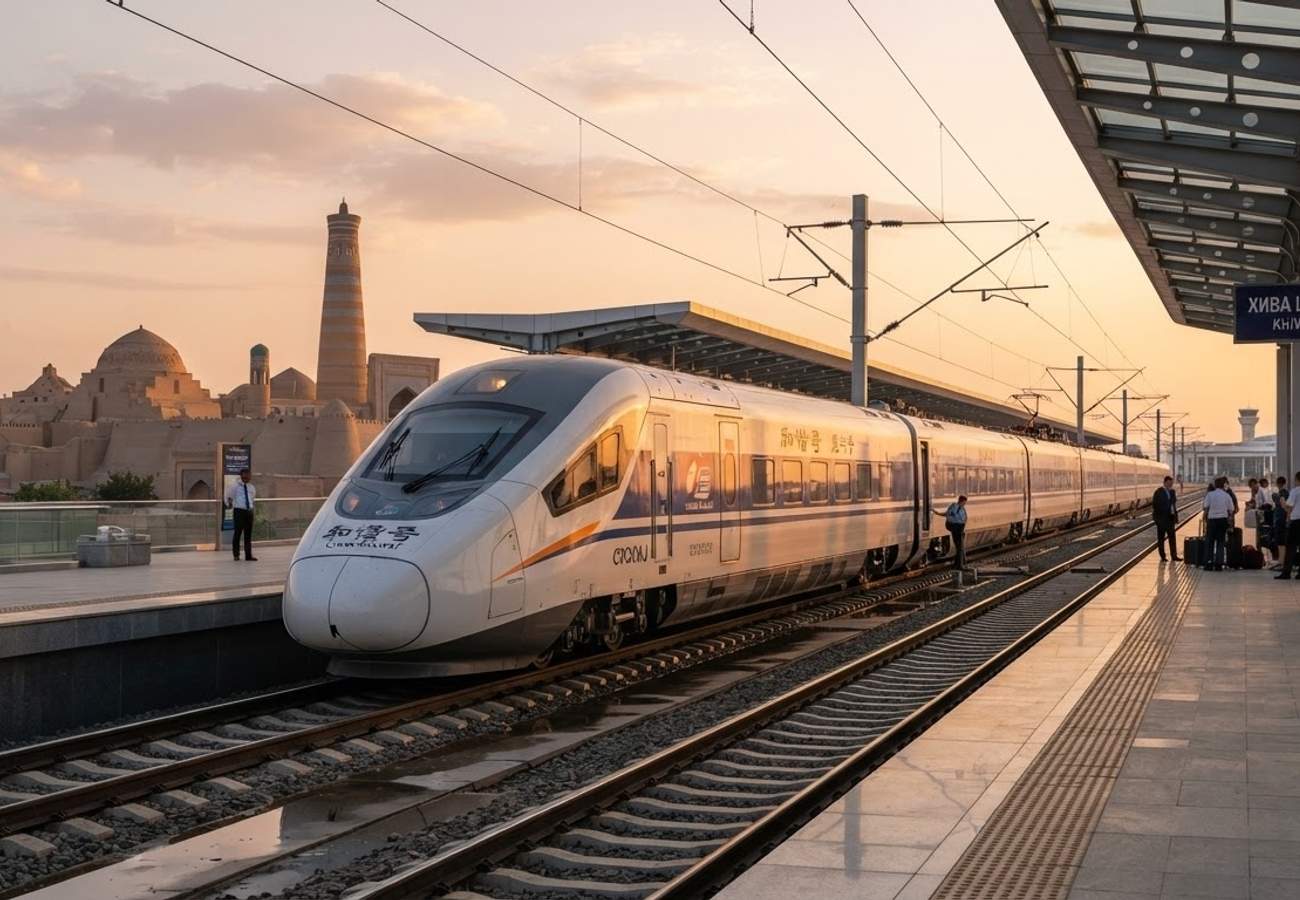
Image generated by AI
Uzbekistan has officially commissioned the Urganch Airport Railway Link, a strategic infrastructure project designed to bridge the gap between Urganch International Airport, the local railway station, and the ancient city of Khiva.
This development is a primary component of Uzbekistan's broader initiative to create an integrated tourism transport system. By linking aviation hubs directly to rail networks, the government aims to eliminate the logistical friction that often deters international visitors from exploring the Khorezm region.
Infrastructure and Operational Capacity
The new rail link spans 11 kilometres and is engineered to handle a significant increase in tourist traffic. Market data indicates the line will serve approximately 650,000 passengers annually.
For the traveler, the most immediate impact is the reduction in transit time. The journey from Urganch Airport to the historic center of Khiva is now estimated at approximately 40 minutes, providing a predictable and efficient alternative to road-based transfers.
Technical Specifications of the Rail Link:
- Total Length: 11 kilometres.
- Annual Capacity: 650,000 passengers.
- Transit Time to Khiva: Approximately 40 minutes.
- Primary Route: Urganch International Airport $\rightarrow$ Urganch Railway Station $\rightarrow$ Khiva.
Rolling Stock: The Chinese CR200J Integration
To service this route, Uzbekistan has introduced the CR200J passenger train, manufactured in China. This acquisition signals a deepening technical cooperation between Uzbekistan and China regarding railway technology.
The CR200J is a six-car trainset optimized for regional travel and passenger comfort. The introduction of this modern rolling stock ensures that the transit experience matches the expectations of high-spending international tourists.
On-Board Amenities and Features:
- Service Classes: VIP, Business, and Economy seating.
- Climate Control: Full air-conditioned interiors.
- Connectivity: Integrated Wi-Fi and passenger charging ports.
- Inclusivity: Dedicated accessibility features for passengers with disabilities.
Strategic Impact on Khiva Tourism
Khiva, specifically the Ichan Kala historic center, remains one of Uzbekistan's most significant cultural assets due to its preserved Silk Road architecture. Historically, the "last mile" from the airport to the city has been a pain point for independent travelers.
Our analysis suggests that by stabilizing the arrival experience, Uzbekistan is positioning Khiva not just as a short stop, but as a primary destination. Improved accessibility typically correlates with longer visitor stays and increased spending at local hospitality businesses, museums, and traditional craft markets.
Expected Tourism Gains:
- Operator Appeal: More viable "seamless" packages for international tour operators.
- Itinerary Expansion: Easier integration of Khiva into multi-city routes including Tashkent, Samarkand, and Bukhara.
- Local Economic Growth: Increased footfall for restaurants and guides within the Khorezm region.
Logistical Considerations for Travelers
While the infrastructure is complete, travelers are advised to verify specific operational details before arrival.
- Ticketing: Passengers should utilize official railway ticketing platforms to confirm schedules.
- Eligibility: The service is open to both domestic and international passport holders.
- Planning: It is recommended to synchronize flight arrivals with rail departure windows to maximize the 40-minute transit efficiency.
Regional Transport Analysis
From a logistical perspective, the Urganch Airport Rail Link is not an isolated project but a blueprint for Uzbekistan's wider transport strategy. The country is aggressively shifting toward a hub-and-spoke model where airports act as the primary entry point and high-speed or modernized rail serves as the distribution network.
This shift reduces reliance on private taxis and road transport, which can be inconsistent in quality and pricing. For the aviation industry, this improves the "destination appeal" of Urganch International Airport, potentially driving higher flight frequencies from international carriers.
A seamless transition from tarmac to tracks is the new standard for Silk Road tourism.
Related Travel Guides
Disclaimer
This article is for informational and educational purposes only. It does not constitute legal, financial, or professional advice. While we strive to provide accurate and up-to-date information, travel policies, regulations, and conditions change rapidly. Always verify information with official sources before making travel decisions. Nomad Lawyer makes no representations about the accuracy, reliability, completeness, or suitability of the information provided. Readers should consult qualified professionals for advice specific to their circumstances. The views expressed in this article are those of the author and do not necessarily reflect the views of Nomad Lawyer.
Preeti Gunjan
Contributor & Community Manager
A passionate traveller and community builder. Preeti helps grow the Nomad Lawyer community, fostering engagement and bringing the reader experience to life.
Learn more about our team →