
Abandoned Snowdon Railway Station Transforms Into Ultra-Luxury 5-Star Welsh Holiday Home
A derelict railway station in Snowdonia, Wales has been converted into an exclusive 5-star luxury holiday retreat, sparking demand for heritage accommodations across North Wales tourism sector.

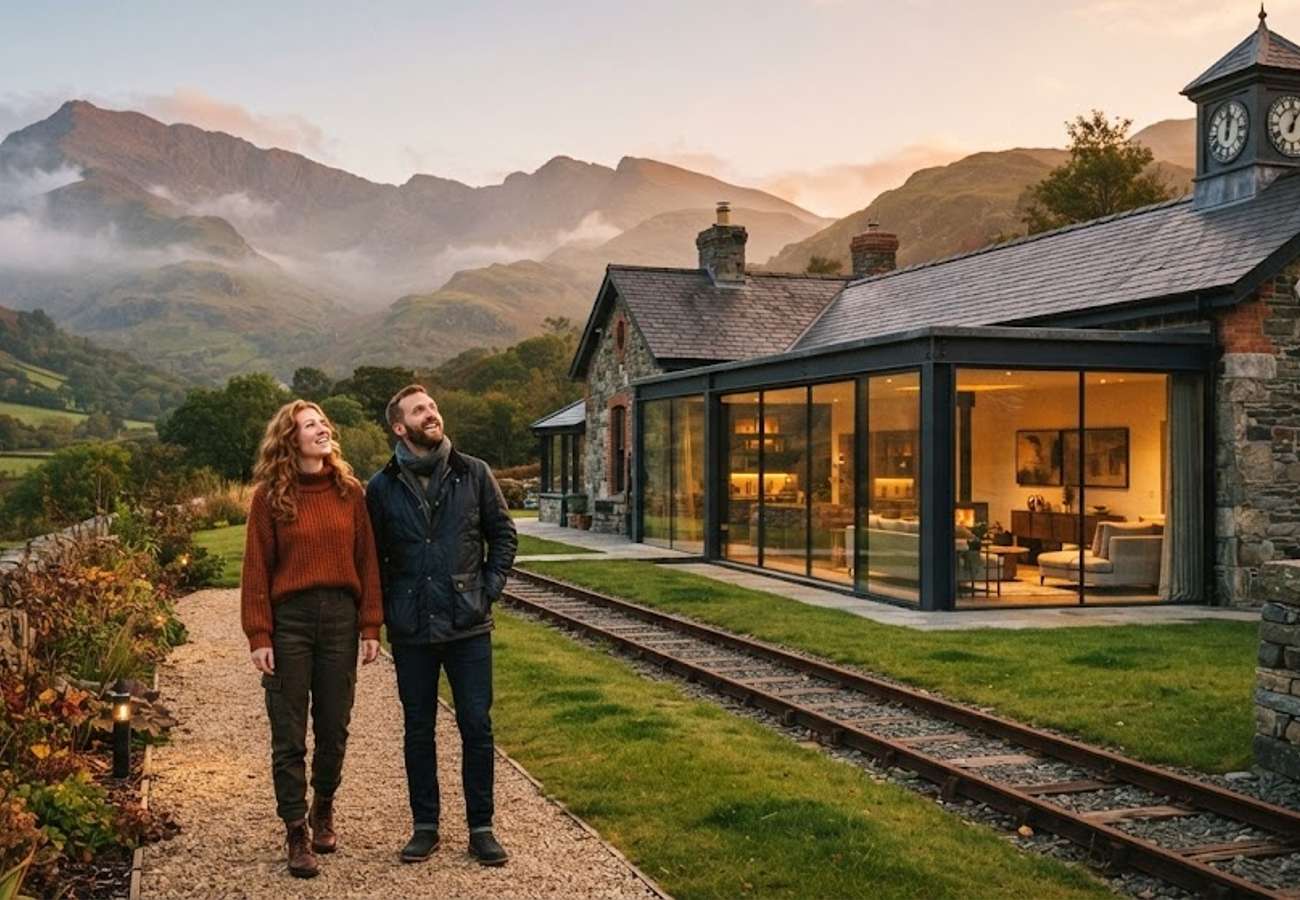
Image generated by AI
A Ghost Station Gets a Second Life
Deep in the Snowdonia mountains of North Wales, a structure that had quietly deteriorated for decades has been jolted awake. What was once an abandoned railway station—a relic of the region's 19th-century industrial boom—is now a 5-star luxury holiday home attracting international travellers seeking something far more authentic than standard hotel stays.
The conversion marks a striking shift in how the UK is handling its vast inventory of disused transport infrastructure. Rather than letting heritage buildings crumble, property developers and tourism authorities are asking: What if we transformed this into something extraordinary?
The Industrial Skeleton in Snowdonia's Closet
To understand why this transformation matters, you need to know Snowdonia's railway story. During the 1800s, the Welsh narrow-gauge rail network was the lifeblood of the region—connecting remote slate quarries with coastal export ports and, eventually, bringing wealthy Victorian tourists to experience the dramatic mountain landscape.
According to documented railway history in North Wales, more than 180 disused stations remain scattered across the region, ghostly reminders of an industrial era that transformed the landscape but couldn't survive the 20th century's transport evolution. The Snowdon railway station was one of them: gradually abandoned, slowly decaying, forgotten by most except historians and railway enthusiasts.
Reddit: "Wales has more abandoned train stations than actual running lines—it's wild to see them being saved instead of demolished." — r/UKTravel
Converting Bricks Into Bookings
The redevelopment itself is a masterclass in adaptive reuse. The property retains the original stone architecture and industrial character of the station building while introducing contemporary design elements—heated floors, modern kitchens, luxury linens—that modern travellers expect.
The result is something hotels simply cannot replicate: a genuine heritage experience wrapped in premium comfort. You're not just staying in Wales. You're sleeping in a piece of railway history, watching mist roll over mountains from a window that once welcomed passengers over a century ago.
This approach aligns with broader UK heritage conservation strategies, which increasingly favour preservation-through-repurposing over demolition. When done well, these conversions generate tourism revenue while ensuring historic structures remain part of living communities instead of vanishing entirely.
Why Snowdonia Became the Perfect Testing Ground
Snowdonia National Park attracts millions of visitors annually—hikers tackling Mount Snowdon, railway enthusiasts riding the preserved Welsh Highland Railway, heritage tourists exploring slate quarries. The park already draws tourists. The missing piece? Accommodation that matched the experience-seeking mentality of modern travellers.
Standard hotel chains don't capture the imagination the way a converted railway station does. Luxury holiday homes in heritage properties command premium rates specifically because they offer exclusivity and narrative. You're not just booking a bedroom. You're becoming part of a story.
The UK's national park authorities have explicitly encouraged this type of development. National park planning frameworks prioritise projects that use existing structures rather than expanding the physical footprint of tourism infrastructure into protected landscapes.
The Broader Heritage Accommodation Boom
This single converted station reflects a significant shift in UK tourism demand. Travellers are increasingly prioritising fewer, higher-quality stays over rapid destination-hopping. They're also willing to pay substantially more for properties with genuine character and historical grounding.
The luxury rural accommodation sector in the UK has seen measurable growth in recent years, driven partly by post-pandemic preferences for remote, privacy-focused stays and partly by the simple fact that people want experiences that are memorable—not interchangeable.
A converted railway station in Snowdonia delivers both: remoteness, privacy, luxury, and a compelling backstory that becomes part of the holiday narrative guests share on social media and with friends.
Economic Ripple Effects Across North Wales
Properties like this don't operate in isolation. Visitors booking a luxury heritage stay in Snowdonia typically extend their regional spend across multiple sectors: dining at local restaurants, hiring guides for mountain hikes, purchasing rail excursions on the preserved heritage railways, visiting slate quarry museums.
Higher-spending visitors who book premium accommodation tend to stay longer and explore more deeply. They're not Instagram tourists dashing between famous spots. They're the kind of travellers who book three-night minimums and actually integrate into the local landscape.
Tourism authorities in North Wales have increasingly recognised heritage conversions as economic multipliers—they draw affluent visitors whose spending supports hospitality workers, guides, hospitality vendors and local communities in ways that standard accommodation cannot.
The Sustainability Angle That Planners Love
Here's what doesn't get headlines but drives planning approval: adaptive reuse prevents new construction in protected landscapes. Rather than clearing forest or meadow to build a boutique hotel, you repurpose an existing structure, minimise environmental disruption, and preserve architectural heritage simultaneously.
In sensitive environments like Snowdonia National Park, this matters enormously. Planners, conservation bodies, and environmental agencies favour projects that enhance tourism capacity without expanding physical footprints. A converted railway station accomplishes exactly that.
The alternative—building new luxury accommodation in a national park—would face far more regulatory resistance and environmental objections. Repurposing existing buildings sidesteps many of these tensions entirely.
What This Means for Travelers
If you're the kind of traveller who gravitates toward authentic experiences over convenience chains, this trend is worth tracking. The UK has thousands of disused railway stations, former industrial buildings, abandoned lighthouses, and derelict transport infrastructure. As more property developers and tourism authorities recognise their potential, expect an expansion of these heritage conversions.
Snowdonia's converted railway station represents the early wave of a broader movement: taking the forgotten infrastructure of Britain's industrial past and reimagining it as premium tourism products for discerning modern travellers.
The past isn't demolished anymore. It's upgraded.
The mountains of Wales are keeping their stories—and now, they're renting them out.
Related Travel Guides
Disclaimer
This article is for informational and educational purposes only. It does not constitute legal, financial, or professional advice. While we strive to provide accurate and up-to-date information, travel policies, regulations, and conditions change rapidly. Always verify information with official sources before making travel decisions. Nomad Lawyer makes no representations about the accuracy, reliability, completeness, or suitability of the information provided. Readers should consult qualified professionals for advice specific to their circumstances. The views expressed in this article are those of the author and do not necessarily reflect the views of Nomad Lawyer.
Kunal K Choudhary
Co-Founder & Contributor
A passionate traveller and tech enthusiast. Kunal contributes to the vision and growth of Nomad Lawyer, bringing fresh perspectives and driving the community forward.
Learn more about our team →