
Uzbekistan Silk Road Travel Guide 2026: Record 25% Tourism Surge, High-Speed Rail, and Historic Cities

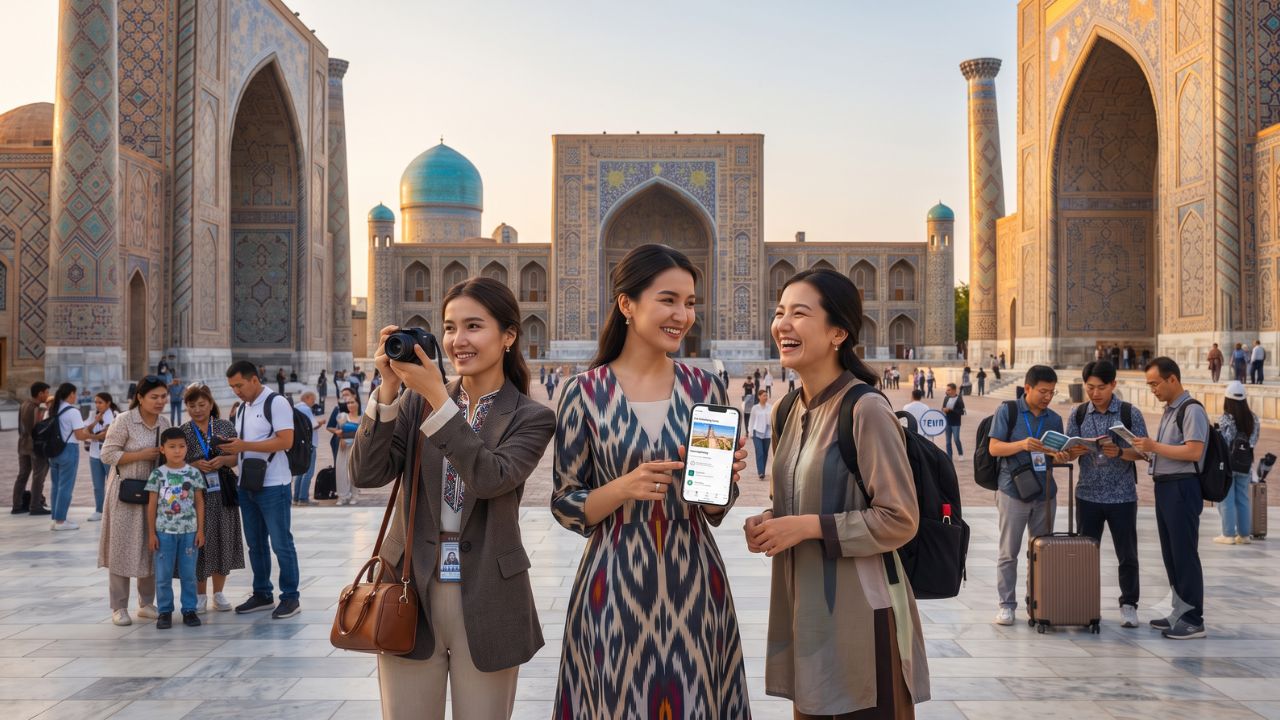
While worldwide international tourism expanded by just 0.4 percent during the first half of 2026, Uzbekistan recorded an astonishing 25 percent surge in foreign arrivals, welcoming over 6.6 million international travelers between January and June. Outpacing European tourism growth by 22 percentage points and leaving global averages far behind, this Central Asian crossroads is executing one of the most remarkable tourism transformations of the 21st century on its path to welcoming 20 million annual international visitors by 2030.
The catalyst behind this unprecedented movement is a powerful combination of open regional borders across Central Asia, rapid high-speed rail expansion, streamlined electronic visa policies, and a global rediscovery of ancient Silk Road architecture.
Inside the Numbers: Central Asia and Global Feeder Markets
Official data from the UN Tourism World Tourism Barometer and the Uzbekistan Tourism Portal highlights how regional integration and diversified global interest propelled H1 2026 arrivals:
- Central Asian Neighbors Anchor the Surge: Regional cross-border mobility represented the lion's share of arrivals, led by Kyrgyzstan with 1,875,332 visitors, Kazakhstan with 1,553,688 travelers, and Tajikistan with 1,471,670 tourists. Turkmenistan added 164,211 arrivals, reflecting seamless cross-border transit protocols.
- Russia and Northern Eurasia: Russia remained the largest non-border source market, delivering 585,558 travelers drawn to cultural city breaks, culinary heritage tours, and extended family holidays.
- China and East Asia Acceleration: China contributed 223,479 visitors, supported by expanded direct flights connecting Tashkent and Samarkand with Beijing, Shanghai, and Chengdu.
- South Asian and Middle Eastern Inbound: Afghanistan recorded 238,925 visitors, while Türkiye generated 95,466 tourists and India contributed 26,450 travelers seeking heritage and wedding destinations.
- European Long-Haul Momentum: Germany led Western European demand with 22,294 arrivals, establishing a growing footprint of cultural scholars and independent rail enthusiasts.
What Makes Uzbekistan’s Silk Road Cities Experientially Unique
To walk through Uzbekistan’s historic centers is to step into a living museum of Islamic art, monumental Timurid architecture, and ancient desert oasis commerce.
In Samarkand, inscribed on the UNESCO World Heritage List as the Crossroads of Cultures, the towering turquoise-tiled madrasas of the Registan complex create one of humanity’s most awe-inspiring public squares. At the Shah-i-Zinda necropolis, a sacred avenue of cobalt-blue mausoleums reflects intricate majolica and mosaic tilework dating back to the 11th century.
Traveling west across the Kyzylkum Desert, Bukhara preserves over 140 architectural monuments spanning two millennia. The Po-i-Kalyan minaret—so magnificent that Genghis Khan spared it from destruction in 1220—towers over covered trading domes (taqi) where copper artisans, silk weavers, and miniature painters practice techniques unchanged for centuries. Further west lies Khiva’s walled fortress city of Itchan Kala, where sun-dried clay ramparts and minarets preserve the atmosphere of a complete medieval Silk Road caravan post.
Visitor Insider Tips for Exploring Uzbekistan in 2026
- Book the Afrosiyob High-Speed Train Early: The Spanish-built Talgo Afrosiyob trains connect Tashkent, Samarkand, and Bukhara at 250 km/h, reducing a six-hour road journey to just two hours. Tickets release exactly 45 days in advance via the Uzbekistan Railways Official Platform and sell out within hours during spring and autumn peaks.
- Seasonal Timing for Comfortable Exploration: Visit during the spring shoulder season (April to early June) or autumn (September to early November). Summer temperatures in July and August frequently surpass 40 degrees Celsius, while winter brings crisp mountain winds across the steppe.
- Taste Regional Plov Varieties: Every historic province prepares its own distinct variation of plov (rice pilaf slow-cooked in giant cast-iron cauldrons with lamb, yellow carrots, raisins, and cumin). Visit Samarkand's traditional tea houses for layered saffron plov, or sample Tashkent's rich dark wedding plov at the central Central Asian Plov Center.
- Currency and Digital Payments: The local currency is the Uzbek Som (UZS). While modern hotels and fine-dining restaurants accept Visa and Mastercard, carry physical cash for transactions in traditional bazaars like Chorsu in Tashkent or Siab in Samarkand.
- Modest Etiquette in Sacred Sanctuaries: When entering active mosques, mausoleums, and madrasas, remove shoes at the threshold. Both men and women should keep shoulders and knees covered, and women should carry a light silk scarf to cover hair inside active shrines.
Cultural and Environmental Context
Uzbekistan’s 25 percent arrival surge is fundamentally transforming the country's economic fabric, shifting communities away from intensive industrial cotton production toward high-value heritage preservation and sustainable hospitality services.
Family-run boutique guesthouses (yurt camps and restored 19th-century merchant mansions) now support thousands of artisan families across the Fergana Valley and Karakalpakstan. By restoring ancient terracotta brickworks, natural indigo dyeing vats, and hand-loomed ikat silk workshops, tourism provides a direct economic incentive for younger artisans to sustain ancestral crafts.
Environmentally, the nation faces severe water-management pressures in the Aral Sea basin. The government’s sustainable tourism roadmap prioritizes green railway electrification over short-haul domestic flights and mandates water-saving technologies across new hotel developments in desert oasis cities.
FAQ: Visiting Uzbekistan 2026
Do international travelers need a visa for Uzbekistan?
Citizens of more than 90 countries (including EU members, the UK, Australia, and GCC states) enjoy 30-day visa-free entry. US and Canadian passport holders can easily obtain an electronic visa (e-visa) online prior to departure.
How do I travel between Tashkent, Samarkand, and Bukhara?
The fastest and most comfortable method is the high-speed Afrosiyob train, which connects Tashkent to Samarkand in 2 hours and continues to Bukhara in an additional 90 minutes.
Is Uzbekistan safe for solo and female travelers?
Yes. Uzbekistan is widely recognized as one of the safest destinations in Asia, featuring dedicated Tourist Police units at all historical monuments and extremely welcoming local communities.
What is the primary language spoken in Uzbekistan?
Uzbek is the official state language, while Russian is universally understood in urban centers. English is increasingly spoken by hotel staff, train conductors, and younger guides.
Under the desert stars of Samarkand and the turquoise domes of Bukhara, Uzbekistan proves that the timeless magic of the Silk Road shines brighter today than ever before.
Related Travel Guides
Disclaimer
This article is for informational and educational purposes only. It does not constitute legal, financial, or professional advice. While we strive to provide accurate and up-to-date information, travel policies, regulations, and conditions change rapidly. Always verify information with official sources before making travel decisions. Nomad Lawyer makes no representations about the accuracy, reliability, completeness, or suitability of the information provided. Readers should consult qualified professionals for advice specific to their circumstances. The views expressed in this article are those of the author and do not necessarily reflect the views of Nomad Lawyer.
Kunal K Choudhary
Co-Founder & Contributor
A passionate traveller and tech enthusiast. Kunal contributes to the vision and growth of Nomad Lawyer, bringing fresh perspectives and driving the community forward.
Learn more about our team →