
Uzbekistan and Azerbaijan to Unlock New Tourism Trade and Investment Opportunities Through Diplomatic Ties
Uzbekistan and Azerbaijan to Unlock New Tourism Trade and Investment Opportunities Through Diplomatic Ties

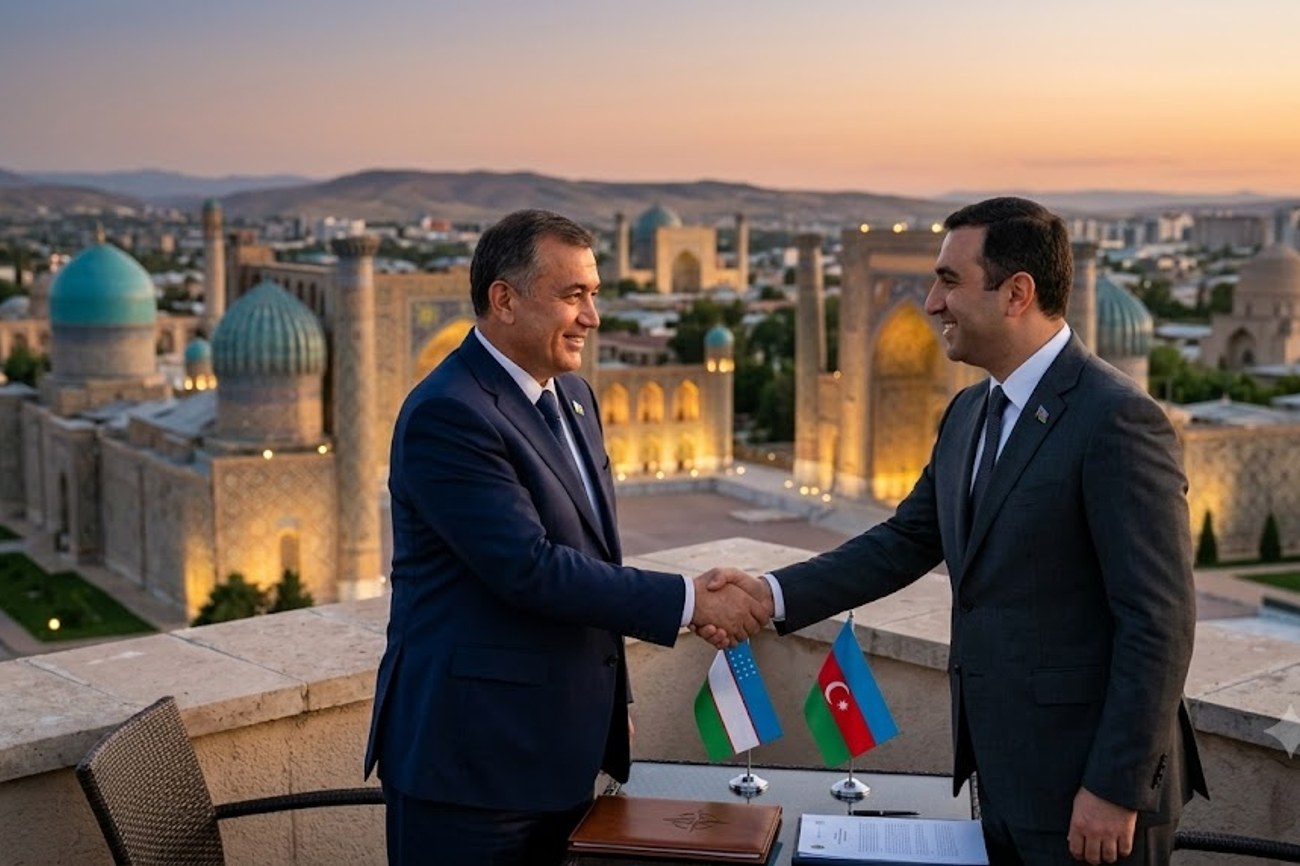
Image generated by AI
A 26-fold increase in bilateral trade over the last decade serves as the primary indicator of a seismic shift in the geopolitical and economic alignment between Uzbekistan and Azerbaijan. This trajectory has culminated in 2026 with the transition from basic diplomatic cordiality to a formal, institutionalized alliance designed to bypass traditional Eurasian bottlenecks. By establishing the Supreme Interstate Council and ratifying the Treaty on Allied Relations, Baku and Tashkent are no longer merely trading partners; they are constructing a synchronized economic bloc.
The Architecture of the Supreme Interstate Council
The current acceleration of ties is not a spontaneous development but the result of a decade-long strategic synchronization. Historically, the relationship between these two Turkic nations was defined by shared linguistic and cultural heritage, yet it remained economically dormant. The shift toward a "multidimensional economic alliance" became evident by late 2025, moving away from ad-hoc agreements toward a harmonized policy framework.
The centerpiece of this new era is the Supreme Interstate Council. This body transforms diplomatic dialogue into executive action. A primary example occurred in July 2026, when Tashkent hosted the 15th meeting of the Intergovernmental Commission. Led by Uzbekistan’s Minister of Investments, Industry and Trade, Laziz Kudratov, and Azerbaijan’s Minister of Economy, Mikayil Jabbarov, the session functioned less as a diplomatic summit and more as a corporate board meeting. The resulting agreements focused on the immediate deployment of capital and the removal of bureaucratic friction through the introduction of e-permit systems.
This political architecture is reinforced by the Treaty on Allied Relations. This legal instrument elevates the two states to the status of full allies, providing enhanced legal protections for cross-border joint ventures. By aligning their stances on regional security and international trade, Uzbekistan and Azerbaijan are effectively creating a unified front that reduces their vulnerability to the volatility of larger global markets and the influence of dominant regional hegemons.
Quantifying the Economic Surge and Middle Corridor Integration
The financial ambitions of this alliance are aggressive, with both nations targeting an annual bilateral trade turnover of $1 billion. The data suggests this goal is within immediate reach. By the end of 2025, trade turnover hit $795 million, marking a 3.2-fold increase over previous baseline periods.
The momentum has continued into 2026. Data from the first five months of the year indicates a trade volume increase of between 33% and 40% compared to the same window in 2025. During this specific period, Azerbaijan's exports to Uzbekistan totaled $59.5 million, while imports from Uzbekistan reached $84.6 million.
Beyond simple trade figures, the alliance is focused on deep capital integration. The scale of corporate presence in each other's territories reveals a high level of investor confidence:
| Investment Metric (Early 2026) | Azerbaijani Capital in Uzbekistan | Uzbek Capital in Azerbaijan |
|---|---|---|
| Number of Operating Enterprises | 368 | 130+ |
| Primary Sectors | Manufacturing, Finance, Energy, Real Estate | Industrial, Services, Trade |
| Strategic Focus | Localized Production | Market Expansion |
This integration is inextricably linked to the Middle Corridor. By streamlining the movement of goods between the Caucasus and Central Asia, these nations are reducing their reliance on northern routes. The focus has shifted from exporting raw materials to creating "integrated clusters." For instance, instead of shipping raw cotton, the two nations are developing joint cotton-textile hubs that handle everything from harvesting to final garment retail, ensuring that the value-added profits remain within the alliance.
Expert Analysis: The Logistics of Sovereignty
For the professional traveler and the international investor, the Uzbekistan-Azerbaijan alliance represents more than just a trade deal; it is a strategic hedge against regional instability. The direct consequence of the Treaty on Allied Relations is the creation of a "protected corridor" for capital and people.
The pricing pressure created by this alliance will likely lower the cost of goods moving between Central Asia and Europe. By utilizing the International Air Transport Association (IATA) standards for logistics and integrating digital e-permit systems, the two nations are slashing the "hidden tax" of bureaucracy that typically plagues Eurasian transit.
Furthermore, the shift toward joint manufacturing—such as the textile clusters—means that Uzbekistan is leveraging Azerbaijan's energy and trans-Caspian logistics to move up the value chain. For those booking travel or business ventures in the region, this means a rapid modernization of infrastructure in Tashkent and Baku. We are seeing a transition from "statism" (government-to-government) to "economic integration" (business-to-business), which typically precedes a surge in visa liberalization and increased flight frequencies.
The integration of the Middle Corridor is the most critical geopolitical move here. By strengthening the link between the Republic of Azerbaijan and the Republic of Uzbekistan, these nations are effectively diversifying their exit points to global markets, making them less susceptible to the political whims of larger neighbors.
Key Takeaways
- Trade turnover reached $795 million by the end of 2025, representing a 26-fold increase over the last ten years.
- The 2026 trade growth for the first five months is estimated between 33% and 40%, with a hard target of $1 billion in annual turnover.
- 368 Azerbaijani-funded enterprises now operate in Uzbekistan, while over 130 Uzbek firms are registered in Azerbaijan.
- The alliance has moved from raw commodity trading to joint industrial clusters, specifically in the textile and garment sectors.
- The Supreme Interstate Council and the Treaty on Allied Relations provide the legal and political framework to insulate both economies from global volatility.
FAQ: Uzbekistan-Azerbaijan Relations 2026
Will the new alliance make travel between Baku and Tashkent easier? Yes. The focus on "unlocking tourism opportunities" and the implementation of digital e-permit systems for trade typically precede broader visa simplifications and increased direct flight capacities between the two capitals.
What is the "Middle Corridor" mentioned in the trade agreements? The Middle Corridor is a trade route linking Asia to Europe via the Caucasus and Central Asia, bypassing Russia. The Uzbekistan-Azerbaijan alliance is a critical link in making this route faster and more cost-effective.
How does the Treaty on Allied Relations affect business investments? The treaty provides enhanced legal protections for joint ventures and mandates regular consultations on economic policy, reducing the risk for investors operating across both borders.
What are the primary goods being traded under the new 2026 framework? While agriculture and raw materials remain, the focus has shifted to manufactured goods and joint industrial products, particularly in the textile and energy sectors.
The Eurasian map is being redrawn not by borders, but by balance sheets.
Tags: Uzbekistan-Azerbaijan-Alliance-2026, Middle-Corridor-Logistics, Supreme-Interstate-Council, Baku-Tashkent-Trade, Treaty-on-Allied-Relations
Related Travel Guides
- Berlin Aligns with Munich and More Cities to Propel Germany Tourism GDP Over 20% Through Global Demand, Cruise Growth and Aviation Links
- US Unites Germany and More Countries as Istanbul Sees Massive Foreign Visitor Share in Tourism Growth
- UAE and Finland Lead 2026 Travel Transformation as AI Integration, Lapland Ski Escapes, and Experience-Led Tourism Reshape Global Demand
Disclaimer
This article is for informational and educational purposes only. It does not constitute legal, financial, or professional advice. While we strive to provide accurate and up-to-date information, travel policies, regulations, and conditions change rapidly. Always verify information with official sources before making travel decisions. Nomad Lawyer makes no representations about the accuracy, reliability, completeness, or suitability of the information provided. Readers should consult qualified professionals for advice specific to their circumstances. The views expressed in this article are those of the author and do not necessarily reflect the views of Nomad Lawyer.
Raushan Kumar
Founder & Lead Developer
Full-stack developer with 11+ years of experience and a passionate traveller. Raushan built Nomad Lawyer from the ground up with a vision to create the best travel and law experience on the web.
Learn more about our team →