
3,141 Delays and 117 Cancellations: Thunderstorms and Flash Floods Paralyze US Aviation Grid
A volatile convergence of severe thunderstorms, rapid snowmelt, and flash flooding has unleashed 3,141 flight delays and 117 cancellations across the United States. Chicago O'Hare alone absorbed 59 cancellations and 973 delays as the FAA imposed Ground Stops, while Spirit Airlines logged a staggering 497 delays.

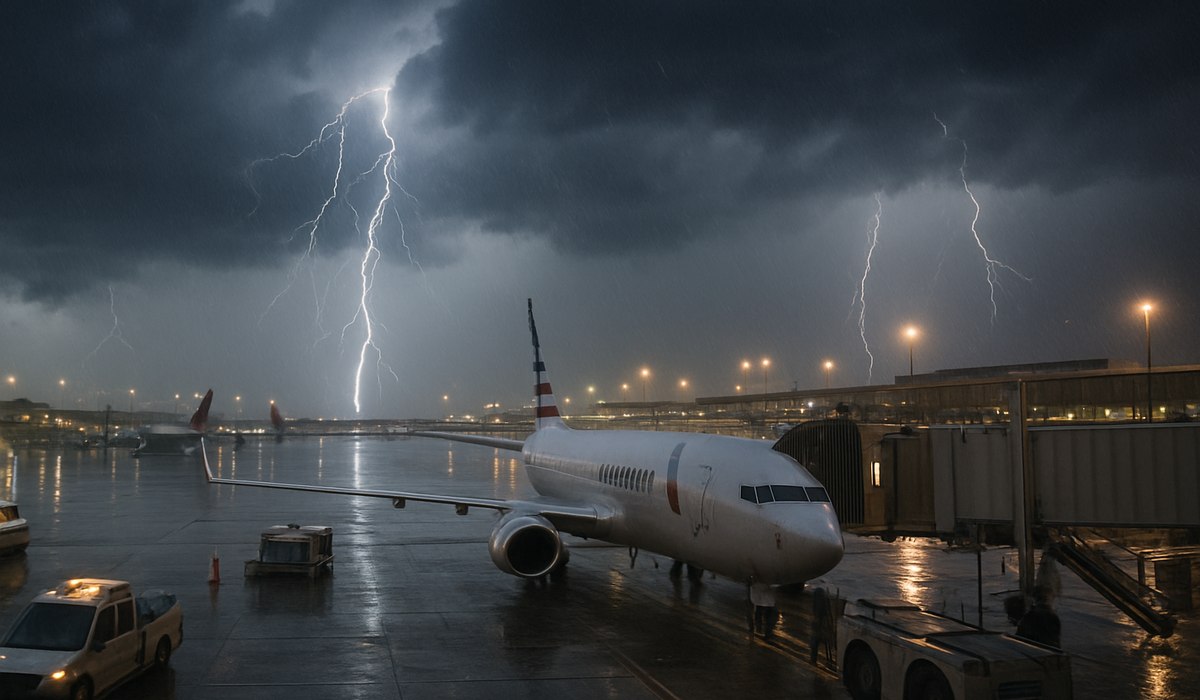
Image generated by AI
A Perfect Meteorological Storm Crushes the US Aviation Network
The United States aviation grid buckled catastrophically on March 31, 2026, as a volatile cocktail of severe thunderstorms, rapid snowmelt, and flash flooding simultaneously struck multiple high-volume corridors, generating a punishing total of 3,141 flight delays and 117 cancellations across the national network. Data from FlightAware confirms the disruption was not localized—it was systemic, penetrating every major hub from Chicago to Fort Lauderdale and from the Northeast corridor to the Gulf Coast.
The meteorological mechanics were particularly cruel. A classic spring weather pattern drove warm, moisture-laden Gulf air violently northward, colliding with retreating winter air masses. This atmospheric collision generated explosive thunderstorm cells over the Midwest while simultaneously triggering dangerously rapid snowmelt across the Mid-Atlantic states. The resulting flash flood risk compounded the aviation chaos by imperiling ground operations, crew transport logistics, and airport access roads.
Chicago O'Hare: The Epicenter of National Misery
Chicago O'Hare International Airport (ORD) bore the overwhelming majority of the nationwide devastation, single-handedly absorbing 59 cancellations and 973 delays—nearly one-third of the entire national delay total concentrated at a single facility.
The FAA was forced to implement simultaneous Ground Stops and Ground Delay Programs as heavy rain and thunderstorm cells parked directly over O'Hare's airspace. Average delays at ORD stretched to 81-90 minutes, with some flights reporting holds exceeding two hours. Neighboring Chicago Midway (MDW) also struggled as departure delays cascaded from the same regional storm system.
The Northeast's Double Crisis: Thunderstorms Meet Flash Floods
While Chicago dominated the raw numbers, the Northeast corridor endured a uniquely dangerous operational environment created by a rare dual-threat scenario:
The Thunderstorm Layer: Heavy convective cells battered LaGuardia (9 cancellations, 94 delays), Newark (7 cancellations, 82 delays), Reagan National (7 cancellations, 49 delays), and Philadelphia (7 cancellations, 56 delays).
The Flash Flood Layer: Surging water temperatures triggered rapid snowmelt across the Mid-Atlantic region. Combined with heavy rainfall, this created severe flash flood conditions. Forecasters issued an alarming warning: even 12 inches of moving water can sweep a car away, creating hazardous conditions for ground crews, de-icing teams, and passengers attempting to reach terminals via flooded access roads.
Carrier Performance: Who Was Hit Hardest
The disruption data reveals a deeply unequal distribution of pain across the carrier ecosystem:
Regional Carriers—The Sacrificial Layer:
- Envoy Air: 38 cancellations, 156 delays — nation's highest cancellation count
- Republic Airways: 11 cancellations, 96 delays
- PSA Airlines: 10 cancellations, 38 delays
- Horizon Air: 2 cancellations, 17 delays
Mainline Giants—Delayed but Protected:
- Southwest Airlines: 3 cancellations, 438 delays
- American Airlines: 3 cancellations, 373 delays
- United Airlines: 14 cancellations, 339 delays
- Delta Air Lines: 4 cancellations, 197 delays
The Outlier:
- Spirit Airlines: Just 1 cancellation but an extraordinary 497 delays — the single highest delay count of any US carrier, reflecting Spirit's ultra-tight turnaround scheduling that makes recovery from even minor disruptions nearly impossible.
What Guests Get
- Automated mobile rebooking through carrier apps, bypassing massively congested customer service desks
- FAA Traffic Management Initiative updates enabling passengers to monitor Ground Stops in real time
- Meal and accommodation vouchers for controllable (airline-fault) overnight delays
- Interline rebooking across alliance partners when specific carrier operations collapse
- Flash flood safety advisories from airport authorities for passengers commuting via ground transport
National Disruption Data: Airport-by-Airport Breakdown
| Airport | Code | Cancellations | Delays |
|---|---|---|---|
| Chicago O'Hare International | ORD | 59 | 973 |
| Fort Lauderdale International | FLL | 6 | 101 |
| LaGuardia | LGA | 9 | 94 |
| Newark Liberty International | EWR | 7 | 82 |
| Philadelphia International | PHL | 7 | 56 |
| Houston Bush Intercontinental | IAH | 5 | 55 |
| Detroit Metro Wayne County | DTW | 2 | 50 |
| Hartsfield-Jackson Atlanta | ATL | 3 | 49 |
| Reagan National | DCA | 7 | 49 |
| Baltimore/Washington International | BWI | 6 | 34 |
Airline Performance Under Pressure
| Airline | Cancellations | Delays |
|---|---|---|
| Envoy Air | 38 | 156 |
| United Airlines | 14 | 339 |
| Southwest Airlines | 3 | 438 |
| American Airlines | 3 | 373 |
| Republic Airways | 11 | 96 |
| Spirit Airlines | 1 | 497 |
| PSA Airlines | 10 | 38 |
| Delta Air Lines | 4 | 197 |
| Alaska Airlines | 5 | 49 |
| JetBlue Airways | 1 | 66 |
| SkyWest | 1 | 296 |
| Horizon Air | 2 | 17 |
What This Means for Travelers
Operating within a 3,141-delay environment demands a fundamental shift from passive passenger to active navigator. Your most powerful weapon is informational asymmetry: track your inbound aircraft's tail number using third-party apps rather than trusting departure boards, which frequently display optimistic "On Time" statuses for flights whose physical aircraft hasn't yet departed from a weather-impacted origin airport.
If you are connecting through Chicago O'Hare or any Northeast hub during spring thunderstorm season, assume your regional connection will fail. Book mainline-only itineraries when possible, and aggressively pad layovers to a minimum of 3 hours. For travelers driving to airports in the Northeast, the flash flood warnings are deadly serious—the combination of rapidly melting snowpack and heavy rainfall creates genuinely lethal conditions on low-lying roads near airports. Allow double your normal transit time and monitor local emergency management feeds before departing for the terminal.
FAQ: US Aviation Thunderstorm Disruptions
Why did Spirit Airlines have 497 delays but only 1 cancellation? Spirit operates on ultra-tight turnaround schedules with minimal fleet reserves. When weather delays cascade, every subsequent flight in a Spirit aircraft's daily rotation gets pushed later, generating massive accumulated delays. However, Spirit rarely cancels outright because it lacks backup aircraft to re-accommodate passengers—meaning delayed passengers usually still fly, just hours later.
What's the difference between a "Ground Stop" and a "Ground Delay Program"? A Ground Stop completely prohibits any aircraft from departing toward the affected airport. A Ground Delay Program slows the flow by assigning specific departure times to outbound flights, metering arrivals to prevent airborne congestion. Ground Stops are more severe and typically shorter; Ground Delay Programs can persist for hours.
Can I get compensation for a weather delay? Under current US federal regulations, airlines are not required to provide monetary compensation for weather-related delays. However, most carriers offer meal vouchers for delays exceeding 3-4 hours and hotel accommodations if the delay extends overnight, particularly when requested directly by the passenger.
Related Travel Guides
- Western Sydney International Airport Set to Disrupt Australia's Aviation Sector—Even Before Opening
- flydubai and Cyprus Airways Sign New UAE-Cyprus Aviation Deal to Prevent Flight Cancellations and Travel Chaos Risks Across Larnaca, Dubai, Almaty, and Colombo: New Airline News and Aviation Updates
- Massive Travel Chaos Paralyzes Northwest Arkansas as American and United Face 39 Airport Disruptions and Flight Cancellations Severing Routes to Chicago and Denver: Airline News
Disclaimer
This article is for informational and educational purposes only. It does not constitute legal, financial, or professional advice. While we strive to provide accurate and up-to-date information, travel policies, regulations, and conditions change rapidly. Always verify information with official sources before making travel decisions. Nomad Lawyer makes no representations about the accuracy, reliability, completeness, or suitability of the information provided. Readers should consult qualified professionals for advice specific to their circumstances. The views expressed in this article are those of the author and do not necessarily reflect the views of Nomad Lawyer.
Raushan Kumar
Founder & Lead Developer
Full-stack developer with 11+ years of experience and a passionate traveller. Raushan built Nomad Lawyer from the ground up with a vision to create the best travel and law experience on the web.
Learn more about our team →