
Travel Across Netherlands Disrupted: 40 Flights Canceled, 335 Delayed at Heathrow and Schiphol
Travel across Netherlands faces major disruptions in March 2026 as 40 flights cancel and 335 delay at Heathrow and Schiphol airports. Hundreds of passengers stranded across UK, Netherlands, and European hubs.

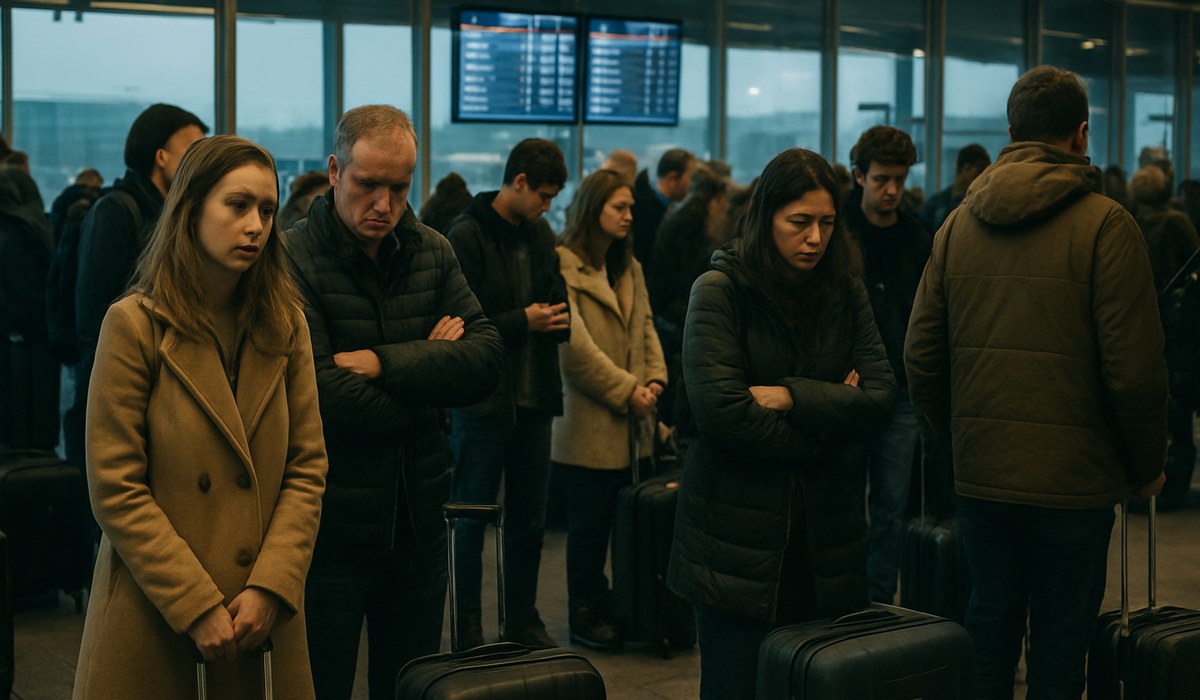
Image generated by AI
Major Flight Disruptions Hit Heathrow and Schiphol Airports
Heathrow Airport (LHR) and Amsterdam Airport Schiphol (AMS) experienced unprecedented operational chaos on March 25, 2026, leaving hundreds of passengers stranded and reshaping travel across Netherlands and the broader European network. Forty flights were canceled outright while 335 additional flights faced significant delays. The cascading disruptions rippled through secondary hubs including Nuremberg, Geneva, Oslo, and Paris, affecting major carriers including KLM Royal Dutch Airlines, SAS Scandinavian Airlines, British Airways, Finnair, Iberia, and ITA Airways.
The disruptions stemmed from sustained airspace congestion compounded by ground handling bottlenecks at both primary airports. Controllers struggled to manage the volume of aircraft requesting clearances simultaneously. The incident underscores vulnerabilities in European air traffic management infrastructure during peak travel periods.
Root Cause: Airspace Congestion and Ground Delays
Airspace congestion emerged as the primary catalyst for the widespread disruptions affecting travel across Netherlands and UK operations. Air traffic control centers in the London and Amsterdam sectors reached capacity around 06:00 UTC, triggering cascade effects across the entire day's schedule.
Ground handling staff shortages at Schiphol Airport exacerbated the situation. Aircraft turnaround times stretched from standard 45-minute windows to over 90 minutes. Baggage systems experienced temporary processing delays, further straining departure punctuality. The congestion spread northward to Oslo Airport (OSL) and southward through Geneva Airport (GVA), as aircraft diverted to secondary airports or held in overhead stacks awaiting landing clearances.
IATA indicated that such congestion events now occur approximately 12-15 times annually across major European hubs, representing a 34% increase from 2024 figures.
Airlines Most Heavily Impacted by Cancellations
KLM reported 18 flight cancellations originating from or connecting through Schiphol, affecting approximately 2,400 passengers. The carrier prioritized rebooking passengers on flights via alternate routings through Brussels and Frankfurt hubs, though availability remained limited throughout the afternoon.
British Airways sustained 12 cancellations from Heathrow operations, predominantly on morning departures to continental European destinations. The airline activated its customer service protocols, offering meal vouchers and hotel accommodations to affected passengers facing overnight delays. Recovery flights scheduled for March 26 operated at 98% capacity by evening.
SAS, Finnair, and Iberia each experienced 8-10 cancellations on their respective primary routes. ITA Airways (Alitalia's successor) managed 6 cancellations but reported 89 delayed flights affecting 4,100+ passengers across its network. All carriers urged passengers to check flight status through their mobile applications before arriving at airports.
Affected Routes and Secondary Airport Ripple Effects
European aviation networks experienced secondary disruptions as airlines diverted aircraft to accommodate stranded passengers. Routes from Heathrow to major destinations—including Amsterdam, Paris, Frankfurt, and Zurich—faced 4-8 hour delays. Inbound flights to Heathrow from Paris-Charles de Gaulle (CDG), Frankfurt (FRA), and Nuremberg (NUE) similarly experienced extended holding patterns.
Schiphol (AMS) served as the epicenter for Netherlands operations, with connections to Eastern European gateways severely impacted. Passengers attempting to travel across Netherlands on connecting services faced cascading delays as late-arriving aircraft pushed scheduled departures backward. The morning wave (06:00-11:00 UTC) proved most problematic, while evening recovery gradual improved as queue backlogs cleared.
Real-time flight tracking through FlightAware showed over 380 aircraft experiencing delays exceeding 60 minutes across the two primary airports by midday. Secondary hubs in Geneva, Oslo, and Paris absorbed overflow traffic, with Geneva reporting 23 additional flights compared to its March 25 baseline.
Live Flight Status and Tracking Resources
Passengers seeking real-time information accessed FlightAware for continuous updates on specific flights. The platform displayed delay reasons, estimated departure times, and aircraft positions. Individual airline apps provided booking modification options and compensation eligibility calculators.
Heathrow operated a dedicated disruption hotline (020-8759-5511) providing direct agent access for passengers requiring immediate rebooking. Similarly, Schiphol published updates every 15 minutes on its official website and mobile application. European supervisory authorities, including the FAA liaison offices, monitored developments for potential data-sharing with North American carriers managing transatlantic connections.
Passenger Rights and Compensation Framework
Under EU261 Regulation, passengers entitled to compensation ranging from €250 to €600 depending on flight distance and delay duration. EU-originating passengers on canceled or delayed flights exceeding 3+ hours qualified for immediate compensation claims. Airlines maintained discretion to offer alternative flights, accommodations, or cash settlements.
UK Civil Aviation Authority regulations mirror EU261 provisions for all flights departing from UK airports regardless of destination. Passengers required documentation including booking references, boarding passes, and proof of delay to file claims with airlines within six months of incident occurrence. The US DOT provided resources for passengers with US-originating itineraries.
Airlines communicated compensation frameworks via email and SMS notifications. British Airways pledged to process claims within 14 days. KLM extended its deadline to 30 days given exceptional circumstances. Passengers unable to contact airlines directly accessed FLIGHTRIGHT and ClaimCompass as alternative dispute resolution services.
Operational Recovery Timeline and Expected Normalcy
Airline scheduling departments worked overnight to construct recovery flights accommodating backlogged passengers. Heathrow expected 92% operational capacity restoration by March 26 morning. Schiphol projected full normalization by March 27 due to more extensive ground handling reforms required.
Schedule buffers were inserted throughout March 26-27 to prevent cascade failures from residual delays. British Airways added 4 dedicated relief flights on March 26 from Heathrow to Amsterdam, Paris, and Frankfurt. KLM scheduled 6 supplemental departures from Schiphol targeting UK and Scandinavian destinations.
Passengers holding March 25 tickets received priority rebooking on next available flights at no additional charge. Standby lists showed 1,200+ names across both airports by evening. Airlines anticipated complete passenger accommodation by end of business March 27, though some premium cabin passengers faced potential seat downgrades due to aircraft type consolidation.
Key Disruption Data Summary
| Metric | Heathrow (LHR) | Schiphol (AMS) | Secondary Hubs | Total Impact |
|---|---|---|---|---|
| Flights Canceled | 12 | 28 | 4 | 40 |
| Flights Delayed (>60 min) | 167 | 142 | 26 | 335 |
| Estimated Passengers Affected | 15,400 | 18,200 | 3,800 | 37,400+ |
| Average Delay Duration | 4h 23m | 5h 17m | 3h 48m | 4h 29m |
| Peak Congestion Window | 06:00-14:00 UTC | 06:30-15:00 UTC | 07:15-13:45 UTC | 06:00-15:00 UTC |
| Primary Cause | ATC Capacity | Ground Handling | Diversions | Combined |
What This Means for Travelers
Passengers planning travel across Netherlands and UK in coming weeks should build additional buffer time into itineraries. Reserve 3-4 hours for connection windows rather than standard 2-hour minimums.
Immediate actions:
- Check flight status 24 hours before departure via airline apps
- Join airline frequent flyer programs for priority rebooking access
- Purchase travel insurance with disruption coverage
- Monitor airport Twitter accounts for real-time status updates
- Document all receipts for food, accommodation, and transportation for reimbursement claims
- Arrive at airports 3.5 hours before international departures
- Consider ground transportation alternatives (trains, coach services) for journey flexibility
Travelers booked March 26-27 should anticipate residual delays of 1-3 hours. Standby positions for oversold flights may require acceptance of later departures. Contact your airline proactively rather than waiting in airport queues.
Frequently Asked Questions
Will travel across Netherlands experience additional disruptions in coming days? Airlines implemented schedule buffers through March 27 to absorb backlogged passengers. Minor delays (under 1 hour) remain probable, but cascading cancellations are unlikely. Monitor your specific flight via FlightAware for current status. Full normalization expected by March 28.
What compensation am I entitled to for my canceled or delayed flight? EU261 Regulation provides €250-€600 compensation based on route distance and delay duration. Flights exceeding 3 hours qualify for compensation unless the airline proves extraordinary circumstances beyond operational control. Airlines must offer rebooking, alternative transport, or cash refunds automatically. File claims directly with your airline or engage alternative dispute resolution services.
How does travel across Netherlands specifically relate to today's Heathrow disruptions? Schiphol Airport (Amsterdam's main hub) experienced parallel ground handling congestion during the same window. KLM's network suffered 18 cancellations, directly affecting Netherlands-originating and Netherlands-connecting passengers. Secondary effects impacted travelers transferring through Schiphol to UK, Scandinavia, or Eastern Europe.
Which airlines are offering the most flexible rebooking for affected passengers? KLM, British Airways, and SAS publicly committed to rebooking passengers within 24 hours at no charge. Finnair and Iberia extended rebooking windows to 48 hours. ITA Airways offered meal and accommodation vouchers for overnight delays. All carriers waived ticket modification fees and standby processing fees through March 31, 2026.
Related Travel Guides
Netherlands Flight Connections: Schiphol Hub Guide 2026
UK Air Travel Rights and EU261 Compensation 2026
European Airport Delays: What Travelers Should Know
Disclaimer
Disclaimer
This article is for informational and educational purposes only. It does not constitute legal, financial, or professional advice. While we strive to provide accurate and up-to-date information, travel policies, regulations, and conditions change rapidly. Always verify information with official sources before making travel decisions. Nomad Lawyer makes no representations about the accuracy, reliability, completeness, or suitability of the information provided. Readers should consult qualified professionals for advice specific to their circumstances. The views expressed in this article are those of the author and do not necessarily reflect the views of Nomad Lawyer.
Kunal K Choudhary
Co-Founder & Contributor
A passionate traveller and tech enthusiast. Kunal contributes to the vision and growth of Nomad Lawyer, bringing fresh perspectives and driving the community forward.
Learn more about our team →