
US Flight Disruptions: Chicago O'Hare and Hawaii Airports Face Delays
A massive disruption impacts US aviation networks, with 3,592 flight delays and 216 cancellations recorded across Chicago O'Hare and Hawaii airports.

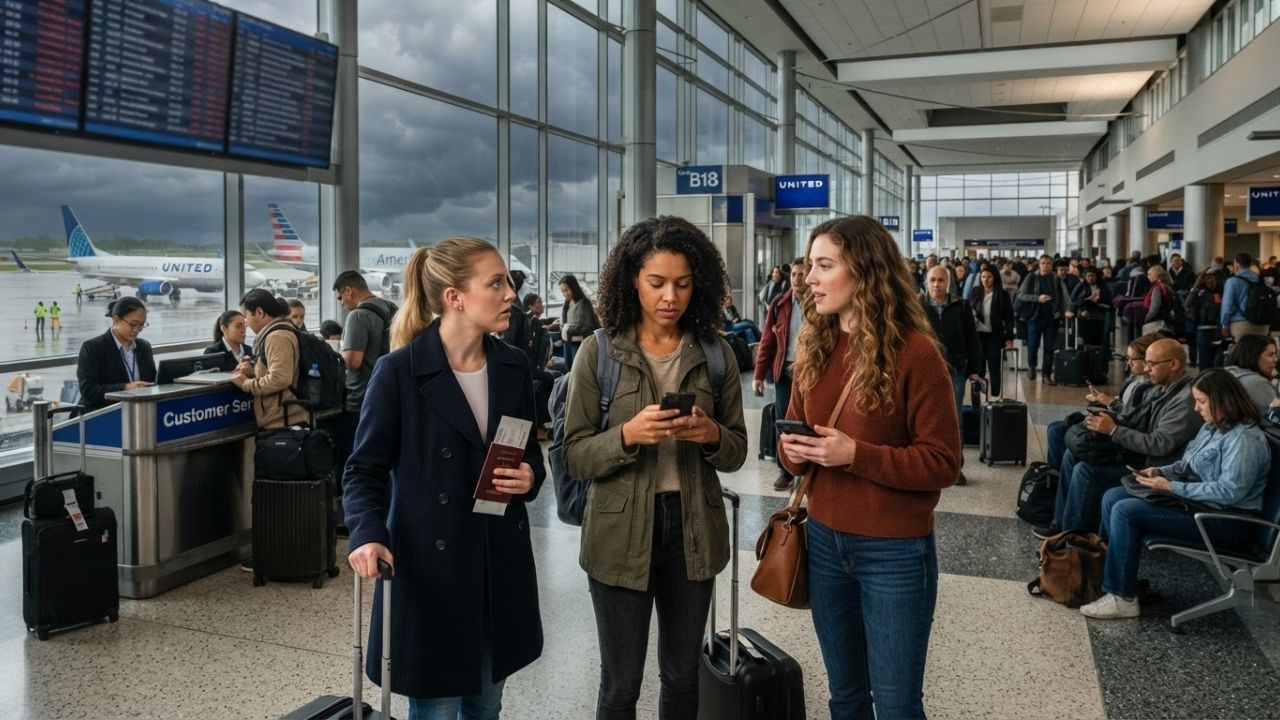
Image generated by AI
A massive wave of flight disruptions has impacted the United States aviation system, with 3,592 delays and 216 cancellations recorded nationwide. Thunderstorms in the East, FAA traffic management measures at major hubs, and the lingering effects of Hurricane Lala in Hawaii have created severe terminal backlogs for passengers.
The Scale of the Nationwide Flight Disruptions
The United States air travel system is managing significant operational challenges as major international airports and domestic terminals adjust flight schedules. Real-time aviation figures compiled on August 16, 2026, at 2:04 pm ET show that the national airspace system recorded 3,592 flight delays and 216 cancellations.
By establishing these seasonal flight lanes, regional airport managers aim to protect global passenger flows. Hub airports, which act as gateways for business visitors, international students, and cultural tourists, benefit from direct route access. The sudden increase in flight delays is proving challenging for the regional hospitality economy, as it forces hotels to manage passenger accommodation and food arrangements more efficiently.
By establishing these passenger safety standards, aviation planners aim to protect the integrity of global flight connections. The primary causes behind this operational congestion include localized weather fronts, federal air traffic control initiatives, and scheduled runway maintenance projects. For passengers traveling through these major transit hubs, this means longer processing times, unexpected connection delays, and revised arrival times at final destinations.
A delayed aircraft can affect more than one flight. An aircraft arriving late at one airport can depart late on its next scheduled service, creating a cumulative effect that spreads disruption from one region to another. Crew schedules are also affected when earlier flights run behind schedule, leading to staffing bottlenecks that delay departures even in areas with clear weather. For connecting passengers, a delay on the first flight segment can result in a missed connection, even if the subsequent flight operates normally.
Airport-by-Airport Disruption Breakdown: Chicago and the East Coast
The travel disruption is distributed across several major hubs, affecting both primary international gateways and regional domestic airports.
This localized disruption also offers a unique opportunity for duty-free retailers and terminal operators to design services suited for stranded passengers. By monitoring passenger comfort levels during long delays, airport customer teams can provide complimentary amenities to ensure guest satisfaction. This proactive approach helps build traveler confidence, ensuring that regional transit routes remain competitive with global hub standards.
Chicago O'Hare International Airport faced the highest delays in the nation today, reporting 950 flight delays and 14 cancellations. As one of the country's major connecting hubs linking domestic routes with international destinations, any disruption at O'Hare can create a ripple effect that impacts travelers across the country.
On the East Coast, Ronald Reagan Washington National Airport reported 283 delays and 26 cancellations. The airport operated under a ground-delay program because of active thunderstorms in the Washington, D.C., metropolitan area. Boston Logan International Airport recorded 166 delays and 7 cancellations, with departures experiencing average delays of approximately 60 minutes. Newark Liberty International Airport reported an average delay of 15 minutes, with delays listed as increasing due to FAA traffic-management measures.
Other major airports also faced significant delays. Dallas-Fort Worth International Airport reported 197 delays and 2 cancellations, Philadelphia International Airport logged 169 delays and 4 cancellations, and Hartsfield-Jackson Atlanta International Airport recorded 162 delays and 8 cancellations. In California, San Diego International Airport recorded 149 delays and 6 cancellations, operating under a ground-delay program because of high airport traffic volume that resulted in average delays of approximately 30 minutes. Meanwhile, San Francisco International Airport experienced departure delays averaging 15 minutes due to ongoing runway construction.
Weather-Related Disruption in Hawaii: Hurricane Lala's Impact
Hawaii is experiencing a high volume of flight cancellations as the region manages the effects of Hurricane Lala. The storm weakened to a tropical storm after passing south of the islands, avoiding direct landfall on the Big Island, but powerful winds, heavy rain, flash flooding, and dangerous surf continue to disrupt aviation operations.
In Hawaii, Daniel K. Inouye International Airport in Honolulu recorded 37 delays and 58 cancellations. Other island airports also faced severe disruptions, with Lihue Airport reporting 11 delays and 41 cancellations, Kahului Airport on Maui logging 16 delays and 30 cancellations, and Ellison Onizuka Kona International Airport recording 15 delays and 16 cancellations.
Although the National Hurricane Center had downgraded the system from a hurricane, tropical-storm winds swept west across Maui toward Oahu and Kauai. Pounding waves hit coastal highways, and heavy rain caused regional rivers to swell, restricting ground transport links to airport terminals and complicating crew movements.
Airline Disruption Metrics: Southwest and Hawaiian Lead
Major United States airlines and regional carriers are adjusting schedules to handle the delays. Southwest Airlines reported the highest delay total, recording 561 delays and 9 cancellations. American Airlines recorded 448 delays and 13 cancellations, and United Airlines reported 405 delays and 24 cancellations.
Other carriers experiencing significant disruption include JetBlue, which recorded 187 delays and 15 cancellations, and PSA Airlines, which logged 142 delays and 16 cancellations. Alaska Airlines reported 63 delays and 17 cancellations, and Frontier Airlines recorded 54 delays and 10 cancellations.
In Hawaii, regional carrier Hawaiian Airlines reported 12 delays and 61 cancellations, marking the highest volume of cancellations among all domestic airlines. The carrier has issued travel advisories and is working with passenger service teams to manage rebooking options for affected travelers.
Visitor Guide: Rebooking Policies, Airport Lounges, and Passenger Rights
Managing a flight delay or cancellation in the United States involves understanding airline commitments, monitoring airport status, and knowing your passenger rights. By following structured steps, travelers can minimize travel complications.
Sample local culinary specialties while waiting in the terminal. At Chicago O'Hare, visit Tortas Frontera by Chef Rick Bayless, located near Gate B11 in Terminal 1, Gate K4 in Terminal 3, and Gate M18 in Terminal 5. Order their signature tortas or fresh guacamole, and utilize their mobile app to order in advance. Near Reagan National, sample local crab cakes, and in Honolulu, try a traditional poke bowl or loco moco.
Monitor real-time airport status before leaving for the terminal. Visit the official FAA National Airspace System (NAS) status dashboard at nasstatus.faa.gov to check for ground-delay programs, runway closures, and average delay times. Keep your airline's mobile app active to receive instant notifications regarding gate changes and flight status updates.
Understand your passenger rights under the US Department of Transportation (DOT) Airline Customer Service Dashboard. For delays of 3 hours or more that are within the airline's control, major U.S. carriers have committed to providing meal vouchers. If your flight is canceled, contact your airline directly to explore rebooking options or request a refund if you choose not to travel. For travel through Hawaii, monitor regional weather bulletins and allow extra travel time to reach the airport safely.
Future Outlook: Rebuilding Resilient US Air Infrastructure
The long-term development of the United States aviation system depends on upgrading infrastructure to handle severe weather events and high passenger volumes. The FAA and regional port authorities are investing in modernization programs.
Sustainable initiatives include upgrading airport runway drainage systems to manage flash flooding, installing solar energy grids to power passenger terminals, and deploying next-generation air traffic control routing systems to minimize flight paths. By coordinating infrastructure upgrades with sustainable operations, the aviation sector aims to protect global travel connections, securing a reliable and sustainable transport network for future travelers.
Related Travel Guides
Disclaimer
This article is for informational and educational purposes only. It does not constitute legal, financial, or professional advice. While we strive to provide accurate and up-to-date information, travel policies, regulations, and conditions change rapidly. Always verify information with official sources before making travel decisions. Nomad Lawyer makes no representations about the accuracy, reliability, completeness, or suitability of the information provided. Readers should consult qualified professionals for advice specific to their circumstances. The views expressed in this article are those of the author and do not necessarily reflect the views of Nomad Lawyer.
Kunal K Choudhary
Co-Founder & Contributor
A passionate traveller and tech enthusiast. Kunal contributes to the vision and growth of Nomad Lawyer, bringing fresh perspectives and driving the community forward.
Learn more about our team →