
US Airspace Chokehold: 5,292 Delays and 544 Cancellations Impact O'Hare, LaGuardia, and Boston Logan as Wind and Low Ceilings Trigger FAA Ground Delays
Over 5,290 US flight delays and 544 cancellations disrupt major hubs including Chicago O'Hare, LaGuardia, and Boston Logan amid FAA ground delays.

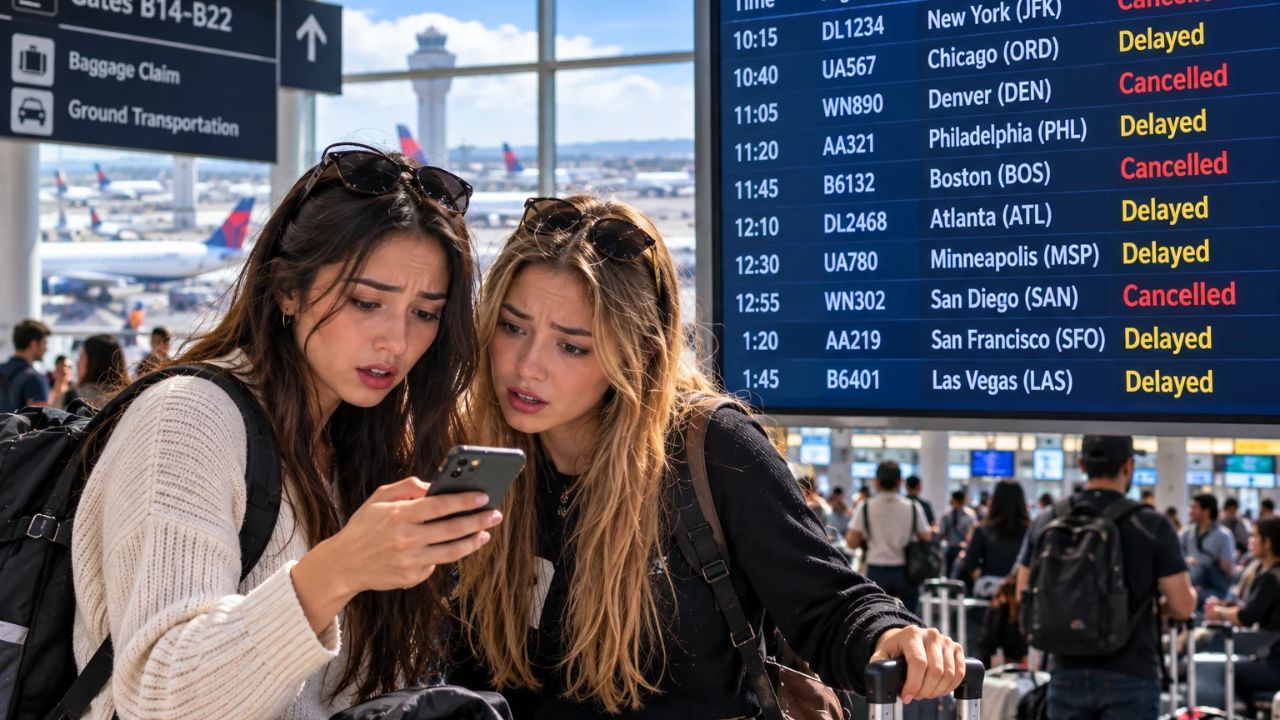
Image generated by AI
At New York LaGuardia, 60 percent of all scheduled departures and 59 percent of incoming arrivals suffered operational disruption in a single afternoon, while Boston Logan saw 301 flights cancelled outright due to severe coastal wind shears. Total flight disruptions across the United States surged to 5,292 delays and 544 cancellations for domestic and international routes, placing severe strain on major connecting hubs from Chicago to San Francisco.
Cascading Ground Delays Across Major US Air Corridors
Adverse meteorological conditions combined with federal air traffic initiatives have restricted throughput across several key airspace sectors. According to real-time operations data from the Federal Aviation Administration (FAA), ground delay programs were activated across multiple metropolitan airports. Strong crosswinds severely restricted runway configurations at Boston Logan, Philadelphia International, New York LaGuardia, and Las Vegas Harry Reid, while marine layer low ceilings forced arrival spacing restrictions into San Francisco International Airport.
Chicago O'Hare recorded the nation's heaviest disruption volume, logging 1,148 delayed flights alongside 53 cancellations, resulting in a 35 percent departure delay rate and a 42 percent arrival delay rate. In New York, LaGuardia documented 641 delays and 62 cancellations. Boston Logan logged 275 delays alongside 301 grounded flights, paralyzing regional feeder networks across New England.
On the West Coast, San Diego recorded 247 delays and 7 cancellations as ground delays were enacted due to sheer airport traffic volume, creating a 42 percent arrival delay rate. San Francisco registered 209 delays and 12 cancellations, while Philadelphia logged 167 delays and 10 cancellations. Further inland, Las Vegas Harry Reid documented 139 delays with average departure holds exceeding 15 minutes, Orlando recorded 117 delays and 8 cancellations, and Minneapolis/St Paul logged 76 delays with 30-minute departure sequencing holds. Regional island services in Massachusetts were especially hard hit, with Nantucket Memorial recording 51 cancellations and Martha's Vineyard logging 31 cancellations.
Airline Operational Performance Breakdown
Major network carriers and regional feeder airlines experienced significant schedule volatility:
- Southwest Airlines: Documented 574 delayed flights and 7 cancellations across its point-to-point network.
- United Airlines: Registered 532 delays and 28 cancellations, heavily concentrated around its Chicago O'Hare and San Francisco hubs.
- Delta Air Lines: Logged 404 delays alongside 100 cancellations across domestic trunk routes.
- SkyWest Airlines: Recorded 365 delays and 16 cancellations on regional partner routes.
- Republic Airways: Handled 357 delays and 79 cancellations, impacting regional connections for American Eagle, Delta Connection, and United Express.
- Endeavor Air: Logged 224 delays and 29 cancellations operating as Delta Connection.
- JetBlue: Reported 156 delays and 50 cancellations, with heavy exposure to Northeast coastal wind restrictions.
Passenger Travel and Rerouting Strategies
- Monitoring FAA Ground Delay Programs: Check the FAA Air Traffic Control System Command Center status page before departing for the terminal. If your departure airport is subject to a Ground Delay Program (GDP), inbound aircraft may be held at their origin gates for several hours.
- Regional Train Alternatives in the Northeast: If your regional flight between Boston, New York, Philadelphia, or Washington D.C. is cancelled, immediately book an Amtrak Northeast Regional or Acela train seat. Rail corridors operate independently of airport wind ground stops.
- Rebooking Via Airline Apps: Do not stand in terminal customer service queues exceeding 100 passengers. Use airline mobile applications, airport self-service kiosks, or international support desks via phone to secure automated rebooking.
- Security Screening Adjustments: When schedules compress, TSA security lines experience sharp surges as delayed passengers converge on checkpoints at once. Verify checkpoint throughput via the Transportation Security Administration (TSA) mobile application.
Federal Consumer Protections and Passenger Rights
Under federal airline passenger protection regulations administered by the US Department of Transportation (DOT), passengers whose flights are cancelled or significantly altered are entitled to a full cash refund to their original form of payment if they choose not to accept alternative transportation offered by the carrier. This rule applies regardless of whether the cancellation stems from airline mechanical failure, crew scheduling issues, or weather-related FAA traffic management initiatives.
Major US carriers have also committed to customer service plans providing complimentary meal vouchers for controllable delays exceeding three hours and hotel accommodation vouchers for overnight disruptions caused by airline operational issues. However, when delays are triggered by weather or FAA air traffic flow restrictions, hotels are generally not provided, making private travel insurance reimbursement essential.
FAQ: Navigating US Flight Cancellations in 2026
What is the difference between an FAA ground stop and a ground delay?
A ground stop halts all inbound flights to a specific airport immediately, while a ground delay program slows the rate of incoming aircraft by holding them at departure gates to match reduced airport capacity.
Are passengers entitled to a full refund if their flight is cancelled due to weather?
Yes. If an airline cancels your flight and you decline their rebooking options, DOT regulations mandate a full cash refund, not merely travel credits.
Which airline app features speed up rebooking during major delays?
Most major US airline apps offer automated rebooking prompts on the itinerary screen, allowing passengers to select alternative flight connections without agent intervention.
How do low cloud ceilings affect airport operations at San Francisco (SFO)?
Low clouds prevent side-by-side visual approaches on SFO's closely spaced parallel runways, cutting the airport's hourly landing capacity by nearly half.
Staying proactive with mobile rebooking tools and monitoring federal airspace advisories is the most effective defense against nationwide flight disruptions.
Disclaimer
This article is for informational and educational purposes only. It does not constitute legal, financial, or professional advice. While we strive to provide accurate and up-to-date information, travel policies, regulations, and conditions change rapidly. Always verify information with official sources before making travel decisions. Nomad Lawyer makes no representations about the accuracy, reliability, completeness, or suitability of the information provided. Readers should consult qualified professionals for advice specific to their circumstances. The views expressed in this article are those of the author and do not necessarily reflect the views of Nomad Lawyer.
Kunal K Choudhary
Co-Founder & Contributor
A passionate traveller and tech enthusiast. Kunal contributes to the vision and growth of Nomad Lawyer, bringing fresh perspectives and driving the community forward.
Learn more about our team →