
Asia Aviation Network Strained: 4,597 Flight Delays and 239 Cancellations Hit Shanghai, Bangkok, Tokyo, and New Delhi
Over 4,590 flight delays and 239 cancellations impact major Asian hubs including Shanghai Pudong, Bangkok Suvarnabhumi, Jakarta, and New Delhi.

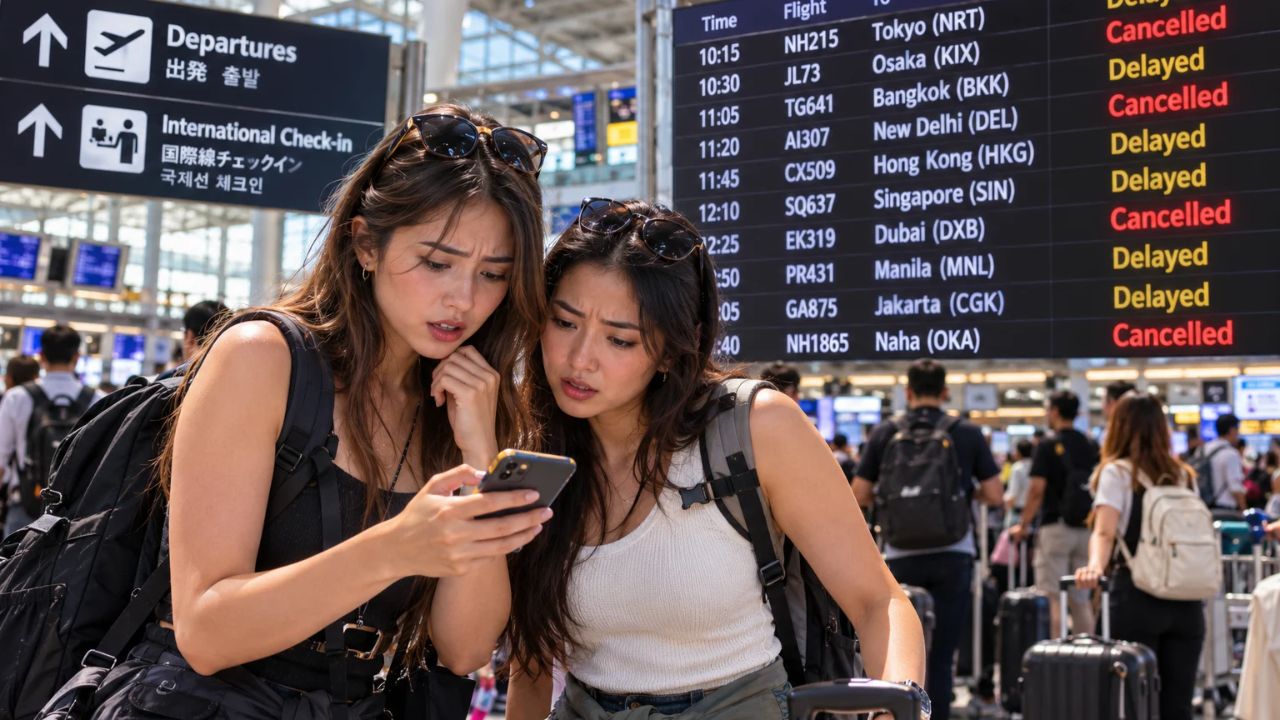
Image generated by AI
More than 76 percent of Thai Airways scheduled flights and 34 percent of FlyDubai services suffered operational setbacks in a single 24-hour cycle across Asian airspace. Widespread schedule friction has triggered 239 cancellations and 4,597 flight delays, placing heavy pressure on primary interchange hubs including Shanghai Pudong, Bangkok Suvarnabhumi, Jakarta Soekarno-Hatta, Tokyo Haneda, and New Delhi Indira Gandhi.
Systemic Airspace Congestion Across East and Southeast Asia
A combination of adverse weather cells, slot-restricted airspace corridors, and peak terminal gate occupancy has created cascading schedule shifts across Asia's primary aviation arteries. According to consolidated tracking records, mainland China remains the most heavily impacted market. Shanghai Pudong International Airport recorded 553 delays and 8 cancellations, while regional satellite hubs including Shanghai Hongqiao registered 120 delays alongside 17 cancellations, and Hangzhou Xiaoshan logged 116 delays with 8 cancellations.
Southeast Asian gateways are experiencing comparable gate holds. Bangkok's Suvarnabhumi Airport reported 474 delayed flights and 3 cancellations, while Jakarta Soekarno-Hatta documented 311 delays and 15 cancellations. In East Asia, Japan's primary gateways handled heavy schedule backlogs, led by Tokyo Haneda with 230 delays and 4 cancellations, Narita International with 147 delays and 9 cancellations, Kansai International with 125 delays and 4 cancellations, and Okinawa's Naha Airport recording 105 delays and 8 cancellations.
Across South Asia and the Middle East, New Delhi's Indira Gandhi International Airport logged 191 delays and 7 cancellations, Dubai International registered 221 delays and 11 cancellations, and Istanbul Airport documented 274 delays with 7 cancellations.
Airline Operational Bottlenecks and Carrier Metrics
The disruption reflects significant operational divergence across major flag carriers and low-cost operators:
- China Eastern Airlines: Carried the highest raw disruption volume, logging 54 cancelled flights and 405 delays (16 percent delay rate, 2 percent cancellation rate).
- Air China: Logged 32 cancellations and 172 delays (9 percent delay rate).
- Batik Air: Documented 16 cancellations and 80 delays, reflecting a 5 percent cancellation rate and 25 percent delay rate.
- SpiceJet: Registered a severe 20 percent cancellation rate with 13 grounded flights and 22 delays.
- Turkish Airlines: Managed 282 delays and 6 cancellations (17 percent delay rate).
- IndiGo: Recorded 161 delays and 1 cancellation.
- Thai Airways: Maintained a 76 percent delay rate across 185 operations despite logging only 2 outright cancellations.
- China Southern Airlines: Reported 126 delays and 2 cancellations.
- Cathay Pacific: Recorded 93 delays (22 percent delay rate) and 2 cancellations.
- All Nippon Airways & ANA Wings: Combined for 7 cancellations and 161 delays across domestic and regional international routes.
- Jetstar Japan: Logged 8 cancellations and 16 delays (7 percent cancellation rate).
Other carriers managing localized schedule friction include Shanghai Airlines (84 delays, 7 cancellations), FlyDubai (99 delays, 3 cancellations), Saudia (66 delays, 2 cancellations), Garuda Indonesia (61 delays, 1 cancellation), and XiamenAir (93 delays, 1 cancellation).
Visitor Insider Tips for Disrupted Transit
- Connection Window Buffer: If you are booking or holding connecting itineraries through Shanghai Pudong, Bangkok Suvarnabhumi, or Tokyo Haneda, ensure minimum connection times (MCT) are set to at least 3.5 hours. A standard 90-minute layover will likely lead to missed luggage transfers and closed boarding gates.
- Terminal Rerouting Protocols: If your flight is cancelled at a secondary Chinese airport like Chengdu Tianfu (82 delays, 15 cancellations) or Kunming Changshui (99 delays, 11 cancellations), request immediate rebooking to regional high-speed rail lines via 12306 rather than waiting for next-day replacement flights.
- Digital Document Preparation: Maintain offline digital screenshots of your confirmed e-ticket receipts, boarding passes, and checked baggage tags. When terminal customer service lines lengthen, airline representatives process rebookings faster when provided with exact 13-digit ticket numbers.
- Lounge and Transit Facilities: If facing long delays in Bangkok or Dubai, pay-per-use transit hotels and hourly sleep pods inside the secure airside zone offer showers and beds without clearing immigration or re-entering security screening.
Passenger Rights and Regulatory Context
Aviation recovery procedures operate under standards established by the International Air Transport Association (IATA) and safety guidance from the International Civil Aviation Organization (ICAO). When delays exceed four hours on international departures, operating carriers are generally required to provide meal vouchers, complimentary communication access, and overnight hotel lodging where same-day onward transport is impossible.
Airport operational capacity is closely monitored by global aviation oversight networks like Airports Council International (ACI). Passengers should note that compensation rights vary significantly by jurisdiction: European-originating flights on carriers like Turkish Airlines trigger statutory assistance, whereas delays resulting from air traffic flow management or regional weather in East Asia qualify as extraordinary circumstances, limiting airline obligations to re-routing and standard duty of care.
FAQ: Navigating Asia Airport Disruptions in 2026
How can travelers check if their flight through Asia is delayed?
Monitor your flight status directly through your airline mobile app, check real-time gate departure boards, or verify live radar feeds before heading to the airport.
What should passengers do if their flight is cancelled in transit?
Proceed immediately to your operating airline's airside transit transfer desk to request priority rebooking on the next available flight or secure hotel accommodation vouchers.
Are airlines required to provide hotel rooms for overnight delays?
When an overnight delay is caused by airline technical or operational issues, carriers routinely provide hotel accommodation and ground transport. Weather-related ground stops may require travelers to claim expenses through private travel insurance.
Which Asian airports experienced the longest delay backlogs?
Shanghai Pudong (553 delays), Bangkok Suvarnabhumi (474 delays), Jakarta Soekarno-Hatta (311 delays), and Istanbul Airport (274 delays) recorded the highest disruption counts.
Maintaining flexible layovers and real-time flight tracking is essential for staying ahead of regional airspace congestion across Asia.
Disclaimer
This article is for informational and educational purposes only. It does not constitute legal, financial, or professional advice. While we strive to provide accurate and up-to-date information, travel policies, regulations, and conditions change rapidly. Always verify information with official sources before making travel decisions. Nomad Lawyer makes no representations about the accuracy, reliability, completeness, or suitability of the information provided. Readers should consult qualified professionals for advice specific to their circumstances. The views expressed in this article are those of the author and do not necessarily reflect the views of Nomad Lawyer.
Raushan Kumar
Founder & Lead Developer
Full-stack developer with 11+ years of experience and a passionate traveller. Raushan built Nomad Lawyer from the ground up with a vision to create the best travel and law experience on the web.
Learn more about our team →