
US Department of State Issues Level 3 Travel Warning for Venezuela After Catastrophic June 2026 Earthquakes
The US government urges citizens to reconsider all travel to Venezuela following a double earthquake sequence that killed 3,500 people and crippled national infrastructure.

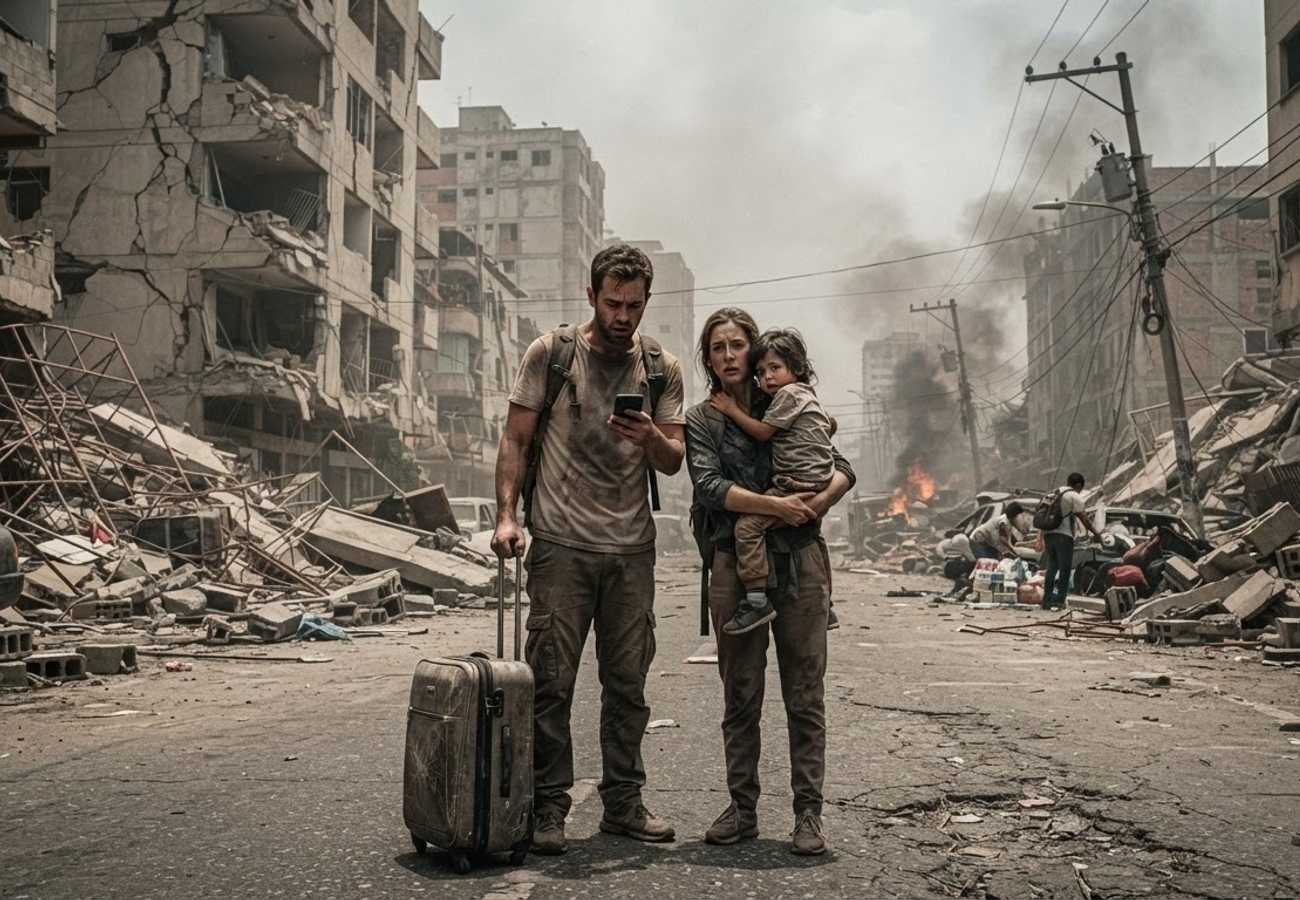
Image generated by AI
The US Department of State has upgraded its travel advisory for Venezuela to Level 3, advising all American citizens to reconsider imminent travel. This urgent shift follows a devastating seismic sequence on June 24, 2026, which struck the north-central region of the country.
The current state of emergency has left the nation's infrastructure in shambles, leaving emergency services compromised and consular support limited to life-threatening scenarios.
Seismic Devastation and Humanitarian Crisis
The advisory is a direct response to two shallow earthquakes, measuring 7.2 and 7.5 magnitude, that ruptured along the San Sebastián fault system. These events resulted in more than 3,500 confirmed deaths, with tens of thousands of residents still missing across major urban centers.
The scale of the physical destruction has effectively neutralized the government's ability to manage logistics or provide basic administrative services. Foreign nationals currently face extreme risks, including:
- Widespread and prolonged power outages.
- Complete failure of telecommunications networks.
- Suspension of all non-essential public services.
- Total absence of a reliable safety net for international visitors.
Infrastructure Collapse and Rising Violent Crime
The evaporation of municipal services—including electricity, potable water, and police patrols—has created a security vacuum. Armed criminal syndicates are actively exploiting this chaos to target foreign nationals.
Travelers arriving at damaged transport hubs are particularly vulnerable to carjackings, expressive kidnappings, and armed robberies. The transit corridor between Maiquetía Simón Bolívar International Airport and downtown Caracas is now identified as a high-risk zone for coordinated ambushes.
With law enforcement diverted entirely toward search-and-recovery operations in flattened residential blocks, gangs are operating with near-total impunity. The use of unregulated taxis or public ATMs currently poses a life-threatening risk.
Perilous Conditions in Border Regions
Security risks intensify significantly near the interior frontiers. The US government warns against any movement within 20 miles of the Colombian and Brazilian borders.
These lawless zones are currently being leveraged by drug-trafficking cartels and guerrilla movements to expand smuggling operations and execute high-value hostage abductions. Regional monitoring by the Pan American Health Organization indicates that states such as Amazonas, Apure, and Táchira are effectively detached from central government control.
In these peripheral corridors, the lack of rural medical clinics means that any physical injury is likely to be fatal, and travelers risk arbitrary detention by paramilitary factions.
Collapse of the Public Health System
Venezuela's healthcare system was already fragile due to long-term economic decline; the June 2026 earthquakes have pushed it into total operational failure. More than 20 regional trauma hospitals have collapsed or are non-functional due to structural damage and power loss.
Critical shortages reported via the World Health Organization include:
- Sterile oxygen supplies.
- Essential antibiotics.
- Clean drinking water.
The breakdown of morgue services has led to severe biosafety violations in metropolitan wards. For US citizens, obtaining basic life-saving care is now virtually impossible without a private, high-cost medical evacuation.
Emergency Protocols for Stranded Citizens
Individuals currently in Venezuela who cannot immediately depart must prioritize survival and situational awareness. The US government emphasizes that its operational capacity within the country is severely limited.
Critical safety measures include:
- Registration: Immediately enroll in the Smart Traveler Enrollment Program (STEP) to facilitate location by consular officers.
- Low Profile: Maintain a minimal digital and physical presence and avoid all political gatherings or protests.
- Documentation: Carry physical color photocopies of passports and primary identification.
- Supplies: Maintain a temporary cache of bottled water and non-perishable food to survive military checkpoints.
Summary of Crisis Impact
| Category | Status/Impact | Primary Risk |
|---|---|---|
| Seismic Activity | 7.2 & 7.5 Magnitude | 3,500+ deaths; massive urban collapse |
| Security | Systemic Failure | Kidnappings, carjackings, cartel activity |
| Health | Total Collapse | No antibiotics/oxygen; 20+ hospitals defunct |
| Border Zones | Lawless | Hostage abductions; paramilitary detention |
| US Consular Aid | Extremely Limited | Only for life-or-death emergencies |
Travelers are reminded that the responsibility for personal preservation rests solely with the individual in the absence of functional local governance.
Related Travel Guides
Disclaimer
This article is for informational and educational purposes only. It does not constitute legal, financial, or professional advice. While we strive to provide accurate and up-to-date information, travel policies, regulations, and conditions change rapidly. Always verify information with official sources before making travel decisions. Nomad Lawyer makes no representations about the accuracy, reliability, completeness, or suitability of the information provided. Readers should consult qualified professionals for advice specific to their circumstances. The views expressed in this article are those of the author and do not necessarily reflect the views of Nomad Lawyer.
Kunal K Choudhary
Co-Founder & Contributor
A passionate traveller and tech enthusiast. Kunal contributes to the vision and growth of Nomad Lawyer, bringing fresh perspectives and driving the community forward.
Learn more about our team →