
Tourism Indonesia Saudi Arabia: Garuda, Emirates Face Flight Cuts as Bookings Plunge
Tourism Indonesia Saudi Arabia sector faces unprecedented crisis as Garuda Indonesia, Emirates, and Thai Airways cut flights amid geopolitical tensions. March 2026 data reveals 40% booking decline across Southeast Asia and Middle East routes.

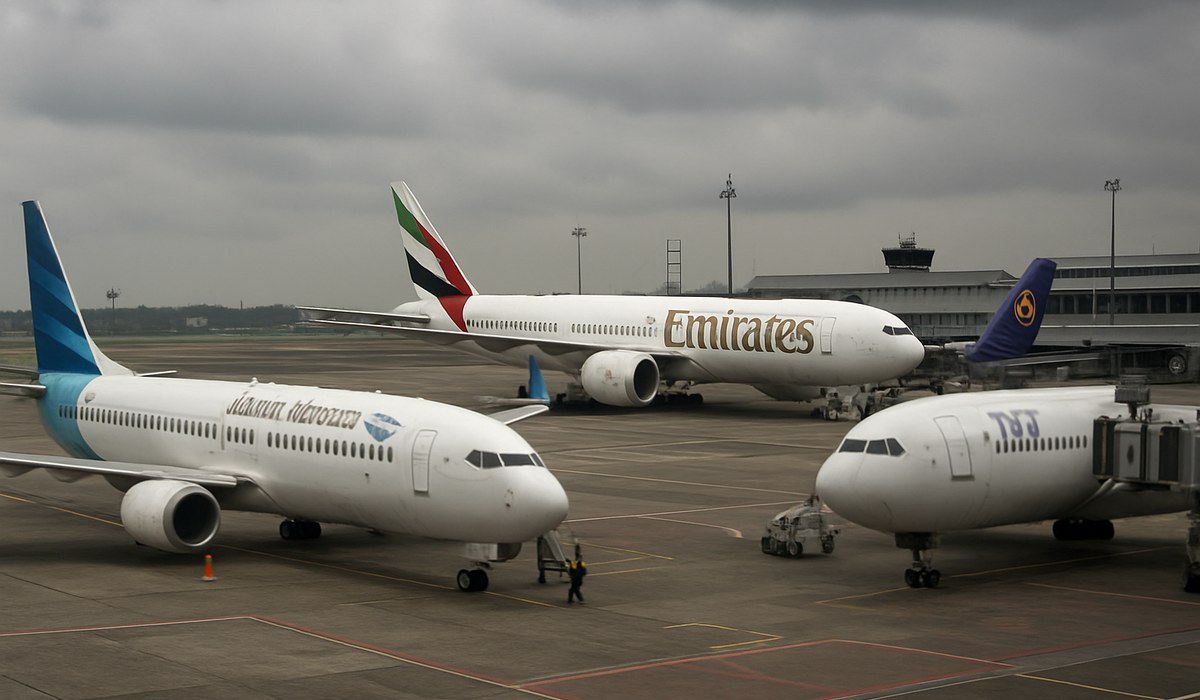
Image generated by AI
Tourism Collapse Across Southeast Asia and Middle East: Major Airlines Cut Operations
The Asia-Pacific and Middle Eastern tourism sectors are experiencing a severe operational crisis in March 2026 as geopolitical instability drives unprecedented flight reductions and booking collapses. Garuda Indonesia (GA), Emirates Airlines (EK), and Thai Airways International (TG) have announced significant capacity cuts on major transnational routes, directly impacting millions of leisure and business travelers.
According to preliminary industry data, international flight bookings to Indonesia, Saudi Arabia, Thailand, and the UAE have declined by 40% year-over-year, marking the steepest downturn since 2020. The crisis stems from regional security concerns, fuel cost volatility, and passenger confidence erosion across critical aviation corridors connecting Southeast Asia to the Arabian Peninsula.
Root Causes: Geopolitical Tensions and Market Volatility Drive Operational Reductions
Multiple converging factors have precipitated this tourism and aviation crisis. Regional geopolitical tensions have created operational uncertainties for carriers flying through contested airspace, forcing airlines to reroute flights, extend flight times, and incur substantial additional fuel costs.
Rising jet fuel prices—now exceeding $95 per barrel—have compressed already-thin airline margins. Low-cost carriers operating on budget models have absorbed unsustainable losses, while legacy carriers like Garuda and Emirates have elected strategic capacity reductions over continued unprofitable operations.
Passenger confidence remains fragile, with tourists deferring bookings to Indonesia's Bali region and Thailand's tourist beaches indefinitely. Hotel chains, including Marriott properties across Bangkok, Jakarta, and Jeddah, report occupancy rates falling to 35-42%, their lowest levels in five years.
Airlines Implementing Aggressive Cost-Cutting Measures
Garuda Indonesia has announced suspension of four international routes from Soekarno-Hatta International Airport (CGK) effective April 1, 2026:
- Jakarta-Jeddah (daily service reduced to 3x weekly)
- Jakarta-Dubai (daily service suspended for 60 days)
- Jakarta-Bangkok (capacity reduced by 45%)
- Denpasar (DPS) to Middle Eastern hubs (consolidated to single daily flight)
The airline estimates these cuts will reduce operational losses by $8.2 million monthly but will result in 12,000 canceled flights through Q2 2026.
Emirates Airlines, the region's largest carrier, has initiated Phase 2 of its "Network Optimization Strategy":
- Reduced daily frequencies on Dubai-Bangkok (DXB-BKK) from 4 to 2 flights
- Temporary suspension of seasonal Dubai-Phuket service
- Rerouting Southeast Asian passengers through secondary hubs in Doha and Abu Dhabi
Thai Airways International has deferred aircraft deliveries and cut Bangkok-Saudi Arabia routes by 35%, affecting approximately 18,000 monthly passengers.
Affected Routes and Passenger Impact Summary
| Route | Airline | Current Status | Monthly Passengers Affected | Revised Frequency |
|---|---|---|---|---|
| Jakarta-Jeddah (CGK-JED) | Garuda Indonesia | Suspended to 3x/week | 28,000 | 60% reduction |
| Dubai-Bangkok (DXB-BKK) | Emirates | Operational | 45,000 | 50% reduction |
| Bangkok-Riyadh (BKK-RUH) | Thai Airways | Suspended | 22,000 | Indefinite pause |
| Denpasar-Kuala Lumpur (DPS-KUL) | Garuda Indonesia | Operational | 16,000 | 40% reduction |
| Jakarta-Dubai (CGK-DXB) | Garuda Indonesia | Suspended | 35,000 | 60-day halt |
Total Affected Passengers (March 2026): 146,000+ monthly travelers disrupted across primary routes.
Real-Time Flight Status and Tracking Resources
Travelers with existing bookings on affected routes should immediately:
-
Check live flight status via FlightAware—the platform's Arabia-Asia corridor tracker shows 340+ cancellations scheduled through April 15, 2026.
-
Monitor airline notifications through official apps and email alerts. Garuda Indonesia, Emirates, and Thai Airways are automatically rebooking affected passengers on alternative flights or competitor carriers.
-
Review IATA guidelines for international flight disruption protocols at IATA.org—comprehensive documentation on passenger rights during carrier-initiated schedule changes.
Traveler Action Checklist: Immediate Steps for Affected Passengers
1. Verify Your Booking Status Log into your airline account or contact the carrier directly via their customer service hotline. Confirm whether your flight appears on cancellation lists through April 30, 2026.
2. Document Original Booking Details Photograph or export your confirmation email, including booking reference number, route, flight time, and ticket price. This documentation becomes critical for compensation claims.
3. Request Rebooking Options Contact your airline within 24 hours of notification to explore alternative flight options. Airlines must rebook you on competing carriers at no additional cost if direct routes are unavailable.
4. Review Cancellation Insurance Coverage If you purchased travel insurance, file a claim immediately for flight cancellation. Most comprehensive policies cover airline-initiated cancellations and offer 100% refund or credit options.
5. File Compensation Claims (EU Regulation 261/2004 Equivalent) Passengers on EU-operating flights or intra-European segments qualify for €250–€600 compensation. Use US Department of Transportation guidelines as reference for non-EU routes; some airlines honor similar compensation voluntarily.
6. Monitor Rebooking Confirmations Once rebooked, confirm new flight details within 12 hours. Verify seat assignments, baggage allowances, and connection times, particularly for multi-leg itineraries.
7. Contact Hotel and Ground Services Notify Marriott and other accommodation providers of flight changes immediately. Most properties will adjust check-in times without penalty during declared airline crises.
Tourism Industry Recovery Timeline and Outlook
Industry analysts project three recovery phases:
Phase 1 (April–May 2026): Continued capacity reductions; bottleneck effects on ancillary tourism services (car rentals, tours, activities).
Phase 2 (June–August 2026): Gradual schedule normalization contingent on geopolitical de-escalation; summer peak season capacity at 70–75% of 2025 levels.
Phase 3 (September 2026+): Full network restoration if regional stability stabilizes; airlines begin redeploying deferred aircraft and adding seasonal frequencies.
Marriott International has announced a $45 million incentive program offering 30% discounts on bookings through June 2026 to rebuild occupancy in Southeast Asian and Middle Eastern properties.
Passenger Rights and Compensation Guidelines
Under international aviation law (Montreal Convention) and regional regulations:
- Flight cancellations initiated by airlines entitle passengers to full refunds or reboooking on alternative carriers at no additional cost.
- Schedule changes exceeding 12 hours may qualify passengers for hotel accommodation, meals, and ground transportation.
- Denied boarding compensation (if overbooking occurs during rerouting) ranges from $400–$1,300 USD depending on flight distance.
- Special assistance requests (medical, mobility, unaccompanied minors) must be escalated to airline customer relations within 48 hours.
For detailed compensation procedures, consult US Department of Transportation Consumer Affairs, which maintains international airline compliance records.
What Tourism Partners Are Doing to Adapt
Garuda Indonesia is leveraging its AeroAsia subsidiary to maintain regional connectivity through code-share partnerships with Malaysia Airlines and Singapore Airlines, ensuring tourist access to Bali and Jakarta despite capacity cuts.
Marriott Hotels across the region are implementing dynamic pricing reductions and bundling packages combining accommodation with alternative ground transportation (bus services, ferry routes) to offset flight disruptions.
Thai Tourism Authority launched an emergency marketing campaign repositioning domestic tourism and regional land-based travel as viable alternatives to long-haul flights.
Frequently Asked Questions
Q: Will my flight be canceled if it's scheduled for April 2026? A: Routes listed in airline notices through April 30 face confirmed suspensions or significant changes. Check FlightAware and your airline account daily for the most current status.
Q: Am I entitled to compensation if my airline suspends my route? A: Yes. Airline-initiated cancellations trigger full refunds or rebooking obligations. EU passengers qualify for additional €250–€600 compensation depending on flight distance. Other passengers should refer to individual airline policies.
Q: Can I rebook on a competitor airline at no charge? A: Airlines are obligated to rebook you on alternative carriers if they cancel flights, though seat availability varies. Contact your airline's rebooking department within 24 hours of notification.
Q: What about my hotel booking if I can't reach my destination? A: Major chains like Marriott will typically waive cancellation penalties during airline crises. Contact properties directly with flight cancellation documentation.
Q: When will normal service resume? A: Industry projections suggest gradual normalization by June 2026, with full restoration by September 2026, contingent on geopolitical stabilization.
Key Takeaways
The March 2026 tourism crisis affecting Indonesia, Saudi Arabia, Thailand, and UAE aviation represents a significant inflection point for regional tourism infrastructure. Garuda Indonesia, Emirates, and Thai Airways capacity cuts will disrupt approximately 146,000+ passengers monthly through mid-2026.
Affected travelers must immediately verify booking status, request rebooking options, and document all cancellation-related expenses for compensation claims. Airlines remain obligated to rebook passengers at no additional cost and provide compensation per international aviation regulations.
Industry recovery depends on geopolitical stabilization and fuel market normalization, with full network restoration expected by Q3 2026. Tourism operators and hospitality chains are implementing aggressive incentive programs and alternative service offerings to mitigate revenue losses.
Monitor FlightAware and official airline announcements daily for real-time schedule updates, and contact customer service immediately upon notification of changes to your itinerary.
Disclaimer
This article is for informational and educational purposes only. It does not constitute legal, financial, or professional advice. While we strive to provide accurate and up-to-date information, travel policies, regulations, and conditions change rapidly. Always verify information with official sources before making travel decisions. Nomad Lawyer makes no representations about the accuracy, reliability, completeness, or suitability of the information provided. Readers should consult qualified professionals for advice specific to their circumstances. The views expressed in this article are those of the author and do not necessarily reflect the views of Nomad Lawyer.
Raushan Kumar
Founder & Lead Developer
Full-stack developer with 11+ years of experience and a passionate traveller. Raushan built Nomad Lawyer from the ground up with a vision to create the best travel and law experience on the web.
Learn more about our team →