
US Cities Supercharge EV Travel: A New Era for American Tourism
New York City, San Francisco, and other US cities expand public EV charging networks, simplifying electric travel and supporting sustainable tourism.

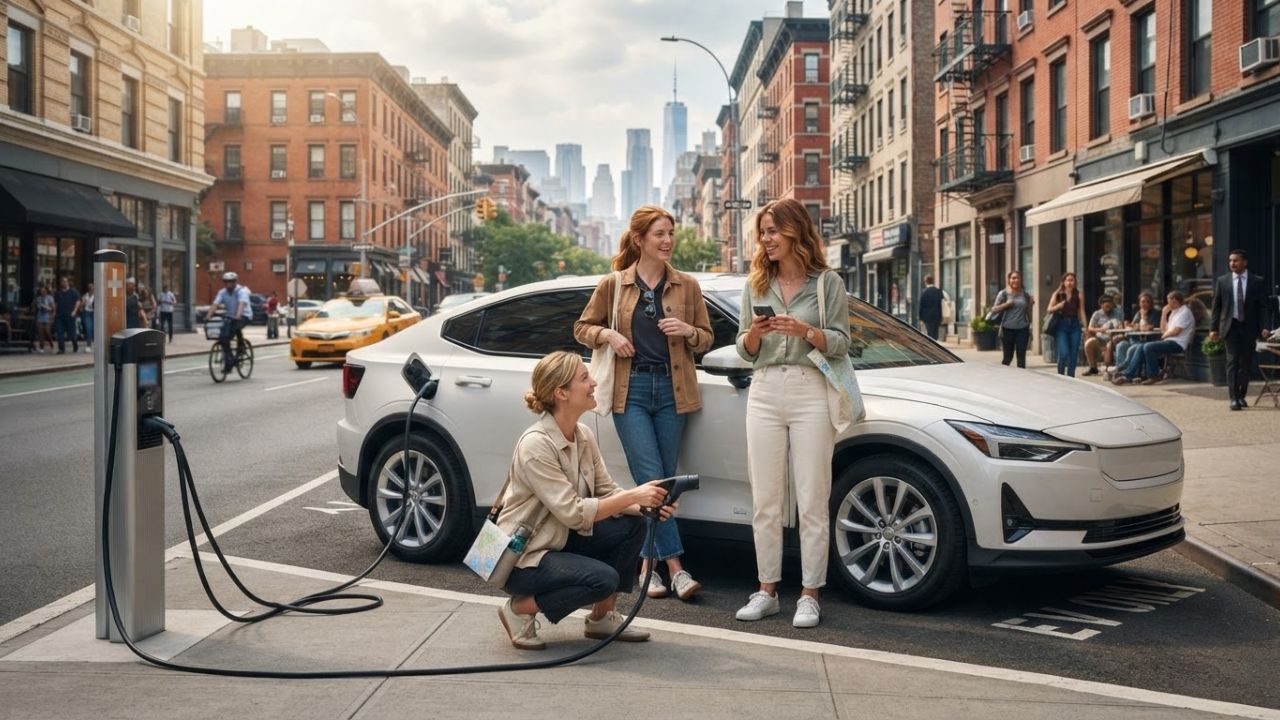
Image generated by AI
A major transition in the transport sector has been established as New York City, San Francisco, Los Angeles, and other U.S. cities expand their public electric vehicle charging networks. Driven by municipal partnerships and large-scale state grants, this infrastructure rollout simplifies road travel and supports the growth of sustainable tourism across the country.
The Expansion of Urban EV Infrastructure
The rapid growth of public electric vehicle charging infrastructure is reshaping urban transportation networks across the United States. As electric vehicle adoption rises, travelers increasingly expect cities to provide reliable charging stations. Historically, electric vehicle road trips required meticulous planning and specialized detours to secure power. In 2026, the transition toward integrated curbside chargers and municipal fast-charging hubs is making electric travel more practical.
To support this demand, municipal authorities are deploying networks integrated into public right-of-ways and municipal parking facilities. This approach places chargers where visitors already park, shop, and explore, transforming charging from a separate service into a standard component of the visitor experience. For tourism destinations, this infrastructure is essential for attracting eco-conscious travelers and supporting electric rental vehicle use.
The expansion of these networks is supported by new city partnerships and federal funding programs, which aim to address charging access in dense urban areas where home charging is unavailable. By improving charger availability and reliability, these municipal initiatives help reduce range anxiety, allowing travelers to explore urban and regional destinations with greater confidence.
New York State's Clean Energy Grants and Funding Programs
New York State is leading one of the nation’s most comprehensive clean transit investment campaigns under the leadership of Governor Kathy Hochul, committing nearly $3 billion to zero-emission vehicles. The New York State Energy Research and Development Authority (NYSERDA) launched the $35 million Charge Ready NY — Large-Scale Public Sector Projects program. The initiative provides funding for state agencies and local governments to install publicly accessible Level 2 chargers on public land.
Selected projects can receive grants ranging from $1 million to $15 million, covering up to 80% of installation costs. This program aims to expand the state's network of over 21,000 chargers, supporting a growing electric vehicle fleet that exceeded 331,000 vehicles as of July 2026. Proposals must be submitted by October 20, 2026. Additionally, New York's Charge Ready NY 2.0 initiative received an additional $15 million allocation in February 2026, offering public and private organizations grants of $3,000 to $4,000 per charging point to install Level 2 chargers at workplaces, multi-family buildings, and hotels.
NYC's Municipal Network: Flushing, Airport Hubs, and Beyond
Within New York City, the Department of Transportation is advancing a visible expansion of the public charging network. In March 2026, the city opened eight new fast chargers at a municipal parking lot in downtown Flushing, Queens, featuring 360kW high-speed units. The installation is part of a program to deploy 66 EVolve NY fast chargers across ten municipal parking facilities in Queens, Brooklyn, and the Bronx.
The city currently operates 92 curbside Level 2 chargers, while the municipal fleet utilizes over 2,500 charging ports. As of January 2026, over 79,000 electric vehicles were registered in New York City. The geographical spread of these charging options is strategically important for tourism, as visitors travel beyond Manhattan to explore outer boroughs, airport corridors like LaGuardia, and popular beaches. In 2026, New York City established a partnership with Los Angeles County to exchange data on charger reliability and municipal permitting.
West Coast and Southern Initiatives: San Francisco, LA, and Dallas
On the West Coast, San Francisco has established permanent curbside electric vehicle charging policies. In May 2026, the city enacted legislation creating a streamlined permitting pathway for chargers in the public right-of-way, supported by a $150,000 allocation from the San Francisco Transportation Authority. The program targets a goal of installing 100 curbside chargers by 2030, addressing the needs of visitors and residents who do not have access to private garages.
San Francisco is also seeing proposals for high-capacity projects, including a planned 124-stall Tesla V4 Supercharger hub near Highway 101. The location near major transport corridors and San Francisco International Airport highlights how high-speed charging hubs are becoming integrated into key travel routes. In Southern California, Los Angeles is participating in projects focused on expanding equitable charging access, supported by a $3 million federal award.
Southern cities are also expanding their networks, with Dallas participating in multi-city programs focused on curbside and right-of-way charging. Additionally, autonomous mobility is driving infrastructure investment, with Uber announcing plans in February 2026 to spend over $100 million on robotaxi charging stations across Los Angeles, Dallas, and the San Francisco Bay Area. Other expanding markets include Phoenix, Sacramento, Boston, and Philadelphia.
Multi-City Clean Mobility Collaborations
The nationwide expansion of public charging networks is supported by collaborative programs that share technology and planning solutions. Cities like Baltimore, Portland, Chattanooga, and Washington, D.C., are participating in joint initiatives to test curbside and solar-powered charging designs. These programs help municipalities resolve common challenges regarding permitting, grid integration, and equipment maintenance.
In Florida, charging providers are expanding connector availability in major tourist hubs such as Orlando and Miami, while Midwest cities like Chicago and Detroit are increasing access to fast chargers. The coordinated deployment of these charging points ensures that electric vehicle users can plan regional road trips across state lines with minimal disruption.
By building an interconnected charging system, these cities help establish a more sustainable travel network. As municipal, state, and private investments continue to expand, travelers can choose low-emission transport options with the confidence that public charging is readily available throughout their journeys.
Local Specialist and EV Traveler Tips
To help travelers plan an electric vehicle journey and secure reliable charging, specialists recommend these practical tips:
- Utilize Network Apps: Download official network applications, such as Electrify America, to locate active EVolve NY fast chargers and check real-time availability in Queens and Brooklyn.
- Verify Connector Compatibility: Most municipal fast chargers are vehicle-agnostic, but Tesla drivers should carry an approved adapter when accessing public networks.
- Plan Around High-Capacity Hubs: Identify strategic high-capacity stations, such as the LaGuardia Airport hub or the Flushing municipal lot, to minimize charging time during transit.
- Confirm Lodging Charging Options: Contact hotels directly before booking to verify the availability of Level 2 chargers supported by the Charge Ready NY 2.0 program.
- Monitor Local Permitting Rules: In cities like San Francisco, be aware of curbside charging parking restrictions to avoid municipal fines while recharging.
Community Support and Sustainable Travel Practices
Choosing electric mobility for travel aligns with environmental conservation and sustainable tourism. By using public charging networks and electric rental vehicles, visitors reduce their carbon footprint and contribute to lower air pollution in the urban communities they visit.
Additionally, travelers can support local economies by spending their charging time at nearby family-owned restaurants, local markets, and independent shops. This practice distributes travel spending directly to the community, helping to sustain local businesses while encouraging municipalities to expand their clean transit infrastructure.
Long-Term Regional Tourism and Connectivity Outlook
The long-term outlook for electric travel remains positive, with public charging infrastructure projected to become a standard component of U.S. tourism. As cities adapt to rising electric vehicle use and implement zero-emission policies, the travel industry must align with clean transportation goals.
The collaboration between state authorities, municipal governments, and technology providers will remain essential in supporting a sustainable, accessible travel network. This ongoing commitment ensures that the nation's major cities and scenic routes remain connected, offering convenient travel experiences for the next generation of global visitors.
Related Travel Guides
Halifax County Tourism Reaches Record $132.8 Million in Visitor Spending
New Caledonia and Mediterranean Escapes Drive Quiet Coastal Travel Trend
US Airlines Summer Airfare Inflation: How Travelers Can Beat Hidden Fees
Disclaimer
This article is for informational and educational purposes only. It does not constitute legal, financial, or professional advice. While we strive to provide accurate and up-to-date information, travel policies, regulations, and conditions change rapidly. Always verify information with official sources before making travel decisions. Nomad Lawyer makes no representations about the accuracy, reliability, completeness, or suitability of the information provided. Readers should consult qualified professionals for advice specific to their circumstances. The views expressed in this article are those of the author and do not necessarily reflect the views of Nomad Lawyer.
Raushan Kumar
Founder & Lead Developer
Full-stack developer with 11+ years of experience and a passionate traveller. Raushan built Nomad Lawyer from the ground up with a vision to create the best travel and law experience on the web.
Learn more about our team →