
US Aviation Crisis 2026: 2,919 Delays and 118 Cancellations Hit Atlanta, Miami, and Orlando Hubs
Massive operational failures and weather disruptions have triggered 2,919 flight delays and 118 cancellations across 26 US airports, with Atlanta Hartsfield-Jackson recording the highest volume of disruptions.

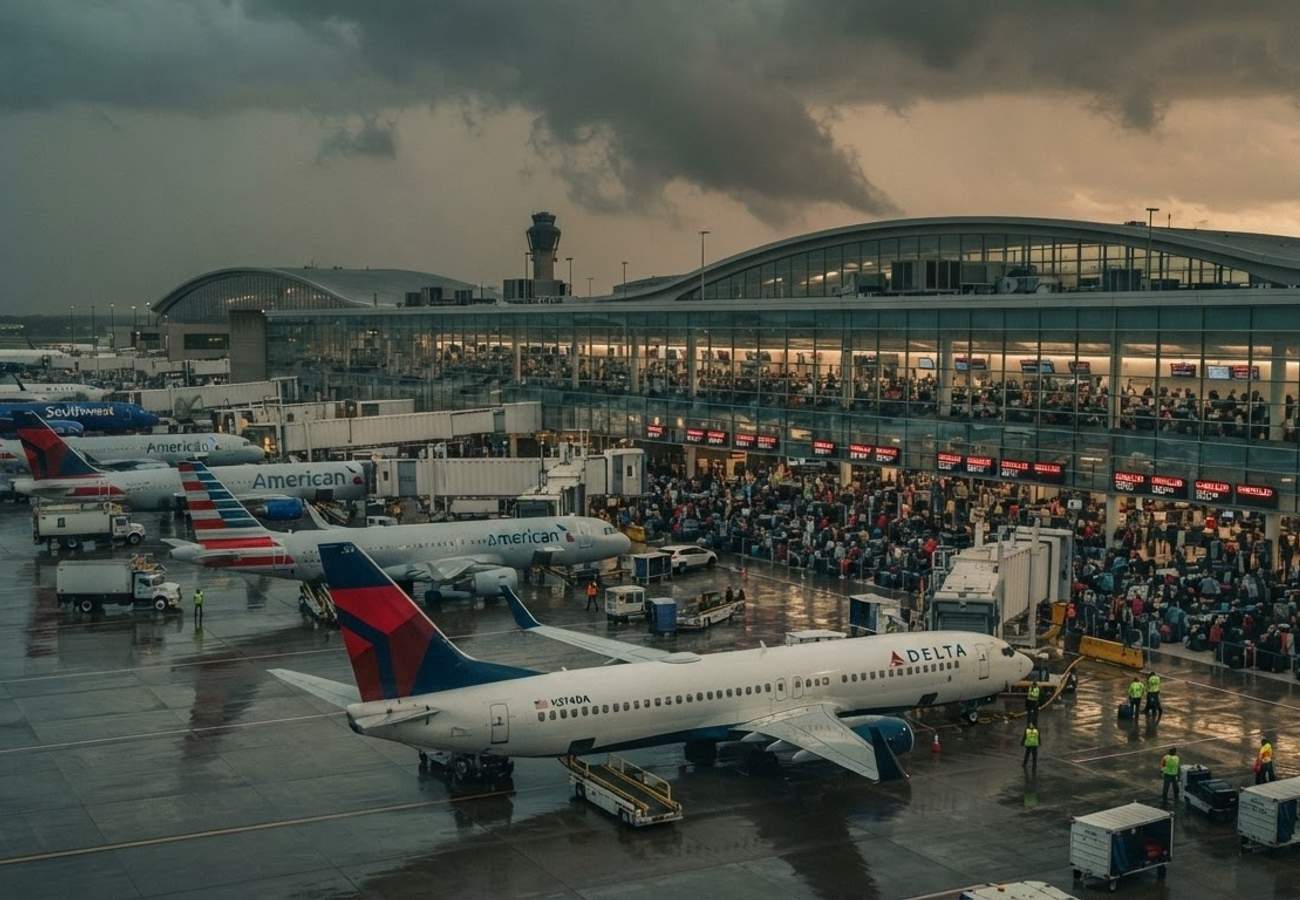
Image generated by AI
[Atlanta, September 13, 2026] — A systemic collapse in operational efficiency and adverse weather has triggered 2,919 flight delays and 118 cancellations across 26 US airports, leaving hundreds of passengers stranded at major hubs. The disruption is concentrated in high-traffic gateways, with Hartsfield-Jackson Atlanta International Airport emerging as the primary epicenter of the chaos.
The current aviation crisis is the result of a volatile combination of runway obstructions, airport congestion, and strict traffic management measures mandated by weather conditions. While airport authorities and carriers are attempting to stabilize schedules, the ripple effect has extended from the Northeast corridor to the Pacific coast and into US territories.
The Catalyst for Systemic Failure
The disruptions are not tied to a single event but a series of localized operational failures that compounded into a national issue. In Florida, the Federal Aviation Administration (FAA) traffic management initiatives were triggered by severe weather, which slashed the number of allowable aircraft movements per hour.
Specifically, Miami International Airport suffered a critical bottleneck when a disabled aircraft obstructed a runway, forcing a ground delay that averaged 86 minutes per flight. Simultaneously, Orlando International Airport saw departure delays climb to an average of 30 minutes as weather-related restrictions limited takeoff slots. In the Northeast, Boston Logan International Airport reported ground delays averaging 61 minutes, driven by high passenger volumes and operational bottlenecks.
Who Is Affected: Impacted Hubs and Carriers
The disruption is widespread, but the data reveals specific hotspots where the aviation network has buckled. Atlanta remains the hardest-hit location, largely due to its role as the primary hub for Delta Air Lines.
Primary Airport Disruption Data
| Airport | Delays | Cancellations | Primary Cause |
|---|---|---|---|
| Hartsfield-Jackson Atlanta (ATL) | 502 | 30 | Hub Congestion/Delta Network |
| Chicago O’Hare (ORD) | 239 | 2 | Midwest Gateway Volume |
| Boston Logan (BOS) | 228 | 3 | Operational Factors |
| Dallas/Fort Worth (DFW) | 217 | 4 | Network Ripple Effect |
| Miami International (MIA) | 200 | 2 | Disabled Aircraft on Runway |
| Orlando International (MCO) | 136 | 3 | Weather Traffic Management |
| Denver International (DEN) | 159 | 4 | Operational Restrictions |
| Los Angeles Intl (LAX) | 125 | 8 | General Congestion |
| LaGuardia (LGA) | 113 | 4 | Regional Traffic |
| San Francisco Intl (SFO) | 112 | 3 | General Congestion |
Beyond the mainland, the crisis extended to Alaska and Hawaii. Daniel K. Inouye International Airport in Honolulu recorded 31 delays and 16 cancellations, while Luis Muñoz Marín International Airport in San Juan, Puerto Rico, saw 38 delays and six cancellations.
Airline Performance Metrics
The burden of these disruptions has fallen disproportionately on the "Big Four" US carriers. Delta Air Lines is the most impacted, reflecting the severe conditions at its Atlanta hub.
- Delta Air Lines: 560 delays and 32 cancellations (18% delay rate; 1% cancellation rate).
- American Airlines: 379 delays and 3 cancellations.
- Southwest Airlines: 373 delays and 4 cancellations.
- United Airlines: 279 delays and 9 cancellations.
- Alaska Airlines: 63 delays and 25 cancellations.
- Tradewind: 0 delays but 25 cancellations (the highest cancellation percentage at 17%).
Regional operators including SkyWest (170 delays), Frontier (96 delays), and Republic Airways (87 delays) also reported significant schedule slippage.
What This Means for Travelers
For passengers currently booking or traveling, these statistics translate into immediate logistical hurdles. The "ripple effect" mentioned by officials means that even if your departure airport is operating normally, your aircraft or crew may be stuck in Atlanta or Miami, leading to "phantom delays" where flights are pushed back repeatedly without a clear cause.
Immediate Passenger Impact:
- Missed Connections: With Atlanta and Chicago seeing hundreds of delays, connecting passengers are at high risk. A 60-minute delay in ATL can result in a missed international connection in BOS or JFK.
- Increased Airport Dwell Time: Travelers at Miami International Airport and Orlando International Airport should expect significantly longer lines at security and boarding gates due to the backlog of displaced passengers.
- Rebooking Friction: With 118 cancellations nationwide, airline customer service channels are likely overwhelmed. Passengers should prioritize mobile app rebooking over phone queues.
Path to Recovery and Next Steps
Aviation officials are currently working to clear the backlog of aircraft and passengers. The primary goal is the restoration of "slot integrity," ensuring that aircraft can depart and arrive in the sequence required to prevent further runway congestion.
Recovery timelines depend heavily on the weather patterns in Florida and the Northeast. Once the FAA lifts traffic management initiatives (TMIs), the flow of aircraft should normalize, though the "crew timing out" phenomenon may cause secondary delays over the next 24 to 48 hours. This occurs when pilots and flight attendants reach their legal flying hour limits while waiting on the tarmac, forcing airlines to find replacement crews.
FAQ: US Flight Disruptions 2026
What should I do if my flight is cancelled due to these disruptions? Immediately use your airline's mobile app to request a rebooking. Document all unplanned expenses, such as hotels and meals, and keep copies of your original and new itineraries to support future reimbursement claims.
Why is Atlanta seeing so many more delays than other cities? Atlanta is one of the world's busiest airports and the central hub for Delta. When a major hub experiences operational failure, it creates a bottleneck that affects flights across the entire national network.
Will I be compensated for a ground delay in Miami or Orlando? Compensation depends on the cause. Weather-related delays are generally considered "outside the airline's control," but disruptions caused by disabled aircraft or operational errors may qualify for vouchers or refunds depending on the carrier's policy.
How can I check if my flight is affected before leaving for the airport? Check the real-time flight status on the official airline website or use a flight tracking service. Do not rely solely on the original itinerary, as schedules are being adjusted in real-time.
Aviation networks are only as strong as their weakest hub, and today, the hubs are buckling.
Related Travel Guides
Disclaimer
This article is for informational and educational purposes only. It does not constitute legal, financial, or professional advice. While we strive to provide accurate and up-to-date information, travel policies, regulations, and conditions change rapidly. Always verify information with official sources before making travel decisions. Nomad Lawyer makes no representations about the accuracy, reliability, completeness, or suitability of the information provided. Readers should consult qualified professionals for advice specific to their circumstances. The views expressed in this article are those of the author and do not necessarily reflect the views of Nomad Lawyer.
Kunal K Choudhary
Co-Founder & Contributor
A passionate traveller and tech enthusiast. Kunal contributes to the vision and growth of Nomad Lawyer, bringing fresh perspectives and driving the community forward.
Learn more about our team →