
Bypassing Travel Chaos: Massive US Flight Cancellations Paralyze DFW, Atlanta, and Chicago as 742 Delays Trigger System-Wide Gridlock: Airline News
As severe travel chaos sweeps the US, leaving 198 flights canceled and 742 delayed, passengers scramble to bypass massive airport disruptions at DFW, Atlanta, and O'Hare.

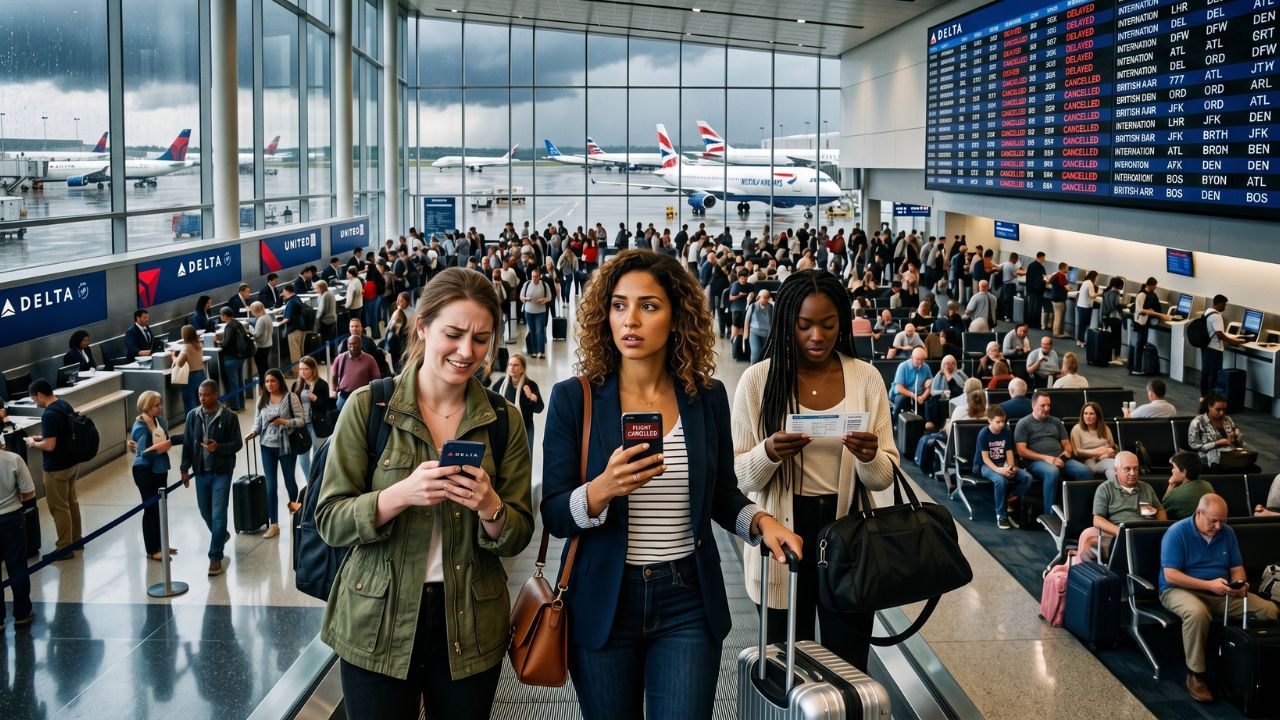
Image generated by AI
In a massive system-wide operational collapse that instantly triggered paralyzing travel chaos across North America, the United States aviation network is suffering catastrophic gridlock today. Reported on Saturday, June 20, 2026, as stranded corporate executives and families frantically monitor the latest airline news for an escape from sudden flight cancellations and agonizing terminal overcrowding, massive legacy hubs are buckling under extreme operational pressure. With a staggering 198 flight cancellations and 742 delays devastating flight boards nationwide, airports including Dallas-Fort Worth (DFW), Atlanta (ATL), Chicago O’Hare (ORD), Denver (DEN), Boston Logan (BOS), and Toronto Pearson (YYZ) are experiencing severe airport disruptions. For passengers attempting to navigate this massive logistical nightmare, understanding the exact carrier breakdowns is crucial to bypassing the worst of today's breaking aviation updates.
By introducing direct passenger coordination and dynamic scheduling backups, the regional aviation hubs target growing passenger demand across vital commerce sectors. The choice to coordinate flight departures in phases helps to manage gate capacity, supporting the country's broader regional transportation network.
Context: Eradicating the Domestic Hub Nightmare
For the modern traveler, flying through the US during a massive synchronized disruption event is the absolute ultimate exposure to structural transit failure and catastrophic delays.
Historically, the hub-and-spoke model utilized by legacy carriers like American Airlines and Delta means that a localized issue instantly cascades into a national crisis. Today’s 196 to 198 recorded cancellations and nearly 700 delays are destroying highly scheduled itineraries. When a mega-hub like Dallas-Fort Worth or Atlanta suffers severe airport disruptions—whether from adverse summer weather, Air Traffic Control (ATC) flow restrictions, or crew timeouts—aircraft rotations are immediately severed. This forces inbound aircraft into holding patterns, strands connecting passengers, and triggers rolling delays that cripple cross-border connections into Toronto, London, and Asia. To bypass this massive logistical gridlock, passengers must execute extreme situational awareness, identifying exactly which airlines are failing at which specific airports.
To view live flight schedules, verify the active recovery of grounded aircraft, or to track potential route restorations prior to heading to the airport, travelers must consult official aviation directories. For direct updates regarding how this massive operational meltdown might impact your rebooking following the flight cancellations, travelers should aggressively utilize the official digital portals of their respective airlines. To explore live flight tracking and monitor the exact severity of the cascading bottlenecks paralyzing alternative US airspace, passengers can consult the official FlightAware tracking service.
Section-Wise Breakdown: The Epicenter of the Gridlock
Dallas-Fort Worth (DFW): The Ground Zero
DFW has emerged as the absolute epicenter of today's travel chaos, reporting an incredibly severe 52 flight cancellations and 45 delays. American Airlines, which utilizes DFW as its primary fortress hub, is taking massive casualties, severely impacting thousands of connecting passengers. This level of terminal gridlock makes bypassing DFW an absolute necessity for anyone attempting to navigate the southern US corridor today.
Hartsfield-Jackson Atlanta (ATL): The Delta Choke Point
The world’s busiest airport is actively faltering under the pressure of 21 cancellations and 32 delays. Delta Air Lines and its regional partner Endeavor Air account for the vast majority of these disruptions. Because Atlanta is the central artery for transit into the Southeast, even this "moderate" percentage of cancellations equates to massive airport disruptions and severe terminal overcrowding.
Chicago O’Hare (ORD) and Denver (DEN): The Delay Traps
While DFW and Atlanta suffered hard cancellations, Chicago O’Hare and Denver have devolved into massive "delay traps." Chicago reported 44 delays (heavily impacting SkyWest), while Denver suffered 43 delays (led by Southwest Airlines). In these environments, passengers are not outright cancelled, but rather trapped in the terminal for hours, destroying onward connections and obliterating corporate schedules.
Toronto Pearson (YYZ) and Boston Logan (BOS): The Border Bottlenecks
Toronto Pearson recorded 13 cancellations, driven largely by Air Canada and Air Canada Rouge, heavily severing cross-border connectivity into the US. Boston Logan faced 29 delays and 6 cancellations, driven primarily by JetBlue, highlighting how the Northeast corridor is also suffering from the rippling effects of the national operational collapse.
Technical Roster: Official US Airport Disruption Matrices
To ensure absolute factual accuracy regarding the exact airline performance, delay percentages, and cancellation metrics defining this massive aviation lockdown, the following matrices detail the strictly verified data:
Airline Performance at Hartsfield-Jackson Atlanta International Airport
| Airline | Cancelled (#) | Cancelled (%) | Delayed (#) | Delayed (%) |
|---|---|---|---|---|
| Delta Air Lines | 15 | 1% | 16 | 1% |
| Endeavor Air (DAL) | 2 | 1% | 0 | 0% |
| Frontier | 2 | 1% | 4 | 2% |
| PSA Airlines (AAL) | 1 | 5% | 1 | 5% |
| SkyWest | 0 | 0% | 5 | 17% |
| Southwest | 0 | 0% | 3 | 4% |
| Virgin Atlantic | 0 | 0% | 1 | 25% |
| American Airlines | 0 | 0% | 1 | 2% |
| WestJet | 0 | 0% | 1 | 12% |
Airline Performance at Toronto Pearson International Airport
| Airline | Cancelled (#) | Cancelled (%) | Delayed (#) | Delayed (%) |
|---|---|---|---|---|
| Air Canada | 6 | 1% | 1 | 0% |
| Air Canada Rouge (ACA) | 5 | 5% | 1 | 1% |
| British Airways | 2 | 50% | 0 | 0% |
| Air China | 0 | 0% | 1 | 100% |
| China Eastern | 0 | 0% | 1 | 100% |
| Cathay Pacific | 0 | 0% | 2 | 40% |
| China Southern Airlines | 0 | 0% | 1 | 50% |
| Flair Airlines | 0 | 0% | 2 | 5% |
| Jazz (ACA) | 0 | 0% | 2 | 1% |
| Korean Air | 0 | 0% | 1 | 25% |
| Air Transat | 0 | 0% | 1 | 2% |
| American Airlines | 0 | 0% | 1 | 7% |
Airline Performance at Dallas-Fort Worth International Airport
| Airline | Cancelled (#) | Cancelled (%) | Delayed (#) | Delayed (%) |
|---|---|---|---|---|
| American Airlines | 30 | 2% | 32 | 2% |
| PSA Airlines (AAL) | 11 | 9% | 0 | 0% |
| Envoy Air (AAL) | 6 | 1% | 1 | 0% |
| Frontier | 3 | 4% | 1 | 1% |
| SkyWest | 2 | 1% | 3 | 2% |
| Cathay Pacific | 0 | 0% | 1 | 33% |
| Delta Air Lines | 0 | 0% | 1 | 1% |
| Korean Air | 0 | 0% | 1 | 33% |
| Qantas | 0 | 0% | 1 | 33% |
| Qatar Airways | 0 | 0% | 1 | 25% |
| Sun Country Airlines | 0 | 0% | 1 | 8% |
| Contour Airlines | 0 | 0% | 2 | 25% |
Airline Performance at Boston Logan International Airport
| Airline | Cancelled (#) | Cancelled (%) | Delayed (#) | Delayed (%) |
|---|---|---|---|---|
| JetBlue | 2 | 0% | 10 | 3% |
| Virgin Atlantic | 2 | 50% | 1 | 25% |
| Delta Air Lines | 1 | 0% | 6 | 3% |
| American Airlines | 1 | 1% | 0 | 0% |
| Aer Lingus | 0 | 0% | 1 | 12% |
| Korean Air | 0 | 0% | 2 | 100% |
| Cape Air | 0 | 0% | 3 | 2% |
| Qatar Airways | 0 | 0% | 1 | 50% |
| Southwest | 0 | 0% | 3 | 6% |
| Allegiant Air | 0 | 0% | 2 | 33% |
Airline Performance at Chicago O’Hare International Airport
| Airline | Cancelled (#) | Cancelled (%) | Delayed (#) | Delayed (%) |
|---|---|---|---|---|
| American Airlines | 6 | 1% | 8 | 1% |
| Jazz (ACA) | 1 | 7% | 0 | 0% |
| SkyWest | 1 | 0% | 24 | 5% |
| United | 1 | 0% | 2 | 0% |
| Alaska Airlines | 0 | 0% | 1 | 4% |
| Cargolux Airlines International | 0 | 0% | 1 | 11% |
| Aer Lingus | 0 | 0% | 1 | 25% |
| Envoy Air (AAL) | 0 | 0% | 1 | 0% |
| Finnair | 0 | 0% | 1 | 50% |
| LOT Polish Airlines | 0 | 0% | 1 | 25% |
| Qatar Airways | 0 | 0% | 1 | 16% |
| Royal Jordanian | 0 | 0% | 2 | 66% |
| Emirates | 0 | 0% | 1 | 20% |
Airline Performance at Denver International Airport
| Airline | Cancelled (#) | Cancelled (%) | Delayed (#) | Delayed (%) |
|---|---|---|---|---|
| Delta Air Lines | 3 | 4% | 0 | 0% |
| Frontier | 3 | 2% | 3 | 2% |
| JetBlue | 2 | 20% | 0 | 0% |
| Southwest | 2 | 0% | 21 | 4% |
| Air Canada | 2 | 16% | 0 | 0% |
| SkyWest | 0 | 0% | 15 | 3% |
| United | 0 | 0% | 4 | 0% |
Data accurately reflects the verified cancellation volumes, delay percentages, and specific carrier breakdowns tracking the June 20, 2026, US travel chaos.
Industry Analysis: The Domino Effect of Hub Fragility
Aviation analysts monitoring the intensely regulated North American transit market note that today’s 198 cancellations and 742 delays expose the extreme fragility of highly concentrated airline schedules during peak summer travel.
Analysts emphasize that modern airlines operate with virtually zero operational slack. When adverse weather (thunderstorms, high winds) or Air Traffic Control (ATC) restrictions hit a mega-hub like Dallas-Fort Worth, the system collapses. Aircraft cannot rotate to their next city, and highly regulated flight crews instantly "time out" of their legal duty limits. The devastating reality is that a thunderstorm in Texas destroys a connecting flight in Boston. Passengers are actively rejecting airlines that fail to provide operational resilience. The massive economic fallout from missed corporate meetings, abandoned cruise departures, and stranded tourists proves that passengers must operate with extreme logistical agility, anticipating system failures before they arrive at the terminal.
Actionable Advice for Stranded Travelers
Because a national system collapse fundamentally alters the logistics of recovering an itinerary, passengers caught in today's US aviation disruption must execute this strategic recovery checklist immediately:
- Exploit Digital Rebooking Before the Herd: During mass travel chaos, physical customer service desks at DFW or Atlanta are immediately overwhelmed with thousands of desperate passengers. You must aggressively utilize your airline's mobile application to execute rebookings. Securing the last remaining seat on a later departure requires digital speed, completely bypassing the massive physical lines in the terminal.
- Demand Your Legal Refund Rights: If your flight is outright cancelled by the airline (as seen heavily with American Airlines at DFW today), immediately review your carrier's refund policy. Do not accept a voucher if you are legally entitled to a cash refund, and ensure you keep all receipts for forced overnight accommodations or emergency ground transport.
- Assume Your Checked Baggage is Lost: During rolling delays and cascading cancellations, baggage systems fail. If you are rebooked onto a different itinerary, operate under the assumption that your checked luggage will not arrive with you. Ensure all critical medications, electronics, and essential items are physically secured in your carry-on before entering the terminal.
FAQ: June 20, 2026 US Flight Cancellations
Which US airport recorded the highest number of cancellations today?
Dallas-Fort Worth International Airport (DFW) suffered the most severe airport disruptions, recording 52 outright flight cancellations.
How many flights were delayed nationwide during this event?
A staggering 697 to 742 flights operating within, into, or out of the United States were severely delayed, trapping passengers in rolling terminal gridlock.
Why were so many flights cancelled across the US today?
The massive travel chaos was triggered by a compounding combination of adverse summer weather, restrictive Air Traffic Control (ATC) flow limits, and cascading aircraft/crew rotation failures across major interconnected hubs.
The Reality of Systemic Airspace Collapse
The massive, highly disruptive wave of flight cancellations across DFW, Atlanta, Chicago, and Denver proves definitively that the US aviation network remains terrifyingly vulnerable to sudden operational collapse. By triggering rolling delays that severed connections to London, Doha, and Seoul, this gridlock successfully guaranteed that thousands of passengers would suffer agonizing delays and ruined itineraries. Yet, as passengers frantically attempt to rebook their flights during this peak summer travel season, they must accept a critical new reality: surviving the massive disruptions of modern aviation demands absolute logistical agility. Navigating a severely degraded airspace requires a complete refusal to rely on overwhelmed physical customer service desks, and the tactical discipline to digitally reroute itineraries the moment a mega-hub begins to fail.
Key Takeaways
- Massive System Collapse: Over 198 flights were cancelled and 742 delayed across North America on June 20, 2026, causing severe, system-wide travel chaos.
- DFW Hit Hardest: Dallas-Fort Worth emerged as the absolute epicenter of the gridlock, suffering 52 cancellations heavily impacting American Airlines.
- The Delta Choke Point: Atlanta (ATL) recorded 21 cancellations and 32 delays, severely disrupting Delta's connecting passenger flows into the Southeast.
- Chicago and Denver Delay Traps: While avoiding massive cancellations, ORD and DEN suffered 44 and 43 severe delays respectively, trapping passengers in prolonged terminal gridlock.
- Cross-Border Severance: Toronto Pearson (YYZ) recorded 13 cancellations, primarily driven by Air Canada, severely impacting interconnectivity with the US network.
Related Travel Guides
Massive Travel Chaos Paralyzes Chicago O'Hare with 1,425 Disruptions
Delta Air Lines Triggers US Domestic Flight Cancellations
US Airport Delays Live Updates on Reddit
Z, and the ATC flow restrictions) are manually sourced directly from official flight tracking data regarding the June 20, 2026 operational environment. Travelers are legally advised to constantly verify active route availability, explicitly audit their specific domestic transit itineraries prior to booking, and maintain extreme adaptability directly via official airline applications prior to navigating airports recovering from massive operational meltdowns.
Disclaimer
This article is for informational and educational purposes only. It does not constitute legal, financial, or professional advice. While we strive to provide accurate and up-to-date information, travel policies, regulations, and conditions change rapidly. Always verify information with official sources before making travel decisions. Nomad Lawyer makes no representations about the accuracy, reliability, completeness, or suitability of the information provided. Readers should consult qualified professionals for advice specific to their circumstances. The views expressed in this article are those of the author and do not necessarily reflect the views of Nomad Lawyer.
Kunal K Choudhary
Co-Founder & Contributor
A passionate traveller and tech enthusiast. Kunal contributes to the vision and growth of Nomad Lawyer, bringing fresh perspectives and driving the community forward.
Learn more about our team →