
United Airlines Expands Denver Flight Training Center to Meet Surge in Pilot Demand 2026
United Airlines completes a massive expansion of its Denver Flight Training Center, scaling to 700,000 square feet to support fleet growth and pilot certification.

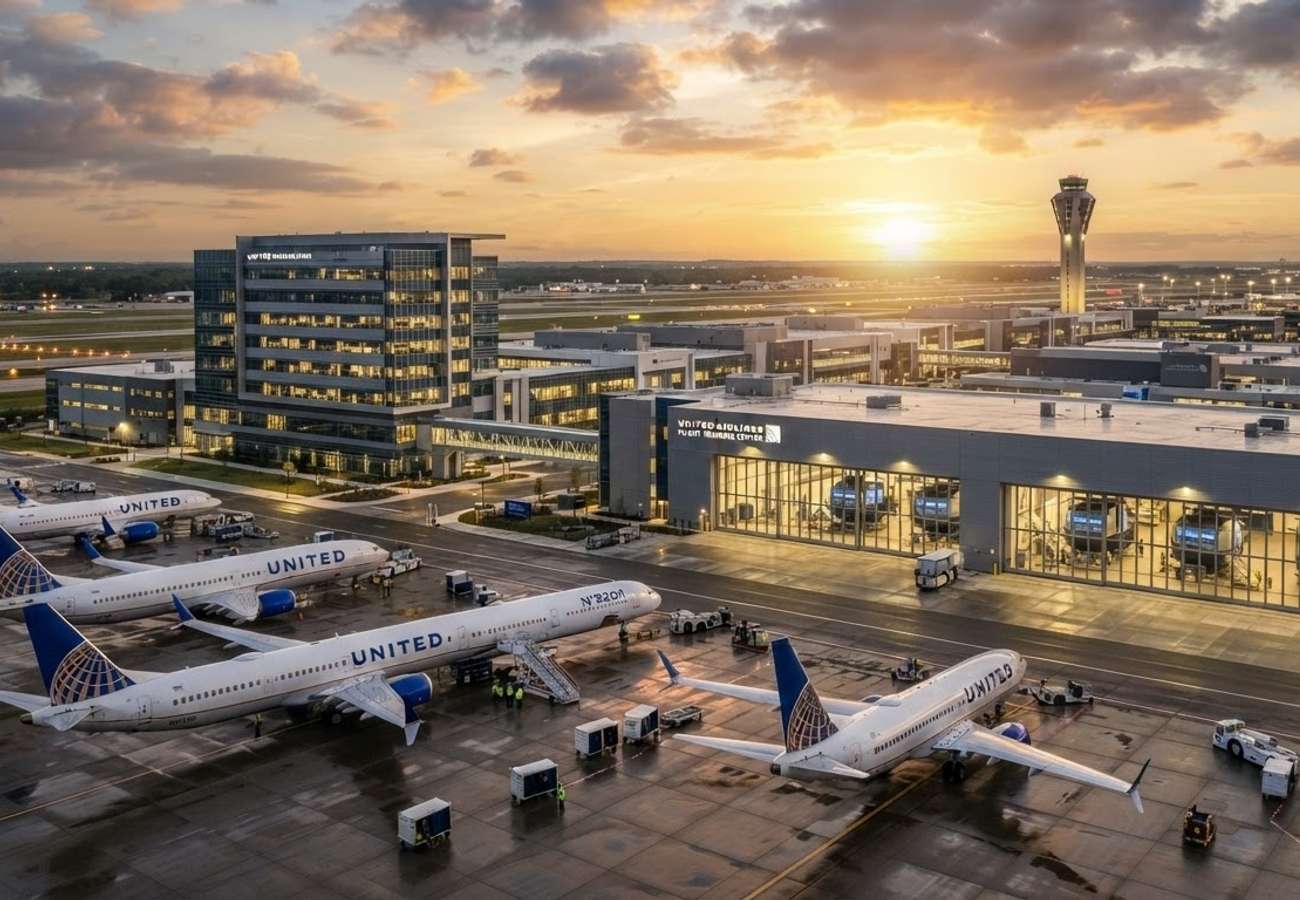
Image generated by AI
United Airlines has completed the first phase of a massive expansion of its Denver Flight Training Center, scaling the facility to nearly 700,000 square feet to secure its pilot pipeline for the next decade.
Scaling the World's Largest Pilot Training Campus
United Airlines has solidified Denver's position as the primary node for its global pilot qualification strategy. The training complex, situated on the former Stapleton International Airport grounds, now encompasses eight buildings. This expansion is a direct response to the carrier's rapid fleet growth and the transition toward newer aircraft models.
The facility currently operates as a high-throughput engine for certification, housing more than 80 flight training devices. This includes over 50 full-motion simulators and several dozen fixed training devices. The scale of the operation allows United to run training cycles 24/7, ensuring that recurrent checks and type ratings do not become bottlenecks for flight operations.
The most recent architectural phase introduced a five-story, 155,000-square-foot addition. This specific structure is engineered to house 12 full-flight simulator bays, supported by dedicated briefing and debriefing zones. These devices are specifically calibrated for the Boeing 737 Max and Airbus A321neo, the two pillars of United's current narrowbody fleet renewal.
Infrastructure Specifications and Capacity
The Denver campus functions as the capstone of a multi-stage pipeline that begins at the United Aviate Academy in Goodyear, Arizona. Once pilots complete their initial training in Arizona, they migrate to the Denver facility for advanced mainline certification.
| Facility Component | Specification/Capacity | Primary Purpose |
|---|---|---|
| Total Campus Area | ~700,000 Square Feet | Consolidated Pilot Training |
| Total Training Devices | 80+ Devices | Certification & Recurrent Training |
| Full-Motion Simulators | 50+ Units | Type Ratings & Scenario Training |
| Newest Building Size | 155,000 Square Feet | 12 Simulator Bays & Briefing Rooms |
| On-site Workforce | ~1,500 Employees | Instruction, Tech Support, Design |
| Key Aircraft Focus | B737 Max / A321neo | Narrowbody Fleet Transition |
Future Expansion: The DIA Corporate Campus
Recognizing that the Stapleton campus is approaching its practical capacity limits, United is advancing a second major project closer to Denver International Airport (DIA). In June 2026, the Denver City Council approved the rezoning of 114 acres near East 64th Avenue and Yampa Street.
This new planned-unit development is intended to serve as a long-range corporate and training extension. While the Stapleton site remains the active hub, this new site is slated for groundbreaking later this decade, with operational targets set for the turn of the 2030s. This strategic move places the training infrastructure in closer proximity to the airline's fastest-growing hub, reducing transit friction for crews and instructors.
Traveler Logistics Guide: Navigating the Denver Hub
From a ground-level perspective, the massive investment in pilot training directly correlates to increased flight frequencies and aircraft utilization at Denver International Airport (DIA). For passengers, this means more nonstop options but also a more crowded hub environment.
Optimal Connection Strategies:
- Layover Buffers: As United scales its Denver operations, gate congestion can increase. When booking connections through DIA, a minimum layover of 90 minutes is recommended to account for the airport's expansive terminal layout and security checkpoints.
- Digital Transit: Travelers should utilize the United app for real-time gate changes, as the increased fleet utilization often leads to rapid aircraft rotations and gate shifts.
- Ground Transport: With the new corporate developments near East 64th Avenue and Yampa Street, expect increased traffic in the northeastern corridor. If using ride-shares to/from DIA, allow an extra 20 minutes during peak morning and evening commutes.
Regional Connectivity and Economic Impact
The expansion of the training center has transformed Denver into a central node for aviation standardization. By anchoring its training capacity in Colorado, United has created a high-skill employment cluster, adding hundreds of jobs for simulator technicians and curriculum designers.
For the broader tourism and transit ecosystem, this investment signals a long-term commitment to the Denver hub. Increased simulator throughput allows United to bring new aircraft into service faster, which typically leads to the launch of new international and domestic routes. This infrastructure growth supports the surrounding service economy, including hotels and retail sectors in northeast Denver.
The aggressive scaling of simulator capacity suggests United is preparing for a significant leap in flight frequency through 2030.
Related Travel Guides
Disclaimer
This article is for informational and educational purposes only. It does not constitute legal, financial, or professional advice. While we strive to provide accurate and up-to-date information, travel policies, regulations, and conditions change rapidly. Always verify information with official sources before making travel decisions. Nomad Lawyer makes no representations about the accuracy, reliability, completeness, or suitability of the information provided. Readers should consult qualified professionals for advice specific to their circumstances. The views expressed in this article are those of the author and do not necessarily reflect the views of Nomad Lawyer.
Kunal K Choudhary
Co-Founder & Contributor
A passionate traveller and tech enthusiast. Kunal contributes to the vision and growth of Nomad Lawyer, bringing fresh perspectives and driving the community forward.
Learn more about our team →