
United Airlines Expands Denver Flight Training Center to Support Record Pilot Hiring in 2026
United Airlines accelerates the expansion of its Denver Flight Training Center, adding new facilities and simulators to manage a pipeline of 17,000 pilots and aggressive fleet growth.

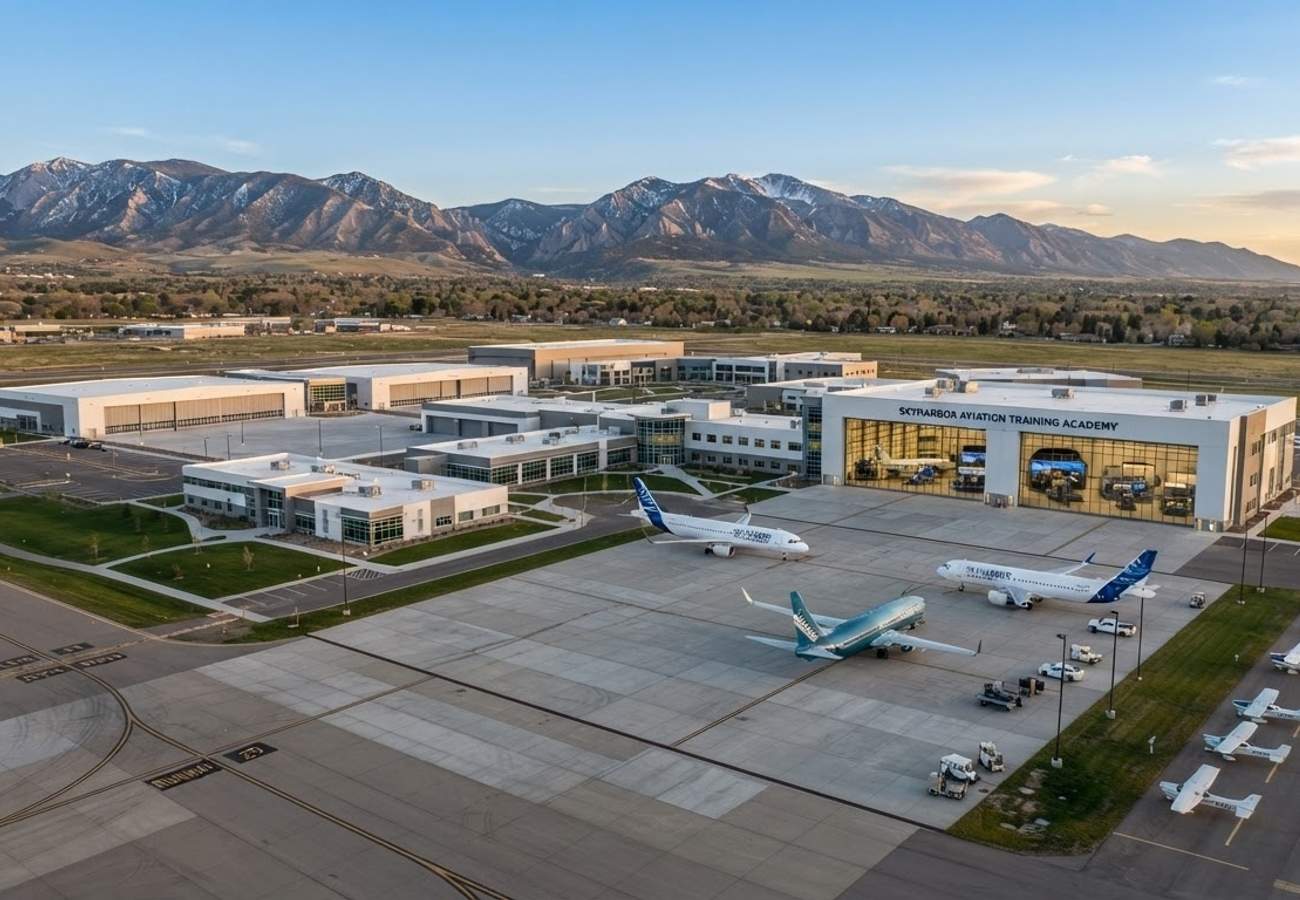
Image generated by AI
United Airlines is aggressively scaling its Denver Flight Training Center to eliminate bottlenecks in its pilot pipeline, investing in massive simulator capacity to support record-breaking hiring and fleet expansion through 2030.
Strategic Expansion of the Denver Aviation Hub
United Airlines has accelerated the development of its Flight Training Center located on the former Stapleton Airport grounds in Denver. The campus has evolved into a global pilot training hub, currently comprising eight buildings and nearly 700,000 square feet of dedicated training space.
Our analysis of the facility's footprint indicates it is roughly equivalent to a dozen football fields. The center serves as the primary engine for United's mainline fleet readiness, housing more than 80 simulator and fixed-base devices. These systems replicate both narrowbody and widebody aircraft from Boeing and Airbus, allowing for 24/7 simultaneous training across multiple aircraft types.
Beyond the simulators, the campus integrates:
- Specialized classrooms and briefing rooms.
- Mock-up cabins for emergency procedure rehearsals.
- Dedicated door and slide trainers.
- Water-ditching equipment for critical safety scenarios.
The most recent expansion phase, completed in 2026, added a new large training building and upgraded existing simulator infrastructure to increase pilot throughput.
Pilot Pipeline and Fleet Integration
The Denver facility is a critical component of a three-tiered training ecosystem designed to sustain one of the world's largest mainline fleets. This system connects the United Aviate Academy in Goodyear, Arizona—which uses a fleet of modern Piper aircraft—to regional flying and finally to the Denver center for mainline jet certification.
Flight tracking and operational data show that United is hiring hundreds of new pilots monthly. The Denver facility is engineered to handle over 1,000 pilots on a typical day, managing the recurrent training and checks for a total workforce of approximately 17,000 pilots.
Future growth projections include:
- 2027: Anticipated commencement of further site build-out.
- 2030: Expected activation of additional training facilities.
By centralizing these operations in Denver, United reduces reliance on third-party or manufacturer-led training, allowing the airline to standardize curricula and implement procedural changes rapidly across the network.
Operational Impact and Regional Infrastructure
The training center functions as a major economic driver in Denver’s Central Park area, employing nearly 1,500 staff members, including instructors and technicians. City zoning and land-use records confirm that United has acquired additional parcels to accommodate the planned 2027-2030 expansion.
While Denver anchors pilot training, United maintains a distributed network for other crew roles. Flight attendant initial training remains centralized in Houston, utilizing dedicated water training pools and mock cabins.
Passenger Rights & Advisory: The Impact of Pilot Training on Travel
For the passenger, the expansion of training facilities is a direct response to the industry-wide pilot shortage and the risk of "crew-related" cancellations. Our analysis of aviation policy suggests that increased simulator capacity directly correlates to higher operational reliability.
What this means for affected passengers:
- Reduced Cancellations: When airlines lack simulator slots, pilots cannot complete mandatory recurrent training, leading to "illegal" crews and last-minute flight cancellations. This expansion mitigates that risk.
- Compensation Rights: If a flight is cancelled due to a lack of qualified crew (a controllable event), passengers are entitled to compensation under EU261/2004 (for flights departing the EU) or updated US DOT guidelines.
- Rebooking Priority: In the event of crew-related disruptions, passengers should insist on the fastest available re-routing, as the airline is responsible for the staffing failure.
Industry Analyst View
United's move toward a vertically integrated training model is a strategic hedge against the volatility of the aviation labor market. By owning the infrastructure—from the Piper trainers in Arizona to the full-motion simulators in Denver—United minimizes the "training bottleneck" that often hampers fleet growth. This investment suggests that United expects the demand for highly trained cockpit crews to remain elevated well into the next decade, coinciding with their aggressive aircraft orders.
The unseen infrastructure of simulator bays and emergency drills is now as critical to airline profitability as the aircraft themselves.
Related Travel Guides
Disclaimer
This article is for informational and educational purposes only. It does not constitute legal, financial, or professional advice. While we strive to provide accurate and up-to-date information, travel policies, regulations, and conditions change rapidly. Always verify information with official sources before making travel decisions. Nomad Lawyer makes no representations about the accuracy, reliability, completeness, or suitability of the information provided. Readers should consult qualified professionals for advice specific to their circumstances. The views expressed in this article are those of the author and do not necessarily reflect the views of Nomad Lawyer.
Preeti Gunjan
Contributor & Community Manager
A passionate traveller and community builder. Preeti helps grow the Nomad Lawyer community, fostering engagement and bringing the reader experience to life.
Learn more about our team →