
United Airlines Flight UAL1870 Diverts to Grand Junction Regional Airport Due to Severe Mountain Weather 2026
United Airlines flight UAL1870 was forced to divert to Grand Junction Regional Airport on August 4, 2026, avoiding severe convective atmospheric activity and mountain wave turbulence en route to Denver.

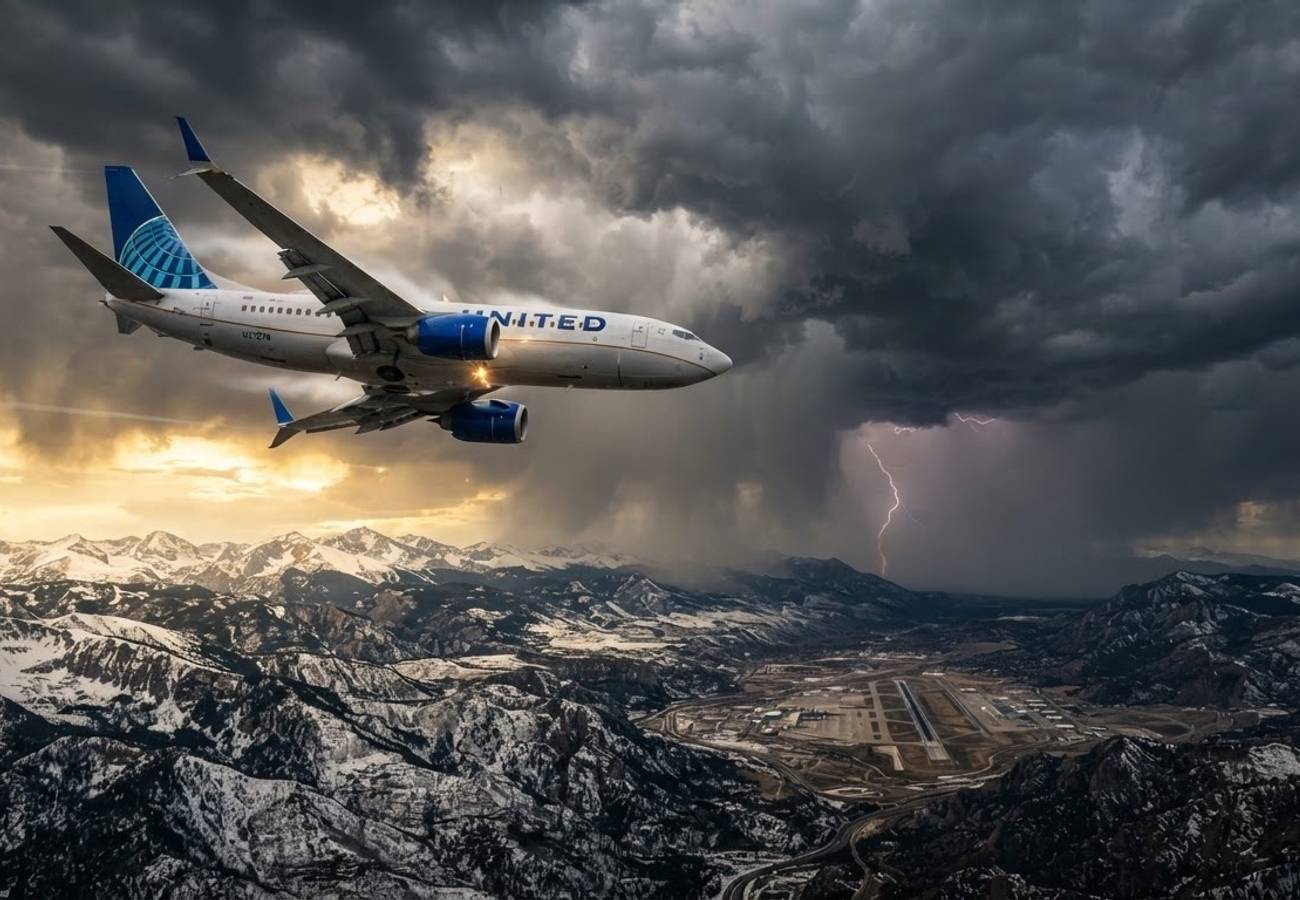
Image generated by AI
Flight UAL1870, bound for Denver, executed an emergency diversion to Grand Junction Regional Airport at 16:45 EST on August 4, 2026. The decision was triggered by severe convective atmospheric activity and mountain wave turbulence across the Rocky Mountains.
Operational Breakdown of UAL1870 Diversion
United Airlines flight UAL1870 was operating a domestic route to Denver International Airport when the flight deck identified significant safety risks associated with localized weather cells. To avoid intense updrafts, unpredictable wind shear, and reduced visibility typical of high-altitude summer storms, pilots rerouted the aircraft to Grand Junction, Colorado.
The diversion occurred during the late afternoon, a period when mountain heat frequently fuels atmospheric instability. Our analysis of the flight path indicates that the crew prioritized passenger security over the scheduled arrival time to avoid hazardous conditions over the Continental Divide.
Flight and Airport Impact Summary
- Flight Number: UAL1870
- Scheduled Destination: Denver International Airport (DEN)
- Diversion Point: Grand Junction Regional Airport (GJT)
- Diversion Time: 16:45 EST
- Primary Cause: Severe convective summer weather and mountain wave turbulence
- Secondary Factors: Air Traffic Control (ATC) airspace holds and fuel safety margins
Tactical Analysis of the Diversion Site
Grand Junction Regional Airport was selected as the primary alternate for several strategic reasons. Unlike many smaller mountain airstrips, GJT provides a lower elevation relative to the surrounding peaks, offering greater atmospheric stability and clearer approach corridors for Boeing aircraft.
Furthermore, the presence of established United Airlines ground personnel, fueling facilities, and passenger service teams at Grand Junction minimized the operational friction of the diversion. This infrastructure allowed the aircraft to touch down and transition to ground support without the complications typically associated with unplanned landings at non-hub airports.
Passenger Rights & Advisory
For passengers aboard UAL1870, a diversion due to weather is generally classified as an "extraordinary circumstance." This means that while the airline is not typically liable for monetary compensation (such as those found under EU261 for European flights), they still maintain a "Duty of Care."
For the affected passenger, this means:
- Communication: The airline must provide timely updates regarding the new departure time from Grand Junction or alternative transportation to Denver.
- Duty of Care: If the diversion results in an overnight stay, United Airlines is generally expected to provide or reimburse reasonable hotel accommodations and meals.
- Rebooking: Passengers are entitled to be rebooked on the next available flight to their final destination at no additional cost.
- Baggage Access: Depending on the aircraft configuration and airport logistics, passengers may be granted access to checked luggage if the delay is prolonged.
Our analysis of U.S. Department of Transportation (DOT) guidelines suggests that because this was a safety-based diversion due to weather, passengers should focus on securing "Duty of Care" vouchers rather than seeking cash compensation for the delay.
Industry Analyst Perspective
The diversion of UAL1870 underscores the persistent challenges of high-altitude aviation in the American West. The "mountain wave" effect—where air flows over a mountain range and creates violent oscillations on the leeward side—can render standard navigational corridors unsafe in minutes.
The seamless coordination between the UAL1870 flight deck and regional ATC demonstrates the effectiveness of current ground delay programs. By diverting to a pre-filed alternate like Grand Junction, the airline prevented the aircraft from entering a hazardous holding pattern near Denver, which was already experiencing airspace congestion.
Safety protocols in 2026 continue to prioritize tactical rerouting over schedule adherence, reflecting a broader industry shift toward risk-averse operational management in volatile weather zones.
Related Travel Guides
Disclaimer
This article is for informational and educational purposes only. It does not constitute legal, financial, or professional advice. While we strive to provide accurate and up-to-date information, travel policies, regulations, and conditions change rapidly. Always verify information with official sources before making travel decisions. Nomad Lawyer makes no representations about the accuracy, reliability, completeness, or suitability of the information provided. Readers should consult qualified professionals for advice specific to their circumstances. The views expressed in this article are those of the author and do not necessarily reflect the views of Nomad Lawyer.
Raushan Kumar
Founder & Lead Developer
Full-stack developer with 11+ years of experience and a passionate traveller. Raushan built Nomad Lawyer from the ground up with a vision to create the best travel and law experience on the web.
Learn more about our team →