
Japan Airlines President Cuts Pay 30% After Cabin Crew Alcohol Violation and Cover-Up Investigation
Japan Airlines President Mitsuko Tottori accepts 30% pay reduction following a preflight alcohol violation by cabin crew and a failed attempt to conceal misconduct during regulatory investigation.

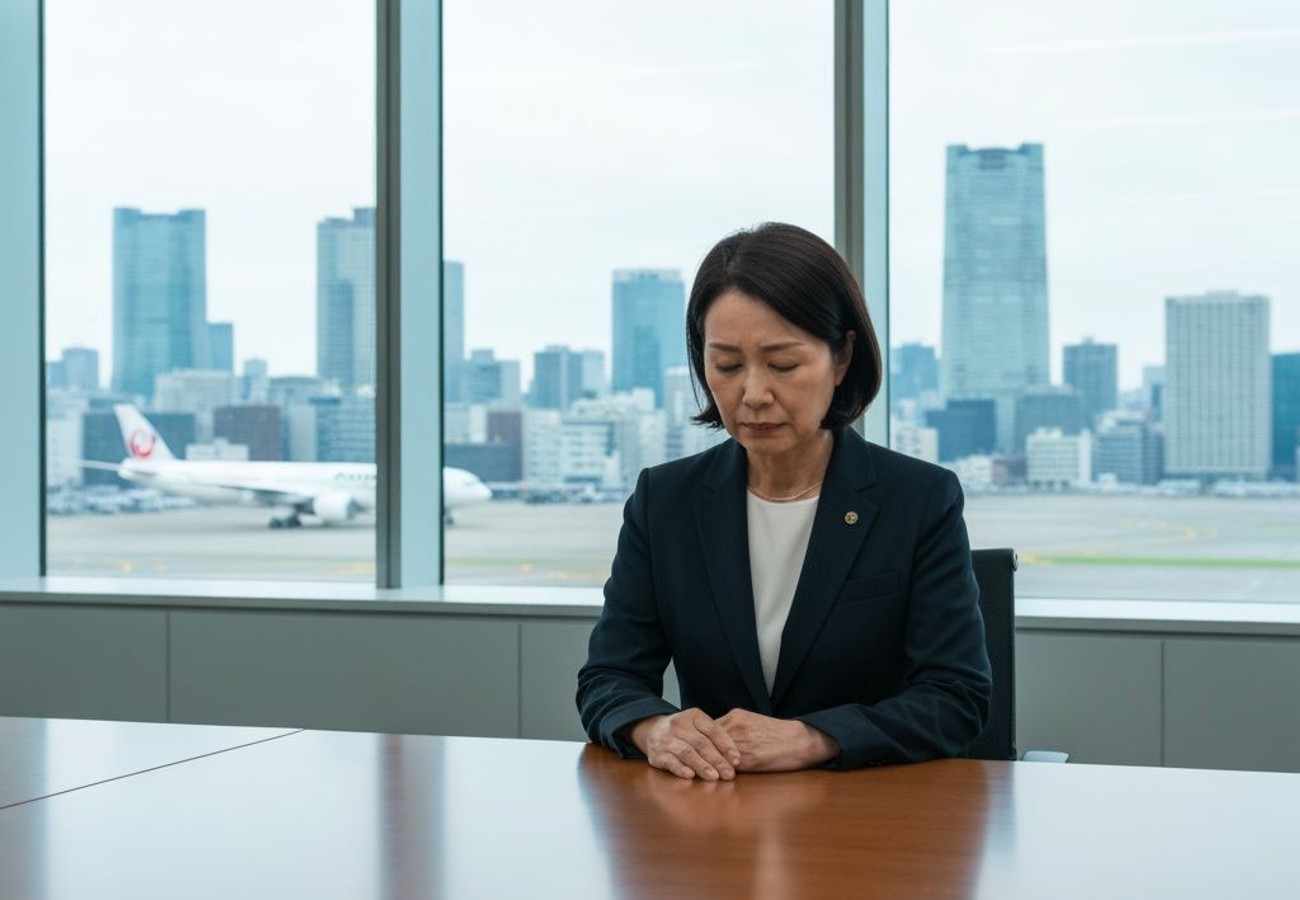
Image generated by AI
When Safety Systems Fail: Inside Japan Airlines' Alcohol Scandal
Japan Airlines (JAL) just handed a stark reminder that no airline—regardless of size or reputation—is immune to safety culture breakdowns. On May 23, 2026, a routine flight from Hiroshima Airport (HIJ) to Tokyo Haneda Airport (HND) became the flashpoint for a crisis that would ultimately cost the airline's president her salary.
The flight was delayed 40 minutes. A cabin attendant was removed from duty. But what made regulators truly furious wasn't just the violation—it was the cover-up that followed.
The Violation That Started It All
Here's where the story gets troubling. A senior cabin attendant in her 50s consumed alcohol beyond permitted limits at a hotel lounge the night before her scheduled flight. She then failed to properly report the results of a pre-departure alcohol screening.
When she arrived at the airport and underwent a second compliance test, the results confirmed alcohol remained in her system.
Reddit: "This is exactly why international aviation has such strict protocols. One compromised crew member can endanger 300 passengers." — r/flying
The immediate action was swift: the attendant was removed from duty and replaced. But the real shock came during the investigation.
The Cover-Up That Changed Everything
Japan's Ministry of Land, Infrastructure, Transport, and Tourism didn't just find a violation—they found evidence of deliberate concealment.
Both the primary offender and a second cabin crew member in her 30s (who failed to report for duty citing illness) allegedly provided false information during Japan Airlines' internal investigation. This wasn't negligence. This appeared to be intentional.
The ministry's statement was unsparing: the incident exposed "gaps in safety awareness and a culture of compliance within the carrier." That's regulatory language for: your internal systems are broken.
Executive Accountability Hits Hard
President Mitsuko Tottori made a decision that signals serious institutional change: she accepted a 30% pay reduction for two months.
That's not a symbolic gesture. That's millions of yen in personal accountability tied directly to crew misconduct.
The airline also issued formal discipline across its leadership team and released a public apology addressing both the operational disruption and the compliance failure.
A Pattern, Not an Isolated Incident
Here's what keeps regulators awake at night: this wasn't Japan Airlines' first rodeo with alcohol-related violations.
The ministry had already issued a business improvement order in December 2024 following earlier alcohol-related incidents. The airline had also faced warnings regarding pilots on international routes in 2024. Now, in 2026, we're seeing cabin crew violations compound the problem.
Industry observers tracking airline safety compliance measures are watching closely. Repeated violations suggest training programs aren't sticking, or worse—that some crew members believe they can outrun internal checks.
What Regulators Are Demanding Now
The Ministry of Land, Infrastructure, Transport, and Tourism gave Japan Airlines until July 17, 2026 to submit comprehensive preventive measures. No extensions. No negotiation.
The ministry's orders are clear:
Strengthen internal alcohol monitoring systems. Reinforce crew compliance training across all personnel. Restore regulatory confidence through sustained, documented corrective action.
Japan Airlines is now obligated to implement enhanced preflight verification protocols and create demonstrable accountability mechanisms. The airline has also announced it's banning over 6,000 flight attendants from consuming alcohol during layovers—a sweeping policy change that signals institutional reset.
The Broader Aviation Safety Picture
What happened on that Hiroshima-to-Tokyo route isn't unique to Japan Airlines. Airlines globally struggle with crew alcohol enforcement, which is why the Federal Aviation Administration (FAA) and international bodies maintain strict protocols.
The difference is how organizations respond when violations surface. Mitsuko Tottori's decision to take a personal financial hit for institutional failure sends a message: leadership owns this problem.
But actions matter more than gestures. If Japan Airlines doesn't rebuild its safety culture over the next six months, regulators will escalate further—potentially affecting route approvals, operational certifications, or passenger confidence in the carrier.
Japan Airlines bet its credibility on crew culture. Now they have to prove they meant it.
Related Travel Guides
Disclaimer
This article is for informational and educational purposes only. It does not constitute legal, financial, or professional advice. While we strive to provide accurate and up-to-date information, travel policies, regulations, and conditions change rapidly. Always verify information with official sources before making travel decisions. Nomad Lawyer makes no representations about the accuracy, reliability, completeness, or suitability of the information provided. Readers should consult qualified professionals for advice specific to their circumstances. The views expressed in this article are those of the author and do not necessarily reflect the views of Nomad Lawyer.
Raushan Kumar
Founder & Lead Developer
Full-stack developer with 11+ years of experience and a passionate traveller. Raushan built Nomad Lawyer from the ground up with a vision to create the best travel and law experience on the web.
Learn more about our team →