
United Airlines Flight UA1729 Diverts to Rapid City Regional Airport Spotlighting South Dakota Heritage Tourism
An unscheduled diversion of United Airlines Flight UA1729 to Rapid City on August 3, 2026, highlights the growing appeal of the Black Hills and Indigenous heritage tourism.

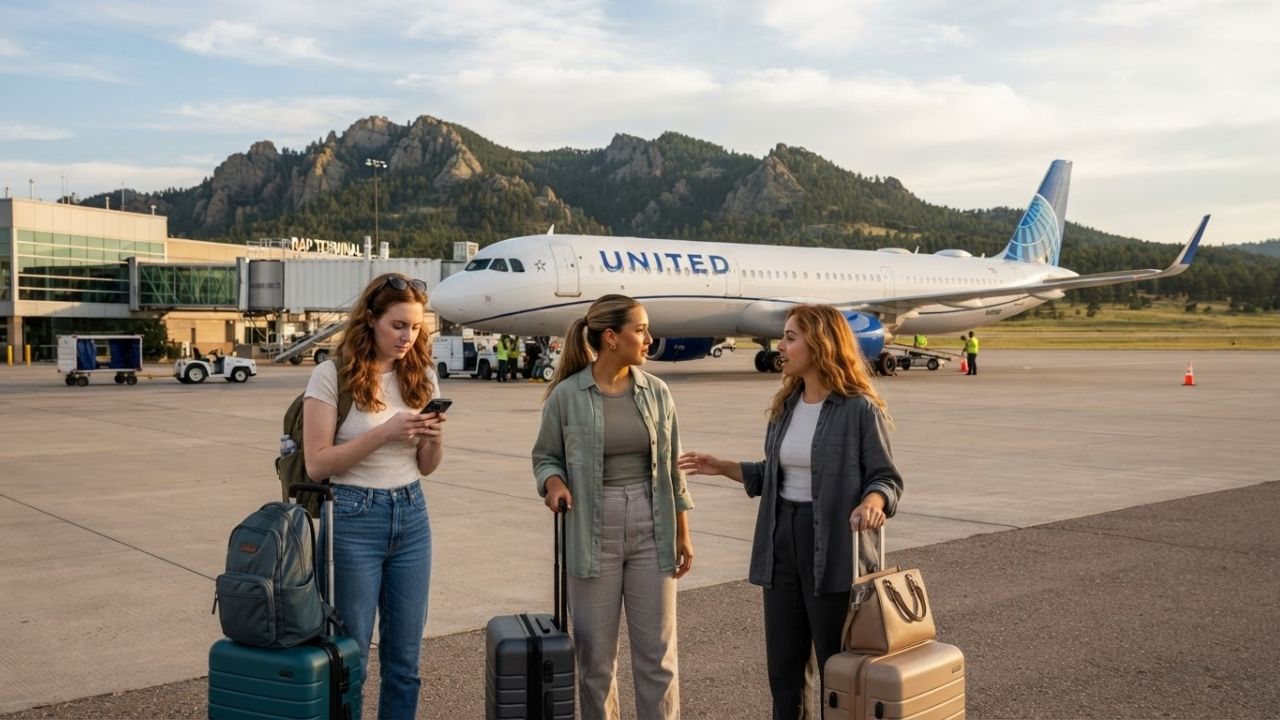
Image generated by AI
A single unscheduled flight diversion on August 3, 2026, brought an Airbus A321neo carrying passengers from New York to Denver directly into the heart of western South Dakota. This operational detour to Rapid City Regional Airport underscores a larger trend: travelers increasingly bypassing traditional hubs in search of authentic, community-supported cultural heritage in the Black Hills.
The Local Trend Revealed
In recent years, the American West has witnessed a profound shift toward heritage-led exploration and eco-conscious travel. When United Airlines flight UA1729—an Airbus A321neo with registry N14523—diverted to Rapid City Regional Airport (RAP) during its transcontinental run from New York LaGuardia (LGA) to Denver International (DEN), it did more than interrupt a standard schedule. The arrival of this large narrow-body aircraft, which departed LGA at 3:20 PM and was diverted before its scheduled 5:56 PM arrival in Colorado, illustrated the growing logistical readiness of regional gateways to support tourism in lesser-known destinations.
Rapid City is no longer just a transit point for travelers. The city is experiencing a surge in arrivals driven by visitors seeking direct engagement with Indigenous culture, wildlife conservation, and pristine wilderness. According to data monitored by the South Dakota Department of Tourism, regional hubs are playing a vital role in decentralizing travel traffic, directing curious visitors toward localized economies that benefit directly from tourism spending.
Cultural & Environmental Value (Information Gain & Experience)
For the visitor, the real impact of this trend is the opportunity to engage with living history and native stewardship. The Black Hills—known to the Lakota people as He Sapa—are a sacred geological formation, and modern travel initiatives are focusing on preserving this spiritual geography. By supporting Native-owned businesses, such as art collectives and cultural centers in downtown Rapid City, travelers contribute directly to the economic sovereignty of the Oglala Lakota and Cheyenne River Sioux tribes.
Conservation efforts are also a major draw. Custer State Park, located just south of Rapid City, operates a highly successful bison herd management program, preserving one of the world's largest public herds. The park's eco-tourism guidelines ensure that visitor fees directly fund prairie restoration and wildlife biology studies. For travelers, participating in these guided wildlife safaris supports long-term biodiversity without disrupting the natural environment.
Visitor Insider Tips
- Optimal Visit Window: Plan your trip for the shoulder season between late September and mid-October. This window avoids the heavy crowds of the August Sturgis Motorcycle Rally while offering vibrant fall foliage in Spearfish Canyon.
- Sacred Site Etiquette: When visiting places like Bear Butte State Park (Mathó Paha), remain on designated wooden boardwalks. Respect the prayer cloths tied to trees; these are sacred offerings, and visitors must not touch or photograph them.
- Indigenous Dining: Stop by localized diners in the region to try traditional fry bread tacos or wild-rice soup. For dessert, seek out local bakeries serving kuchen, South Dakota’s official state dessert.
- Hidden Scenic Routes: Skip the main highway and drive the Iron Mountain Road (U.S. Route 16A). This highway features hand-carved stone tunnels that frame Mount Rushmore and unique wooden pigtail bridges designed to blend into the surrounding forest.
Tourism Outlook
As air travel networks become more flexible, regional airports will continue to act as key economic engines. The ability of Rapid City Regional Airport to handle diverted mainline flights like the Airbus A321neo demonstrates the strength of local infrastructure. Over the long term, this connectivity will help disperse travelers away from overcrowded national parks and into surrounding tribal communities, creating a more balanced, sustainable tourism model for western South Dakota.
Related Travel Guides
Disclaimer
This article is for informational and educational purposes only. It does not constitute legal, financial, or professional advice. While we strive to provide accurate and up-to-date information, travel policies, regulations, and conditions change rapidly. Always verify information with official sources before making travel decisions. Nomad Lawyer makes no representations about the accuracy, reliability, completeness, or suitability of the information provided. Readers should consult qualified professionals for advice specific to their circumstances. The views expressed in this article are those of the author and do not necessarily reflect the views of Nomad Lawyer.
Kunal K Choudhary
Co-Founder & Contributor
A passionate traveller and tech enthusiast. Kunal contributes to the vision and growth of Nomad Lawyer, bringing fresh perspectives and driving the community forward.
Learn more about our team →