
United Airlines Flight UA1729 Airbus A321neo Diverts to Rapid City During New York to Denver Route 2026
United Airlines flight UA1729, an Airbus A321neo traveling from New York to Denver, was forced to divert to Rapid City Regional Airport on August 3, 2026, due to operational issues.

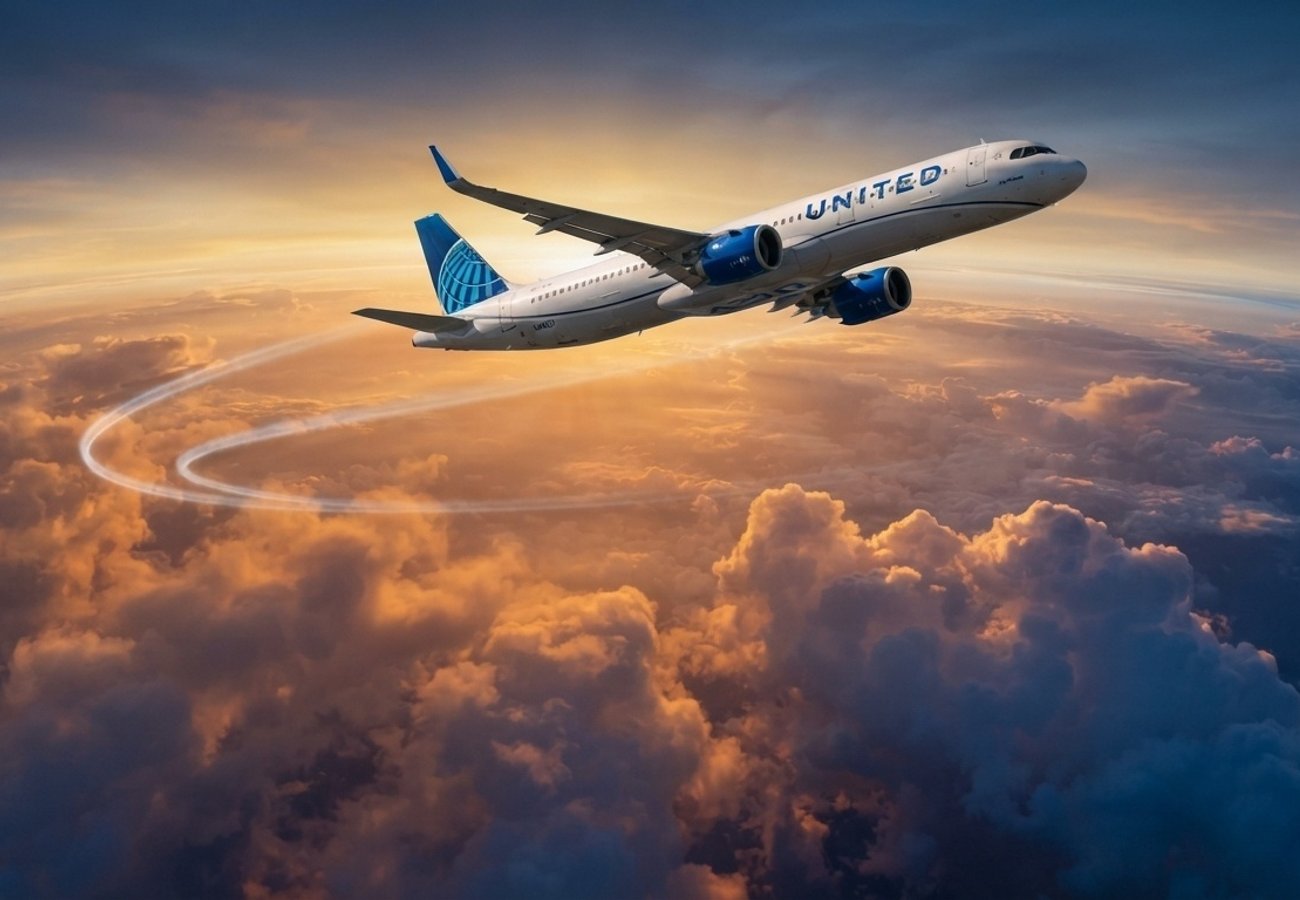
Image generated by AI
A surprise operational incident on August 3, 2026, forced United Airlines flight UA1729 to abandon its planned trajectory from New York to Denver and divert to Rapid City Regional Airport in South Dakota. The diversion affected passengers aboard an Airbus A321neo, resulting in significant arrival delays and disrupted onward connections at one of the U.S.'s busiest aviation hubs.
The flight was operating as a standard link between two major American metropolitan centers. While the specific cause of the operational disruption was not immediately disclosed by officials, the decision to reroute the aircraft underscores the stringent safety protocols governing modern commercial aviation.
UA1729 Route Deviation Between New York and Denver
The flight in question, UA1729, was scheduled to transport passengers from New York LaGuardia Airport to Denver International Airport on August 3, 2026. The aircraft utilized for this leg was an Airbus A321neo, registered as N14523.
According to flight tracking data, the aircraft departed New York at 3:20 PM, with a scheduled arrival in Denver at 5:56 PM. However, the flight did not reach its intended destination as planned. Instead, the crew initiated a diversion to Rapid City Regional Airport.
While the exact nature of the "operational incident" remains unconfirmed, industry observers note that such diversions typically stem from a few primary factors:
- Unforeseen technical malfunctions requiring immediate inspection.
- Rapidly deteriorating weather conditions along the flight path.
- Medical emergencies involving passengers or crew.
- Air traffic control directives based on airspace safety.
Rapid City Regional Airport Facilitates Emergency Landing
The diversion placed the Airbus A321neo at Rapid City Regional Airport, a facility that primarily serves as a gateway for western South Dakota and the Black Hills region. While not a primary hub for United Airlines, the airport provided the necessary infrastructure to safely receive the diverted aircraft.
The ability of a regional facility to accommodate a larger narrow-body aircraft like the A321neo highlights the versatility of the U.S. regional aviation network. Rapid City is well-known for supporting travelers visiting Mount Rushmore National Memorial, Custer State Park, and Badlands National Park, but its role in aviation safety extends beyond tourism.
By providing a secure landing site, Rapid City prevented a more complex logistical crisis and ensured that the aircraft and its passengers were moved out of the active flight corridor to a stable environment.
Operational Disruptions at Denver International Airport
The failure of UA1729 to arrive on schedule created a ripple effect at Denver International Airport. As one of the highest-traffic hubs in the country, Denver relies on precise timing for domestic and international connections.
Passengers on this flight faced immediate delays, with many missing connecting flights or facing disruptions in their ground transportation and hotel arrangements. The diversion necessitated a coordinated effort between United Airlines ground crews and airport authorities to manage aircraft movement and passenger re-accommodation.
| Flight Detail | Information |
|---|---|
| Flight Number | UA1729 |
| Aircraft Model | Airbus A321neo |
| Registration | N14523 |
| Departure City | New York (LGA) |
| Intended Destination | Denver (DEN) |
| Diversion City | Rapid City (RAP) |
| Departure Time | 3:20 PM |
| Scheduled Arrival | 5:56 PM |
| Date of Incident | August 3, 2026 |
The Strategic Value of Regional Aviation Infrastructure
This incident illustrates the symbiotic relationship between "mega-hubs" and regional airports. While major airports handle the bulk of passenger volume, regional facilities act as critical safety valves.
In South Dakota, the tourism economy is heavily reliant on these transportation links. While this specific arrival was an emergency measure rather than a planned tourist influx, it demonstrates that the state's aviation infrastructure is capable of handling high-capacity aircraft under pressure.
From a logistical standpoint, the presence of capable runways and emergency services at regional airports allows airlines to prioritize safety over schedule. Without these secondary landing options, aircraft would be forced to hold in the air for longer periods, consuming more fuel and increasing risk.
Safety Protocols and Passenger Impact in Modern Flight
Flight diversions are a standard, albeit inconvenient, component of global aviation safety. The decision to divert is rarely made lightly and is almost always the result of a risk-assessment process where passenger safety is the absolute priority.
Once an aircraft touches down at a diversion airport, a complex series of events begins:
- Passenger Management: Coordinating food, water, and resting areas for stranded travelers.
- Crew Legality: Ensuring flight crews do not exceed their maximum duty hours.
- Technical Resolution: If the diversion was mechanical, bringing in engineers or parts.
- Recovery Flight: Scheduling a new aircraft or resuming the original flight once cleared.
For the traveler, these events are often frustrating, but they represent the failure-safe mechanisms of the industry. The coordination between the flight deck, air traffic control, and regional ground staff ensures that "unexpected" events are handled via a predetermined playbook.
Why This Matters: The Traveler's Perspective
For the modern traveler, this event serves as a reminder that the "shortest distance" between two cities is not always a straight line. From a legal and logistical standpoint, a diversion to a city like Rapid City creates a gap in the contract of carriage, forcing airlines to provide duty-of-care support in a location where they may not have a permanent staff presence.
For those booking travel in 2026, this highlights the importance of travel insurance that covers "trip interruption" rather than just "cancellation." When a flight diverts, you are technically still in transit, but the ancillary costs—hotels in an unplanned city or missed connections—can be substantial.
Furthermore, the use of the A321neo on this route shows United's commitment to fuel-efficient, modern fleets, but it also proves that even the newest aircraft are subject to the unpredictability of operational incidents.
The seamless coordination between Rapid City and United Airlines ensures that while the destination changed, the safety of the passengers remained the primary objective.
Related Travel Guides
Disclaimer
This article is for informational and educational purposes only. It does not constitute legal, financial, or professional advice. While we strive to provide accurate and up-to-date information, travel policies, regulations, and conditions change rapidly. Always verify information with official sources before making travel decisions. Nomad Lawyer makes no representations about the accuracy, reliability, completeness, or suitability of the information provided. Readers should consult qualified professionals for advice specific to their circumstances. The views expressed in this article are those of the author and do not necessarily reflect the views of Nomad Lawyer.
Kunal K Choudhary
Co-Founder & Contributor
A passionate traveller and tech enthusiast. Kunal contributes to the vision and growth of Nomad Lawyer, bringing fresh perspectives and driving the community forward.
Learn more about our team →