
United Airlines Launches Automated Standby App Feature to Resolve Flight Disruptions in 2026
United Airlines has upgraded its mobile app to automatically track and notify passengers of earlier flight availability following delays or cancellations, reducing reliance on airport customer service desks.
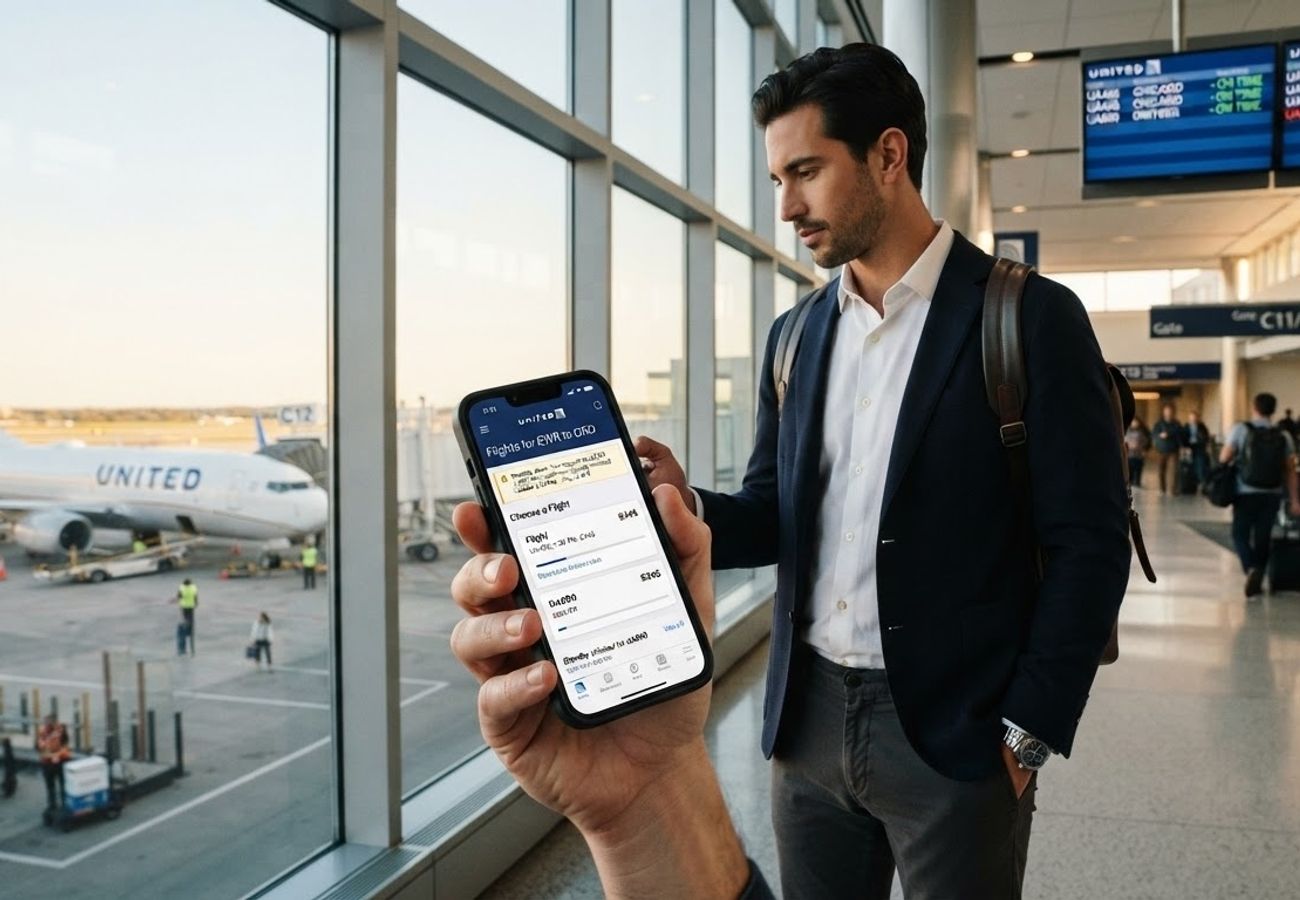
Image generated by AI
United Airlines has deployed a digital recovery tool designed to eliminate the manual effort of searching for alternative flights during delays or cancellations.
The airline's mobile app now allows passengers rebooked on later flights to automatically monitor and join standby lists for earlier departures, shifting the burden of seat-hunting from the passenger to the system.
Automated Recovery: How the System Operates
Flight disruptions—driven by weather, operational failures, or missed connections—traditionally force passengers into a cycle of refreshing apps or queuing at airport kiosks. United’s new automated standby feature replaces this manual process with a background monitoring system.
The operational workflow follows a specific three-step sequence:
- Selection: Eligible passengers rebooked on a later flight select up to three earlier United flights to the same destination via the app.
- Monitoring: The system tracks availability in real-time. Passengers no longer need to manually refresh the interface or contact agents.
- Notification: When a seat opens, the passenger receives a text alert. They then choose to either accept the earlier flight or maintain their existing confirmed booking.
A critical component of this logic is the protection of the original itinerary. Passengers do not forfeit their confirmed seat while waiting for a standby opportunity, providing a safety net that was previously absent in many standby scenarios.
Strategic Deployment and Passenger Volume
The rollout is timed to coincide with the high-demand Labor Day travel window in the United States. United anticipates significant traffic between September 3 and September 8, 2026, with projections showing:
- Total Expected Passengers: 3.4 million
- Year-over-Year Increase: 300,000 additional passengers
- App Adoption Rate: Over 85% of customers utilize the mobile app on their day of travel
By migrating recovery efforts to the app, United aims to reduce physical congestion at customer service counters during these peak surges.
Integration into the Digital Ecosystem
This feature is not a standalone tool but an expansion of United's broader digital strategy. The app now functions as a comprehensive recovery platform, integrating the following services:
- Automatic rebooking options
- Digital issuance of eligible meal and hotel vouchers
- Real-time checked baggage tracking
- Instant flight status updates
Flight Recovery Data Summary
| Feature | Previous Manual Process | New Automated Process |
|---|---|---|
| Search Method | Manual refresh / Agent request | Background system monitoring |
| Flight Options | Single search at a time | Up to 3 simultaneous flights |
| Notification | Manual check | Instant text alert |
| Booking Security | High risk of losing seat | Confirmed seat held until acceptance |
| Staff Interaction | High reliance on airport desks | Direct smartphone resolution |
Why This Matters: Industry Analysis
From a logistical perspective, this move signals a shift in the "power dynamic" of flight disruptions. Historically, the airline held all the data, and the passenger had to "beg" for access to that data via an agent. By democratizing seat availability through automated alerts, United is reducing the operational friction that leads to passenger hostility at the gate.
For the frequent traveler, the real impact is the removal of "refresh fatigue." The ability to track three different flight options simultaneously without risking a confirmed seat creates a low-stakes environment for recovery. This is particularly vital for business travelers and families with tight connections, where a three-hour difference in arrival time can be the difference between a successful trip and a total failure.
Our analysis suggests that this is a direct response to the scalability problem of human staffing. Airlines cannot hire enough agents to handle a systemic collapse (like a major storm), but they can scale a cloud-based notification system to millions of users instantly.
Forward Outlook
The aviation industry is moving toward a "zero-queue" model for disruptions. We expect to see other major carriers adopt similar "background monitoring" tools to prevent terminal congestion. The next logical step in this evolution will likely be AI-driven predictive rebooking, where the system suggests the optimal flight based on the passenger's historical preferences and loyalty status before the passenger even realizes a delay has occurred.
The era of the airport standby line is rapidly being replaced by the push notification.
Related Travel Guides
Disclaimer
This article is for informational and educational purposes only. It does not constitute legal, financial, or professional advice. While we strive to provide accurate and up-to-date information, travel policies, regulations, and conditions change rapidly. Always verify information with official sources before making travel decisions. Nomad Lawyer makes no representations about the accuracy, reliability, completeness, or suitability of the information provided. Readers should consult qualified professionals for advice specific to their circumstances. The views expressed in this article are those of the author and do not necessarily reflect the views of Nomad Lawyer.