
UAE And Qatar Endure a Devastating Middle East Travel Warning Dragging Iraq and Other Countries into Disruptions Amid US Alerts
UAE And Qatar Endure a Devastating Middle East Travel Warning Dragging Iraq and Other Countries into Disruptions Amid US Alerts

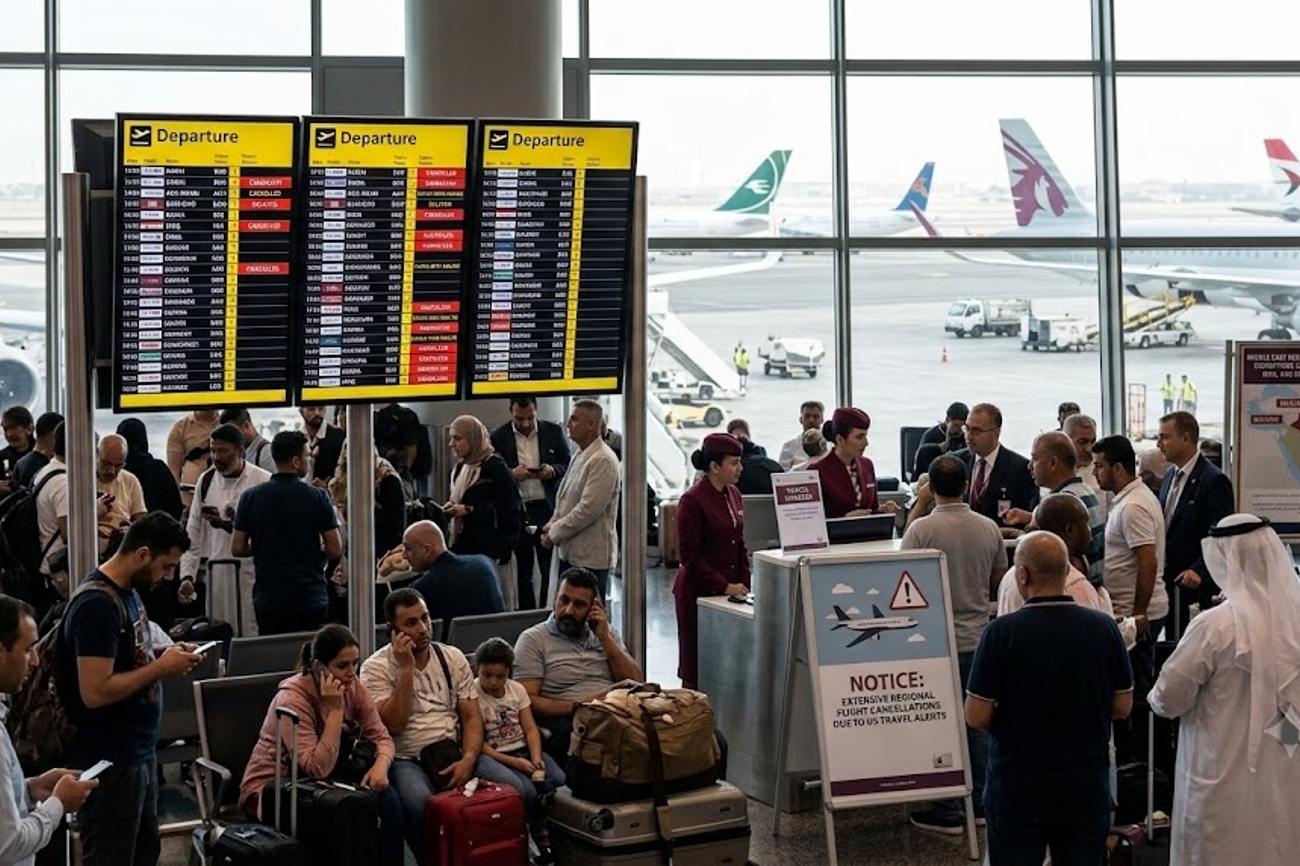
Image generated by AI
[Washington, D.C., October 2023] — The U.S. Department of State has issued urgent travel warnings for the United Arab Emirates, Qatar, Iraq, Saudi Arabia, and Yemen, citing a volatile security environment and the threat of unpredictable military confrontations. The alert impacts hundreds of thousands of American citizens currently residing in or planning travel to the region, warning that war and terrorism could manifest without prior notice.
The warnings come amid escalating hostilities involving Iranian-supported Houthi rebels in Yemen, whose drone and missile strikes frequently target Saudi Arabian infrastructure and civilian airports. The U.S. government is advising tourists to seriously reconsider all travel plans and specifically warns against transiting through the region, a directive that threatens the operational stability of some of the world's most critical aviation hubs.
Houthi Rebel Escalations and Airspace Volatility
The immediate catalyst for these warnings is the increased aggression from Houthi rebels based in Yemen. These groups are conducting persistent attacks on Saudi Arabian civilian aviation infrastructure using unmanned aerial vehicles (UAVs) and missiles. This instability has shattered the predictable safety parameters required for commercial aviation to operate reliably.
Because commercial flights depend on strict safety protocols, these sudden strikes have forced safety regulators to demand more stringent operational guidelines. The Federal Aviation Administration (FAA) and other global bodies are monitoring the situation as a single major incident could trigger a total shutdown of regional airspace. This volatility creates a ripple effect across the global network, as the Gulf region serves as the primary bridge between Western nations and destinations across Asia and Africa.
Impacted Markets and Risk Classifications
The Department of State has assigned specific risk levels to the affected nations, ranging from cautionary warnings to absolute prohibitions. The primary risks include armed conflict, terrorism, and the sudden closure of flight corridors.
| Country | Advisory Level | Primary Risk Factor |
|---|---|---|
| Yemen | Level 4: Do Not Travel | Active armed conflict and terrorism |
| Saudi Arabia | Level 3: Reconsider Travel | Missile threats and drone attacks |
| Iraq | Level 3: Reconsider Travel | Armed militias and terrorism |
| UAE | Varies by Region | Unpredictable airspace closures |
| Qatar | Varies by Region | Transit and logistical disruptions |
The restrictions are particularly stringent for U.S. government personnel, who are currently banned from traveling within 20 miles of the Yemen border. Furthermore, the advisory warns that the threat extends beyond the immediate conflict zones; U.S. diplomatic facilities and American-owned businesses worldwide could potentially become targets for Iran or its proxy groups.
What This Means for Travelers
For the average passenger, these warnings translate into significant logistical chaos and financial risk. The "reconsider travel" and "do not travel" designations often trigger immediate changes in how the travel industry operates.
Flight Disruptions and Rerouting Passengers should expect frequent, unannounced flight cancellations. To avoid dangerous airspace, airlines are implementing extensive rerouting. These detours add several hours to long-haul flight times and increase fuel consumption, which is likely to be passed on to the consumer through higher ticket prices. Major hubs, including Dubai International Airport and Hamad International Airport, are experiencing severe terminal crowding and overwhelmed customer service teams as travelers scramble for alternative routes.
Financial and Insurance Risks Standard travel insurance policies frequently contain "acts of war" exclusions. If a traveler chooses to cancel a trip voluntarily based on these warnings, they may find that their policy does not cover the loss. Insurance experts now suggest that only "Cancel for Any Reason" (CFAR) upgrades provide guaranteed financial protection in the current climate.
Corporate Travel Shifts Multinational corporations are currently halting non-essential business trips to the region. Duty of care protocols are being updated, and risk management experts are demanding immediate itinerary reviews for any employees currently stationed in the Middle East.
The Shift to Alternative Aviation Corridors
As the Gulf becomes an unreliable transit point, the global aviation network is fracturing. Airlines are increasingly bypassing the Middle East entirely, shifting traffic toward European hubs. This transition requires the use of specialized, ultra-long-range aircraft capable of flying from the West to Asia without the traditional refueling and connection stops in Doha or Dubai.
This shift is causing a surge in ticket prices due to reduced seating capacity on these alternative routes. Aviation analysts suggest that these changes may not be temporary; security concerns are now the primary driver of global flight paths, forcing the industry to adapt to a fragmented security environment.
Mandatory Safety Protocols for Citizens
The U.S. government is urging all citizens currently in these regions or planning to visit to adhere to strict safety measures to mitigate risk.
Registration and Monitoring The most critical step for U.S. citizens is to enroll in the Smart Traveler Enrollment Program (STEP). This system allows the U.S. Department of State to send direct security updates to travelers and helps embassies locate citizens during emergency evacuations.
Operational Security Travelers are advised to:
- Verify flight status directly with the carrier immediately before departing for the airport.
- Closely monitor official airport updates, such as those from Zayed International Airport.
- Maintain a low profile by avoiding large crowds, political protests, and areas with a heavy military or police presence.
- Keep mobile devices fully charged and save local embassy emergency contact numbers.
- Stay away from windows and glass structures during any reported aerial attacks.
Economic Fallout for Regional Tourism
The economic impact of these warnings is immediate and severe. The hospitality sector in the UAE, Qatar, and Saudi Arabia is reporting mass cancellations from Western tour groups. While regional tourism ministries continue to launch marketing campaigns to reassure visitors, the safety warnings from the U.S. government typically carry more weight with international travelers and corporate travel managers.
The fallout is expected to span several financial quarters, affecting everything from luxury hotel occupancy to the employment prospects of hospitality workers. Full economic recovery is now entirely dependent on political de-escalation and the eventual downgrading of these State Department alerts.
FAQ: Middle East Travel Alerts 2023
Will my travel insurance cover a cancellation due to these warnings? Most standard policies exclude "acts of war" or voluntary cancellations. You must check your policy for specific war exclusions. Only "Cancel for Any Reason" (CFAR) policies generally guarantee a refund in these circumstances.
Can I still transit through Dubai or Doha? While these airports remain operational, the U.S. government advises against transiting through the area. Expect potential delays, sudden rerouting, or cancellations due to airspace closures. Always check your flight status in real-time.
What is the STEP program and why should I join? The Smart Traveler Enrollment Program (STEP) is a free service that allows U.S. citizens to register their trip with the nearest embassy. This ensures you receive urgent security alerts and can be located during a crisis.
Which countries are currently under a "Do Not Travel" advisory? Yemen is currently designated as Level 4: Do Not Travel. Saudi Arabia and Iraq are at Level 3: Reconsider Travel, while the UAE and Qatar have varying risk levels based on specific regional conditions.
Airspace stability remains the primary metric for the return of safe regional transit.
#USStateDepartment #HouthiRebels #DubaiAirport #DohaAirport #YemenLevel4 #SaudiArabiaTravel2023
Related Travel Guides
Disclaimer
This article is for informational and educational purposes only. It does not constitute legal, financial, or professional advice. While we strive to provide accurate and up-to-date information, travel policies, regulations, and conditions change rapidly. Always verify information with official sources before making travel decisions. Nomad Lawyer makes no representations about the accuracy, reliability, completeness, or suitability of the information provided. Readers should consult qualified professionals for advice specific to their circumstances. The views expressed in this article are those of the author and do not necessarily reflect the views of Nomad Lawyer.
Raushan Kumar
Founder & Lead Developer
Full-stack developer with 11+ years of experience and a passionate traveller. Raushan built Nomad Lawyer from the ground up with a vision to create the best travel and law experience on the web.
Learn more about our team →