
Aviation Updates: TSA Forces Multi-Million Dollar Biometric Mandate on US Airlines Amidst Travel Chaos
As catastrophic logistical bottlenecks severely paralyze major transit grids, the TSA implements a massive biometric crew mandate that heavily threatens severe travel chaos.

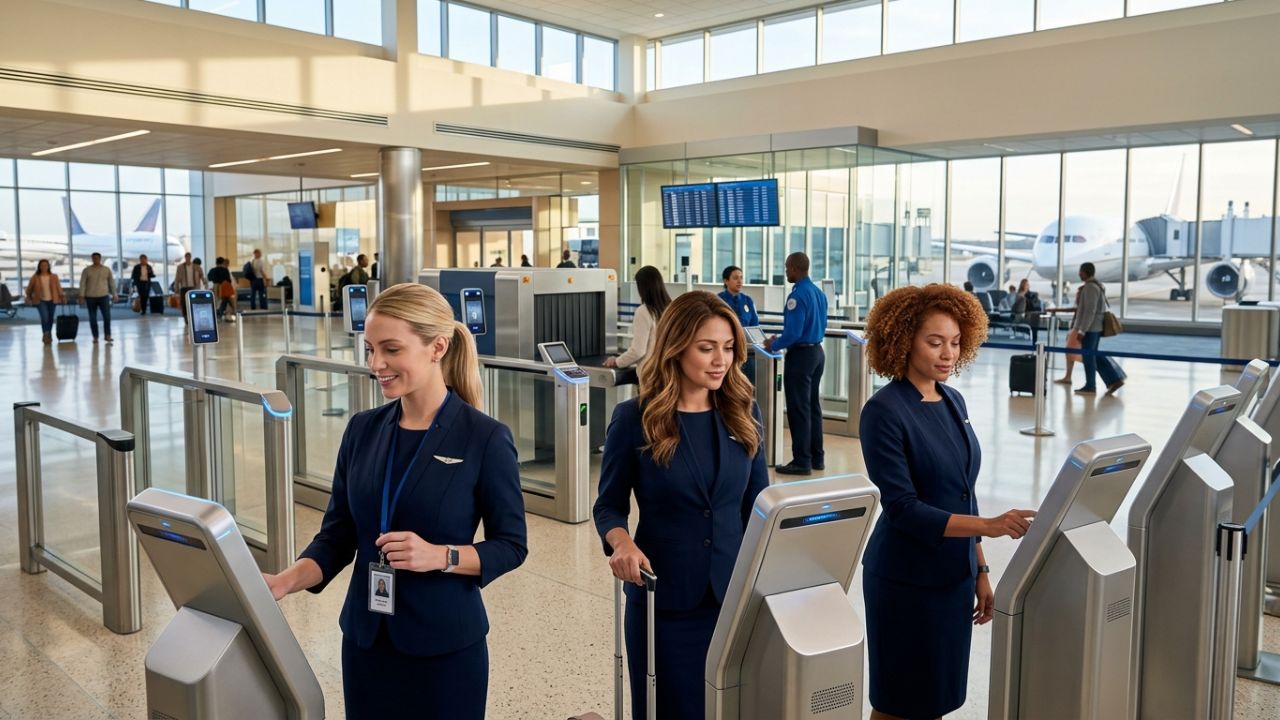
Image generated by AI
Aviation Updates: TSA Forces Multi-Million Dollar Biometric Mandate on US Airlines Amidst Travel Chaos
As extreme operational friction and suddenly compounding infrastructure bottlenecks continue to terrorize standard travel itineraries, the TSA is aggressively imposing a massive, multi-million dollar biometric identity mandate explicitly onto major US airlines, violently threatening widespread flight cancellations and devastating travel chaos if carriers fail to comply.
Image generated by AI
[Washington, July 1] — As high-impact airline news platforms rapidly issue continuous, grim aviation updates regarding the intense fragility of massively congested primary transit grids, preparing for an absolute structural meltdown has officially become an international traveler's only defense mechanism. Amidst widespread rolling travel chaos, severe airport disruptions, and the terrifying threat of devastating flight cancellations severely plaguing heavily overcrowded mega-hubs, the Department of Homeland Security has violently rewritten the rules of commercial airline security. According to highly verified federal reports, the TSA is officially, permanently sunsetting the long-running Known Crewmember (KCM) program definitively by the end of 2026. In its place, the federal government is heavily replacing the legacy system directly with a highly strict biometric identity verification grid explicitly called the Crewmember Access Point (CMAP). Starting precisely on January 1, 2027, this incredibly drastic federal transition actively forces major U.S. network carriers to collectively fork over millions directly to the government via a $19 annual fee per employee completely to preserve expedited checkpoint access for their massive workforces. Failure to pay this massive corporate tax risks violently sending thousands of pilots directly into standard passenger lines, practically guaranteeing cascading hub delays nationwide.
Background Context: The Death of the KCM Era
To fully comprehend the sheer scale of this severe operational evolution, commercial aviation analysts must closely examine exactly how massive federal security policies violently reshape terminal stability and domestic transit economics.
Since exactly 2011, commercial flight crews actively operating within the United States have heavily enjoyed a streamlined, highly efficient path directly to their departure gates. Under the legacy Known Crewmember (KCM) system—originally heavily developed strictly as a joint, cooperative effort directly between the Air Line Pilots Association (ALPA) and the massive industry trade group Airlines for America (A4A)—a simple, basic badge scan and a rapid ID check by a standard Transportation Security Officer (TSO) were completely all it took to heavily bypass traditional, highly congested x-ray lanes. That cooperative framework is officially being aggressively dismantled. According to a formal, verified notice actively published directly by the TSA in the Federal Register, the massive federal agency is fiercely phasing out KCM completely in favor of its absolute own proprietary program. Field testing for the highly advanced CMAP grid has already aggressively kicked off directly at major aviation hubs, explicitly including Ronald Reagan Washington National Airport (DCA), Washington Dulles International Airport (IAD), and Las Vegas Harry Reid International Airport (LAS). Under these strict new protocols, manual verification is being completely replaced by facial comparison technology dynamically cross-referenced directly against federal databases, heavily including U.S. Customs and Border Protection (CBP) records.
Section-Wise Breakdown: Navigating the CMAP Transition
Terminal operations and crew logistics are violently transforming across competing hubs, forcing major domestic operators to furiously deploy highly advanced operational frameworks to strictly ensure they maximize payload revenue while dodging severe federal penalties.
The Financial Burden on Mega-Carriers: While a $19-per-employee annual fee might sound strictly nominal on an individual basis, the absolute total overhead scales into a massively severe recurring expense exclusively for the country’s largest mega-carriers. Because the massive federal government is heavily shifting directly from an industry-funded cooperative model entirely to direct, punitive per-capita billing, major airlines operating the largest workforces are violently left heavily holding the biggest bills. Under the incredibly strict, newly issued federal rules, the TSA explicitly dictates that if a massive airline fails completely to settle its massive annual invoice within exactly 30 days of billing, its entire roster of crew members will be summarily, violently dropped from the federal database. This devastating action would instantly strip those highly critical employees of their fast-track security privileges, aggressively forcing them to stand heavily in standard lines alongside everyday, stressed vacationers.
The Cybersecurity Power Play: While mainstream corporate coverage has frequently framed this massive change purely as a routine fee update, a deep dive into heavily government-verified regulatory reports aggressively reveals what others are completely missing: this is an incredibly massive geopolitical and cybersecurity power play. For completely over a decade, Airlines for America (A4A) exclusively held absolute custody of the master database explicitly containing the incredibly sensitive credentials of the entire nation’s commercial flight crews. The TSA’s massive push to aggressively take absolute control of this highly sensitive data directly stems from incredibly heightened concerns regarding information security, massive data breaches, and severe institutional risk. By aggressively absorbing the administration of the massive program directly into secure federal infrastructure, the TSA actively aims to achieve centralized threat intelligence, fiercely mitigating internal exploitation (such as crews smuggling contraband), and heavily enhancing overall cybersecurity infrastructure.
Labor Privacy and Random Disruption: What many corporate analysts have severely overlooked is the massive, looming tension strictly between corporate efficiency and labor privacy. According directly to operational alerts explicitly issued by powerful labor groups heavily like the Association of Flight Attendants (AFA), highly critical participation in the CMAP grid remains completely voluntary. To explicitly utilize the highly expedited lanes, crew members must explicitly, legally sign a formal digital photo consent form actively distributed by their massive employers. If an employee aggressively chooses to physically opt out entirely due to privacy concerns regarding massive government facial recognition, they permanently forfeit their front-of-line privileges entirely. Furthermore, the massive TSA officially maintains its “unpredictable screening procedures.” Even fully vetted, highly compliant crew members will strictly still be randomly flagged by the biometric system explicitly for full-scale physical screening.
Strategic Details: Verified U.S. Carrier CMAP Financial Impact Matrix
To ensure stranded passengers and commercial aviation analysts can accurately track the incredibly precise operational telemetry of this massive network evolution, the verified structural data has been consolidated into the exact, mandatory matrix below.
| Airline Operator | Estimated Crew Count | Annual CMAP Fee |
|---|---|---|
| American Airlines (AA) | ~47,500 (30k attendants / 17.5k pilots) | $2.64 Million |
| United Airlines (UA) | ~38,000 | $2.17 Million |
| Delta Air Lines (DL) | ~34,200 | $1.95 Million |
| Southwest Airlines (WN) | ~24,200 | $1.38 Million |
| JetBlue (B6) | ~8,000 | $456,000 |
(Source: Federal Aviation Administration and TSA Projections)
Impact Analysis: The Catastrophic Cost of Random Security Delays
Air travel explicitly across massive global transit corridors continues to massively struggle, driven violently by incredibly fragile air traffic flow constraints and severely overloaded security infrastructures.
This randomized biometric disruption actively has a highly verified, devastating history of explicitly causing massive friction. In 2022, highly stressed American Airlines pilots heavily threatened to completely bypass the expedited checkpoints altogether actively after an aggressive, terrifying spike entirely in random selections severely delayed highly critical crews completely from reaching their massive gates absolutely on time. For massive network carriers actively operating tightly packed, incredibly complex hub-and-spoke networks, a highly frustrating 20-minute security delay exclusively for a single captain or highly specialized lead flight attendant can instantly cause a devastating domino effect. This easily results entirely in massively missed connection windows, thousands of highly frustrated stranded passengers, and millions of dollars heavily bleeding out in lost operational revenue.
Why This Matters: The New Reality of Federal Checkpoints
Ultimately, the aggressive, massive deployment of CMAP actively marks a massively significant victory for federal oversight over corporate efficiency. The massive rollout of CMAP kiosks will strictly continue entirely on a highly structured, rolling basis directly across the United States actively throughout the remainder of 2026 as legacy KCM podiums are violently, permanently phased out. While massive flight crews will aggressively begin actively interacting directly with the biometric cameras over the highly critical coming months, the massive financial pain completely for corporate airlines will absolutely not officially hit until the massive fee mandate takes aggressive effect explicitly on January 1, 2027.
As major global carriers furiously attempt to actively manage heavily restrictive federal laws, the ultimate modernization heavily of the massive domestic network firmly depends absolutely on successfully leveraging automated, completely touchless biometric technology. For global travelers aggressively anticipating intercontinental trips securely in the coming years, closely monitoring exactly how massive labor unions aggressively react strictly to this massive facial recognition mandate is absolutely vital. If crews revolt against the privacy implications, a massive influx of uniformed personnel explicitly into standard security lanes will guarantee absolute 2026 travel chaos.
Key Takeaways
- Death of KCM: The TSA is officially sunsetting the legacy Known Crewmember (KCM) program by the end of 2026, replacing it with the biometric CMAP system.
- Massive Corporate Fees: Starting January 1, 2027, airlines must pay the government a $19 annual fee per crew member to maintain expedited security access.
- The Big Three Bill: American Airlines (~47,500 crew), United Airlines (~38,000 crew), and Delta Air Lines (~34,200 crew) face combined annual fees exceeding $6.7 million.
- Data Power Play: The TSA is aggressively stripping the master crew database away from the A4A trade group to centralize threat intelligence and stop internal smuggling.
- The Opt-Out Threat: Crew members who refuse to sign digital facial recognition consent forms, or airlines that fail to pay within 30 days, will force pilots directly into standard passenger security lanes.
FAQ: TSA CMAP Biometric Crew Security 2026
What is the new TSA CMAP program replacing? The Crewmember Access Point (CMAP) is a strict biometric identity verification system actively replacing the legacy Known Crewmember (KCM) program that has been used by pilots and flight attendants since 2011.
How does CMAP verify airline crews? Under the new CMAP protocols, manual verification is being completely replaced by facial comparison technology. A real-time digital photograph is instantly cross-referenced against federal databases, including U.S. Customs and Border Protection (CBP) records.
Which airports are testing the TSA CMAP system? Field testing for CMAP aggressively kicked off directly at Ronald Reagan Washington National Airport (DCA), Washington Dulles International Airport (IAD), and Las Vegas Harry Reid International Airport (LAS).
What happens if an airline pilot opts out of the biometric scan? According to the Association of Flight Attendants (AFA), participation is voluntary. However, if a crew member opts out due to privacy concerns, they forfeit their fast-track privileges and must stand in standard TSA passenger lines.
Related Travel Guides
Lufthansa Airbus A350 Boeing 777x Travel Chaos 2026
British Airways First Class Crew Rest Policy Travel Chaos 2026
Qatar Airways Cancels A380 Guangzhou Travel Chaos 2026
Disclaimer: This article is strictly for informational and aviation tracking purposes. The specific operational telemetry (CMAP rollout dates, $19 annual fees) and federal initiatives (TSA security protocols) are based on verified analytics data available at the time of publication. Security wait times, airport weather delays, localized air traffic congestion, and TSA checkpoint procedures are highly dynamic and subject to immediate modification by the operating authorities. Passengers navigating the global aviation grid should explicitly verify exact terms, conditions, and real-time transit alerts via official travel portals prior to departure.
Disclaimer
This article is for informational and educational purposes only. It does not constitute legal, financial, or professional advice. While we strive to provide accurate and up-to-date information, travel policies, regulations, and conditions change rapidly. Always verify information with official sources before making travel decisions. Nomad Lawyer makes no representations about the accuracy, reliability, completeness, or suitability of the information provided. Readers should consult qualified professionals for advice specific to their circumstances. The views expressed in this article are those of the author and do not necessarily reflect the views of Nomad Lawyer.
Raushan Kumar
Founder & Lead Developer
Full-stack developer with 11+ years of experience and a passionate traveller. Raushan built Nomad Lawyer from the ground up with a vision to create the best travel and law experience on the web.
Learn more about our team →