
Troo's Subterranean Sanctuary: France's Limestone Cliff Village Offers Natural Relief as European Heatwaves Intensify
Amid escalating European heatwaves, Troo's centuries-old limestone cave homes are drawing visitors seeking an electricit

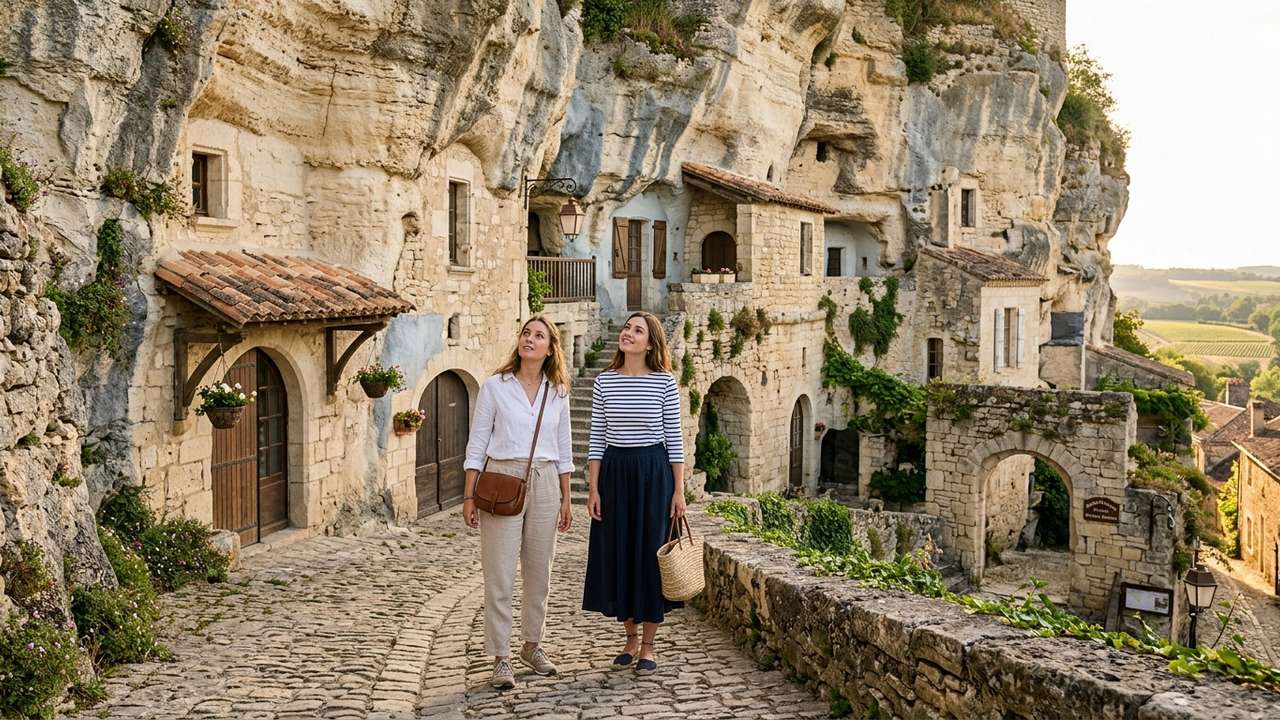
Image generated by AI
Troo, a historic village in France's Loire Valley, is emerging as a definitive example of climate-resilient tourism as European heatwaves become more frequent and intense. While surface temperatures in parts of France approach 40°C during peak summer events, the village carved directly into limestone cliffs offers a stable, naturally cooled environment. Troo's unique subterranean architecture is gaining renewed attention for its ability to maintain thermal comfort without mechanical cooling, positioning the settlement as both a tourism destination and a practical model for passive climate adaptation.
Limestone Geology Drives Passive Climate Control
The defining characteristic of Troo is its microclimate, which is regulated entirely by geology. The village is built into tuffeau limestone, a soft, porous rock widely utilized across the Loire Valley for construction. Unlike conventional buildings, Troo's dwellings are excavated directly into the cliff face, utilizing the earth's thermal mass to control temperature.
Scientific principles of subterranean architecture explain the village's cooling efficiency. Thick limestone walls significantly reduce heat transfer, while the underground positioning blocks direct solar radiation. This combination creates a passive cooling system that keeps interior temperatures stable and notably cooler than the ambient air above. Even during severe heatwaves, when outdoor conditions become challenging, the cave interiors remain cool and comfortable, operating entirely without electricity or artificial air conditioning.
From Quarry Tunnels to Cliffside Settlement
Troo's layout is the result of centuries of adaptation to local resources and geology. The settlement developed around limestone quarrying, where excavated tunnels and cavities were gradually converted into homes, storage areas, and living quarters. Over time, these underground voids evolved into a compact, layered village structure where buildings are partially embedded in the rock.
Today, Troo retains this rare architectural form, with a small population living among the cliffside dwellings. The village serves as a living archive of how historical construction methods aligned with environmental conditions. Some homes remain actively inhabited, while others are preserved as part of the region's cultural identity. This built environment demonstrates a sustainable approach to habitation that predates modern climate challenges, relying on natural insulation and geological design rather than energy-intensive infrastructure.
Heatwaves Reshape European Tourism Flows
France is experiencing a documented increase in the frequency and duration of summer heatwaves, a trend consistent with broader continental warming patterns. Environmental agencies have identified prolonged heat exposure as a growing public health concern, particularly in urban centers where heat retention is higher. These conditions are altering travel behavior, with visitors increasingly prioritizing destinations that offer natural cooling, shaded landscapes, or altitude-based temperature moderation.
Rural and heritage destinations are benefiting from this shift. Troo is attracting travelers seeking climate-safe experiences that do not rely on mechanical cooling. The village is becoming part of a wider movement toward tourism that values resilience and sustainability. Visitors are adjusting their itineraries to include locations that provide relief from extreme weather, driving demand for destinations that combine cultural appeal with climatic advantages.
Heritage Architecture as a Sustainability Model
The resurgence of interest in Troo underscores the value of passive cooling strategies in contemporary climate adaptation. European policy discussions increasingly emphasize the need to reduce reliance on artificial cooling, especially during periods of grid stress or energy constraints. Traditional methods, including underground construction and thick stone walls, offer a proven low-energy alternative.
Troo demonstrates the viability of these techniques in modern contexts. The village's ability to maintain thermal comfort through geological design provides a blueprint for sustainable living that aligns with current environmental objectives. This heritage architecture is being repositioned within tourism narratives as a functional solution to climate adaptation, illustrating how past building practices can inform future resilience.
Rising Demand for Climate-Adaptive Travel
As global temperatures continue to rise, destinations capable of offering natural thermal regulation are likely to see increased importance. Troo's growing visibility reflects a shift in travel narratives toward locations that combine heritage value with environmental functionality. The village stands as a symbolic example of how architectural design and geology can address sustainability challenges without modern infrastructure.
For the broader tourism sector, Troo highlights the potential for heritage assets to drive demand by providing climate-safe experiences. The village's success suggests that travelers are increasingly seeking destinations that offer not only cultural depth but also practical resilience against extreme weather. This shift is reshaping how European tourism markets position rural and historical sites, emphasizing their role in providing comfort and safety during an era of climate volatility.
Key Takeaways
- Natural Cooling Mechanism: Troo's cave dwellings maintain stable, cool temperatures through the insulating properties of tuffeau limestone and underground positioning, requiring no electricity.
- Climate Context: European heatwaves are intensifying, with surface temperatures in France reaching near 40°C, driving travelers toward destinations with passive cooling capabilities.
- Historical Adaptation: The village developed from quarry tunnels into a cliffside settlement, showcasing centuries-old construction methods aligned with environmental conditions.
- Tourism Shift: Visitor behavior is changing, with increasing demand for climate-resilient destinations that offer natural relief from extreme heat.
- Sustainability Model: Troo serves as a practical example of low-energy architecture, demonstrating how traditional design can support modern climate adaptation goals.
FAQ
What makes Troo's temperature so stable compared to the surface?
Troo's stability comes from its tuffeau limestone construction and subterranean layout. Thick rock walls reduce heat transfer, while being carved into the cliff face blocks solar radiation, creating a passive cooling effect that keeps interiors cool even when surface temperatures soar.
How hot do temperatures get on the surface during heatwaves?
During peak heatwave conditions, surface temperatures in parts of France can rise close to 40°C. In contrast, the cave interiors of Troo remain significantly cooler and more comfortable.
Is Troo still a living village?
Yes, Troo has a small population. Some dwellings are actively used as homes, while others are preserved as part of the village's cultural heritage. The settlement remains a compact community built directly into the limestone cliffs.
Why is Troo gaining popularity among travelers now?
The village is attracting visitors due to Europe's increasing frequency of severe heatwaves. Travelers are seeking climate-resilient destinations that offer natural cooling and do not rely on energy-intensive air conditioning, making Troo an appealing option.
Does Troo use any artificial cooling systems?
No. The village relies entirely on passive cooling derived from its geological and architectural design. The limestone insulation and underground structure provide thermal comfort without the need for mechanical systems.
Related Travel Guides
Disclaimer
This article is for informational and educational purposes only. It does not constitute legal, financial, or professional advice. While we strive to provide accurate and up-to-date information, travel policies, regulations, and conditions change rapidly. Always verify information with official sources before making travel decisions. Nomad Lawyer makes no representations about the accuracy, reliability, completeness, or suitability of the information provided. Readers should consult qualified professionals for advice specific to their circumstances. The views expressed in this article are those of the author and do not necessarily reflect the views of Nomad Lawyer.
Raushan Kumar
Founder & Lead Developer
Full-stack developer with 11+ years of experience and a passionate traveller. Raushan built Nomad Lawyer from the ground up with a vision to create the best travel and law experience on the web.
Learn more about our team →