
Travel Victoria Unlocks Unlimited Trains, Trams, Buses in 2026
Victoria's landmark free public transit initiative transforms Australian tourism during the global fuel crisis. Unlimited trains, trams, and buses reshape 2026 travel economics.

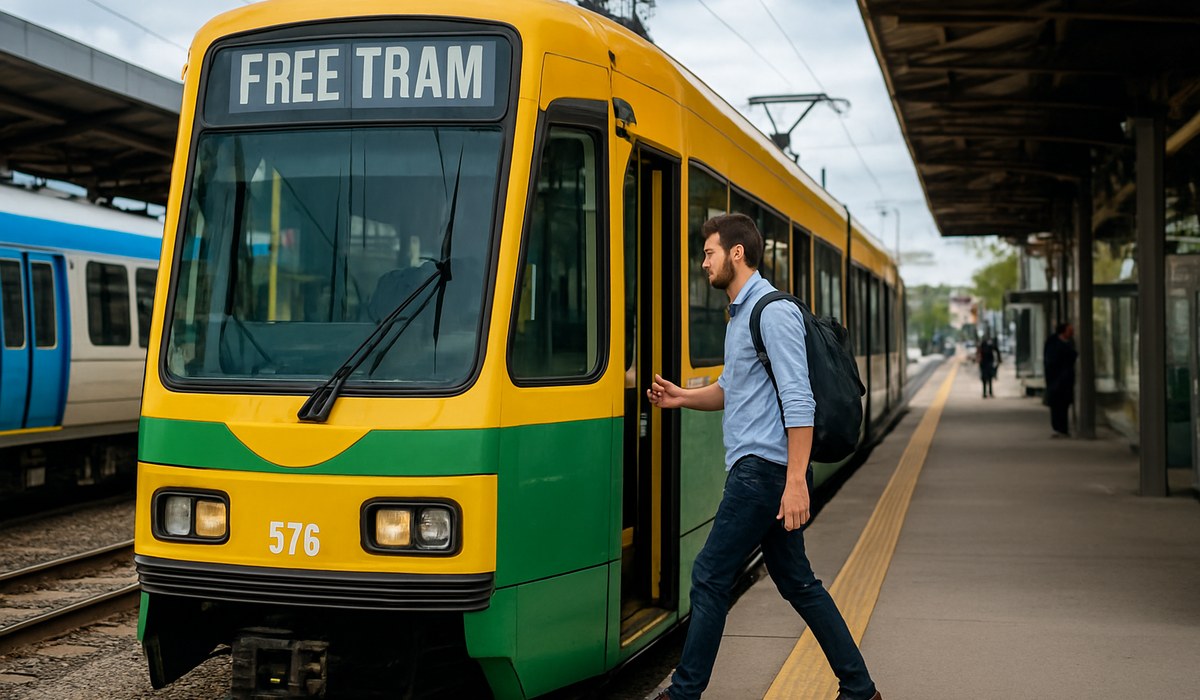
Image generated by AI
**> Quick Summary
- Victoria announces zero-cost unlimited access to all trains, trams, and buses starting April 2026
- Policy positions Australia as a mobility leader responding to severe global fuel shortages
- Expected to drive tourism demand and reduce regional transport bottlenecks
- Free transit aligns with sustainability standards outlined by international railway bodies**
Victoria's Free Transit: A Response to Global Fuel Crisis
As energy markets spiral from historic fuel shortages, Victoria, Australia's second-largest state, has made a bold wager on public mobility. Beginning April 2026, residents and visitors will enjoy zero-cost, unlimited access across Melbourne's extensive metropolitan train network, the city's iconic tram system, and all regional bus services. The move comes as China Halts Fuel Exports: Airlines Weigh Surcharges as Jet Fuel Crisis Deepens continues reshaping how travellers navigate global transportation infrastructure.
The Victorian government has positioned this initiative as both a crisis response and a long-term tourism attraction strategy. Rather than passing petrol price spikes to consumers through fare hikes, the state is absorbing operating costs through general revenue and federal transport grants—a decision that reflects decades of infrastructure investment finally paying dividends during a moment of planetary transition.
Tourism Victoria's acting director, speaking to regional media on March 28, framed the announcement as transformational: "We're turning a crisis into competitive advantage. When fuel is scarce, accessible public transit becomes the primary draw for travellers seeking authentic, uninterrupted experiences." The tram and train networks alone carry over 380 million passenger journeys annually—figures that operators expect to jump 35–50% within six months of the policy launch.
How Unlimited Public Transport Reshapes Australian Tourism
Travel patterns across Australia are shifting rapidly. Domestic visitors previously constrained by rental car costs or fuel surcharges now face a dramatically altered calculus. A return flight to Melbourne plus accommodation represents a smaller total outlay when ground transport carries zero marginal cost.
Regional areas connected to Melbourne's rail spine—including Geelong, Ballarat, and Bendigo—stand to benefit substantially. These secondary tourist destinations, traditionally overshadowed by Sydney's dominance, suddenly offer easier, cheaper day-trip and multi-day itineraries. Accommodation providers in smaller regional towns report early bookings surging 40% month-on-month since the announcement leaked to industry stakeholders on March 25.
The tram network, a fixture of Melbourne's identity and a major photographic draw for international visitors, becomes particularly valuable. Visitors from Asia-Pacific markets—where integrated transit systems command premium fares—will find unlimited tram access a striking differentiator. Japanese, Korean, and Singapore-based travel agents are already marketing "Melbourne's Free Tram Cultural Experience" tours to corporate groups and heritage-focused travellers.
Buses extending into regional Victoria, from coastal Torquay to mountainous communities in the Grampians, now function as affordable gateways to natural attractions previously difficult to access without personal vehicle rental. The policy effectively democratises exploration, a narrative that resonates powerfully with budget-conscious and environmentally conscious segments.
Economic & Environmental Impact: Building the Case for Free Transit
The financial engineering behind Victoria's initiative reflects broader shifts in how governments fund transport in scarcity-driven economies. Rather than attempting to increase fares during fuel crises—a politically fraught move—Victoria has chosen to socialise costs, betting that higher ridership volume and tourism spending will generate tax revenue and economic multiplier effects.
Early economic modelling by the Victorian Treasury suggests the policy will cost approximately AUD $1.8 billion annually to operate. Set against projected tourism revenue increases of AUD $2.4 billion (accounting for accommodation, food, attractions, and retail spending by incremental visitors), the net fiscal position appears favourable within a two-year horizon.
Environmental gains are similarly substantial. Public transport produces roughly one-tenth the carbon emissions per passenger-kilometre compared to private vehicles. With ridership expected to climb significantly, Victoria could offset approximately 450,000 tonnes of CO2 annually—equivalent to removing 100,000 petrol cars from roads. Such figures align closely with standards established by the International Union of Railways{:target="_blank" rel="noopener noreferrer"}, which has documented similar decarbonisation outcomes across European free-transit pilot programmes.
Operators face staffing and infrastructure pressures. Metro Trains Melbourne and the tram operator Yarra Trams have each received AUD $340 million in capital grants to expand peak-hour capacity, acquire new rolling stock, and reduce crowding. Bus operators across regional franchises received AUD $210 million for fleet modernisation and service frequency increases.
International Precedents: What Other Regions Can Learn
Victoria's gambit draws inspiration from successful free-transit models internationally. Luxembourg, the first nation to guarantee free public transport nationwide, saw ridership increase 12% in the first year post-implementation (2020), despite reduced marketing spend. The financial sustainability came through documented increases in economic activity and real-estate valuations along transit corridors.
Europe's premium intercity rail operator Eurostar{:target="_blank" rel="noopener noreferrer"} has documented rising demand for city-pair routes when customers perceive first-mile and last-mile connections as friction-free. Victoria's bundling of trains, trams, and buses creates exactly this integrated ecosystem, reducing the "pain of access" that discourages short-haul travel.
Meanwhile, Travel Saudi Arabia: Trip.com & Checkout Partnership Transforms 2026 illustrates how digital infrastructure and fare innovation work hand-in-hand. Victoria's policy pairs with a modernised mobile ticketing platform—Myki, the state's existing card system—ensuring frictionless access for visitors unfamiliar with Australian transport conventions. The system now integrates with international payment methods and third-party booking apps used by travellers planning itineraries weeks in advance.
Tokyo's JR Pass model, which bundles multi-day unlimited rail access at premium prices, has grossed approximately USD $1.2 billion annually from international tourists. Victoria's free model inverts this: rather than capturing tourist spending via ticket premiums, the state cedes fare revenue to gain volume and indirect spending across the tourism ecosystem—a strategic choice that positions Australia competitively as fuel crises reshape global travel patterns.
Planning Your 2026 Victoria Trip: Transit Map & Travel Guide
The operational reality of Victoria's unlimited transit scheme is straightforward for visitors. From April 1, 2026 onwards, no Myki card purchase or tap-on requirement applies to trains, trams, or buses in the metropolitan zone or regional services. Visitors simply board and travel. This eliminates a traditional friction point: international tourists often struggle with local payment systems and fare structures.
The Melbourne train network spans four main lines (Werribee, Williamstown, Lilydale, Sandringham) plus express services to regional centres. Peak-hour frequency on metropolitan routes typically runs at 3–5 minute intervals; expect slightly longer waits in off-peak. Regional trains to Geelong and Ballarat depart Melbourne's Southern Cross station every 30–60 minutes.
The tram network covers 250 kilometres, making it the world's largest by route length. The 109 tram routes range from the heritage Circle Route (popular with first-time visitors) to longer suburban spokes extending to Williamstown and Preston. The system operates 5:00 a.m. to midnight daily; selected routes run 24-hour service on weekends.
Buses fill coverage gaps, particularly in outer suburbs
Disclaimer
This article is for informational and educational purposes only. It does not constitute legal, financial, or professional advice. While we strive to provide accurate and up-to-date information, travel policies, regulations, and conditions change rapidly. Always verify information with official sources before making travel decisions. Nomad Lawyer makes no representations about the accuracy, reliability, completeness, or suitability of the information provided. Readers should consult qualified professionals for advice specific to their circumstances. The views expressed in this article are those of the author and do not necessarily reflect the views of Nomad Lawyer.
Raushan Kumar
Founder & Lead Developer
Full-stack developer with 11+ years of experience and a passionate traveller. Raushan built Nomad Lawyer from the ground up with a vision to create the best travel and law experience on the web.
Learn more about our team →