
Travel Airports Airline Crisis: TSO Shortage Triggers Massive Flight Delays March 2026
U.S. travel airports airline operations face unprecedented disruptions as Transportation Security Officers work unpaid during the federal government shutdown in March 2026. Thousands of flights delayed nationwide.

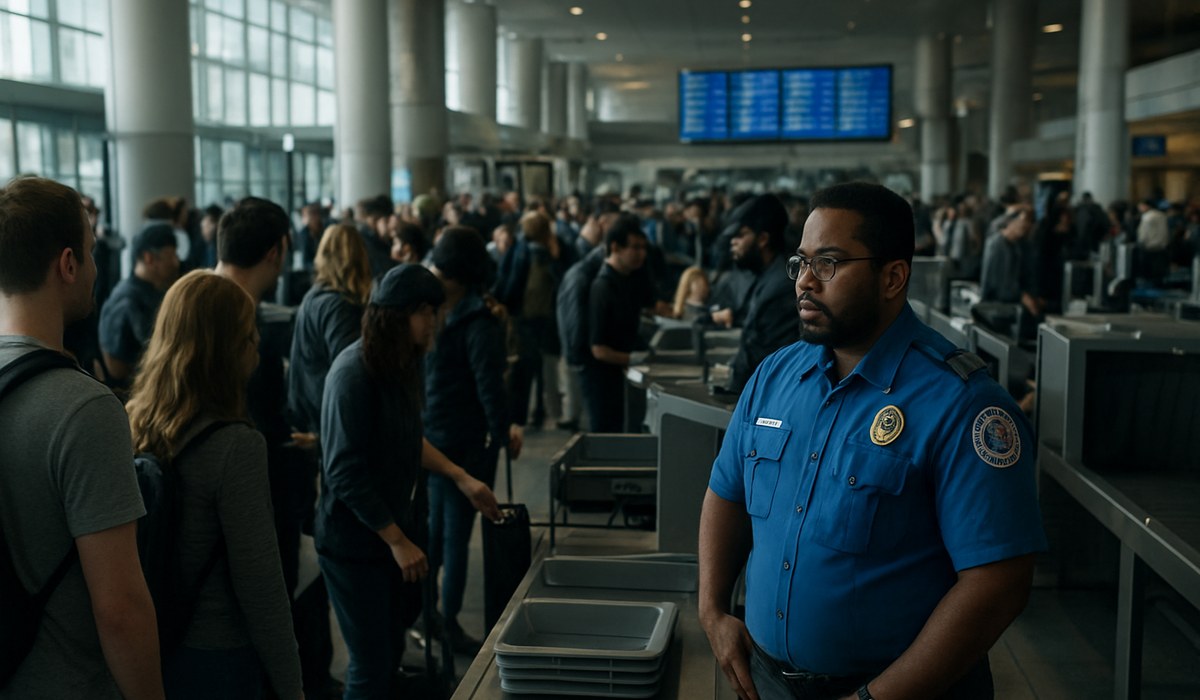
Image generated by AI
Breaking: TSA Checkpoint Crisis Paralyzes Major U.S. Travel Hubs
U.S. travel airports airline networks are grappling with unprecedented operational strain as the ongoing federal government shutdown forces Transportation Security Officers (TSOs) to work without compensation. Major aviation hubs including Atlanta Hartsfield-Jackson (ATL), Los Angeles International (LAX), Dallas/Fort Worth (DFW), and Chicago O'Hare (ORD) report severe security checkpoint delays, with some passengers waiting four to six hours to clear screening. The crisis has triggered cascading flight delays across domestic and international routes, affecting hundreds of thousands of travelers during what should be peak spring travel season.
The Root Cause: Unpaid TSOs and Security Infrastructure Collapse
The current government shutdown has created an unprecedented staffing crisis at Transportation Security Administration checkpoints nationwide. TSOs, who are federal employees, continue reporting to work without paychecks while processing record travel volumes. This combination of financial hardship and exhaustion has sparked callouts and reduced checkpoint efficiency at travel airports airline operations coast-to-coast. According to FAA reports, TSO absence rates have surged to levels not seen since 2013. The situation strains both security operations and the broader travel experience for millions of American passengers.
Which Airlines Face the Worst Delays?
Major carriers grapple with mounting operational challenges tied to checkpoint congestion. American Airlines, United Airlines, Delta Air Lines, and Southwest Airlines have issued travel alerts warning passengers of potential delays. These carriers operate from the most severely affected travel airports airline hubs, where security lane capacity remains critically reduced. United Airlines alone canceled 127 domestic flights on March 21–22, while Southwest Airlines implemented schedule reductions on routes from Denver (DEN) and Phoenix Sky Harbor (PHX). FlightAware tracking shows average delays of 90–120 minutes across major carriers, with no improvement forecasted until federal funding resumes.
Impacted Routes and Real-Time Flight Status
East Coast and West Coast corridors face the heaviest disruptions. Routes between New York (JFK/LGA/EWR), Boston (BOS), and Miami (MIA) show consistent delays exceeding two hours. Midwest hubs like Chicago (ORD) and Minneapolis (MSP) experience 45–90 minute setbacks. Western travel airports airline operations from San Francisco (SFO), Los Angeles (LAX), and Las Vegas (LAS) suffer similar gridlock. Transcontinental flights—particularly evening departures—accumulate delays throughout the day as morning backups cascade forward. FlightAware provides live delay tracking and allows passengers to monitor their specific flights in real time.
Traveler Action Checklist
- Arrive 3–4 hours early for domestic flights and 4–5 hours for international departures at affected travel airports airline hubs.
- Check your flight status on FlightAware or your airline's app before heading to the airport.
- Use TSA PreCheck or CLEAR if enrolled—these expedited screening programs operate with reduced but functional capacity.
- Pack medications and essentials in carry-on bags to account for potential extended layovers or reroutes.
- Monitor airline email and text alerts for schedule changes, which occur frequently during this crisis.
- Consider rebooking on alternative carriers if your preferred airline shows consistent delays on your desired route.
- Document delays over three hours for potential compensation claims under U.S. Department of Transportation regulations.
- Contact your airline immediately if you miss a connection due to TSA delays—documentation strengthens compensation requests.
Operational Impact Across Travel Airports Airline Networks
The shutdown disrupts far more than passenger screening. Ground crew shortages, delayed baggage handling, and reduced air traffic control staffing amplify travel airports airline operational challenges. Airlines report difficulty coordinating aircraft maintenance and turnaround schedules. Catering delays and flight crew scheduling conflicts multiply as connected flights pile up. Regional carriers operating feeder flights to major hubs face cascading cancellations. The Federal Aviation Administration continues operating at reduced capacity, constraining flight approvals and runway availability at congested airports. This multiplier effect means even flights departing from less-affected airports grapple with ripple delays from connections originating at TSA-strained hubs.
Passenger Rights and Compensation Frameworks
Under U.S. Department of Transportation regulations, airlines must provide compensation for delays caused by operational factors within their control. However, security-related delays present a gray area—airlines often classify TSA checkpoint congestion as "extraordinary circumstances" beyond their responsibility. Passengers should document departure delays exceeding three hours with photo timestamps and request written delay explanations from airlines. The U.S. DOT website at transportation.gov/airconsumer outlines specific compensation rights by delay duration and flight type. For flights delayed over three hours domestically, passengers may pursue compensation claims directly with the airline. International flights have different thresholds and regulations; consult DOT guidance for your specific itinerary.
Estimated Recovery Timeline
Federal government funding negotiations remain ongoing with no confirmed resolution date. Industry sources suggest operations may normalize within 7–14 days if shutdown funding legislation passes. However, additional time may be required for TSO staffing levels to stabilize and checkpoint efficiency to fully recover. Airlines are implementing contingency scheduling, reducing flight volumes on high-delay routes through mid-April 2026. The IATA projects cumulative passenger impact may exceed 2 million individuals before full recovery occurs.
| Factor | Current Status | Expected Impact |
|---|---|---|
| Government Shutdown Duration | Ongoing since March 15, 2026 | Cascading travel disruptions |
| TSO Paycheck Status | Unpaid since March 15 | Staffing callouts, reduced efficiency |
| Average Checkpoint Wait Time | 90–180 minutes | 30–50% of passengers miss flights |
| Affected Major Airports | 35+ facilities | East Coast, Midwest, West Coast hubs |
| Airlines Issuing Alerts | American, United, Delta, Southwest | Hundreds of daily cancellations |
| FlightAware Delay Index | 1,200+ delays/day | 12% overall traffic reduction |
| Estimated Recovery Timeline | 7–21 days post-shutdown | Normal operations by early April 2026 |
What This Means for Travelers Planning March–April 2026 Trips
The current government shutdown creates genuine risk for business and leisure travelers. You should assume airport arrival times will extend by two to three hours beyond pre-shutdown baselines. Book morning flights when possible—afternoon and evening departures suffer heaviest delays as queues build throughout the day. If traveling to major hubs like Atlanta, New York, Los Angeles, or Chicago, consider flying into secondary airports like Fort Lauderdale (FLL), Newark (EWR), or Long Beach (LGB) when viable alternatives exist. Purchase trip insurance with coverage for delay-related rebooking; several carriers now exclude TSA-related delays from standard policies. Remote work flexibility or flexible meeting schedules should be prioritized for critical travel. Finally, monitor government shutdown updates daily, as rapid resolution could suddenly restore normal operations.
FAQ: Travel Airports Airline Operations During March 2026 Crisis
Will my flight be canceled due to TSA staffing shortages? Cancellations occur directly due to checkpoint delays when passengers cannot clear security. Airlines have reduced April 2026 schedule capacity by 8–12% on high-traffic routes. Check FlightAware daily and contact your airline for official cancellation status. Cancellations are most likely on morning flights with tight connection windows.
How long will travel airports airline delays persist during the government shutdown? Delays will continue throughout the shutdown period and gradually improve after federal funding resumes. Recovery typically requires 7–14 additional days for TSO staffing and checkpoint efficiency to normalize. The Federal Aviation Administration expects operations to stabilize by early April 2026 if shutdown funding resolves within the next week.
What compensation can I claim if TSA delays cause me to miss my flight? Airlines classify TSA delays as extraordinary circumstances beyond their control, limiting compensation eligibility. However, document all delays exceeding three hours and request written explanations from your airline. Review U.S. DOT airline consumer protections for compensation frameworks. Each airline has different policies—contact customer service with timestamped documentation.
Which travel airports airline routes are safest to book during the March 2026 shutdown? Regional and smaller airports like Oklahoma City (OKC), Nashville (BNA), and Austin (AUS) experience minimal delays. Flights departing before 9 a.m. clear TSA checkpoints faster than afternoon departures. Avoid peak hours (3 p.m.–7 p.m.) when checkpoint queues peak. Check individual airport social media accounts for real-time wait times before driving to the terminal.
Related Travel Guides
TSA PreCheck Worth It? Speed Through Airport Security in 2026 Best U.S. Airport Lounges for Flight Delay Rebooking Spring Travel Planning: Avoiding Peak Airport Crowds
Disclaimer
This article is for informational and educational purposes only. It does not constitute legal, financial, or professional advice. While we strive to provide accurate and up-to-date information, travel policies, regulations, and conditions change rapidly. Always verify information with official sources before making travel decisions. Nomad Lawyer makes no representations about the accuracy, reliability, completeness, or suitability of the information provided. Readers should consult qualified professionals for advice specific to their circumstances. The views expressed in this article are those of the author and do not necessarily reflect the views of Nomad Lawyer.
Kunal K Choudhary
Co-Founder & Contributor
A passionate traveller and tech enthusiast. Kunal contributes to the vision and growth of Nomad Lawyer, bringing fresh perspectives and driving the community forward.
Learn more about our team →