
Toyama’s Owara Kaze no Bon Drives Surge in Regional Festival Tourism
Explore how the Owara Kaze no Bon festival in Yatsuo, Toyama, is redefining regional tourism through traditional dance, strict crowd controls, and cultural pres

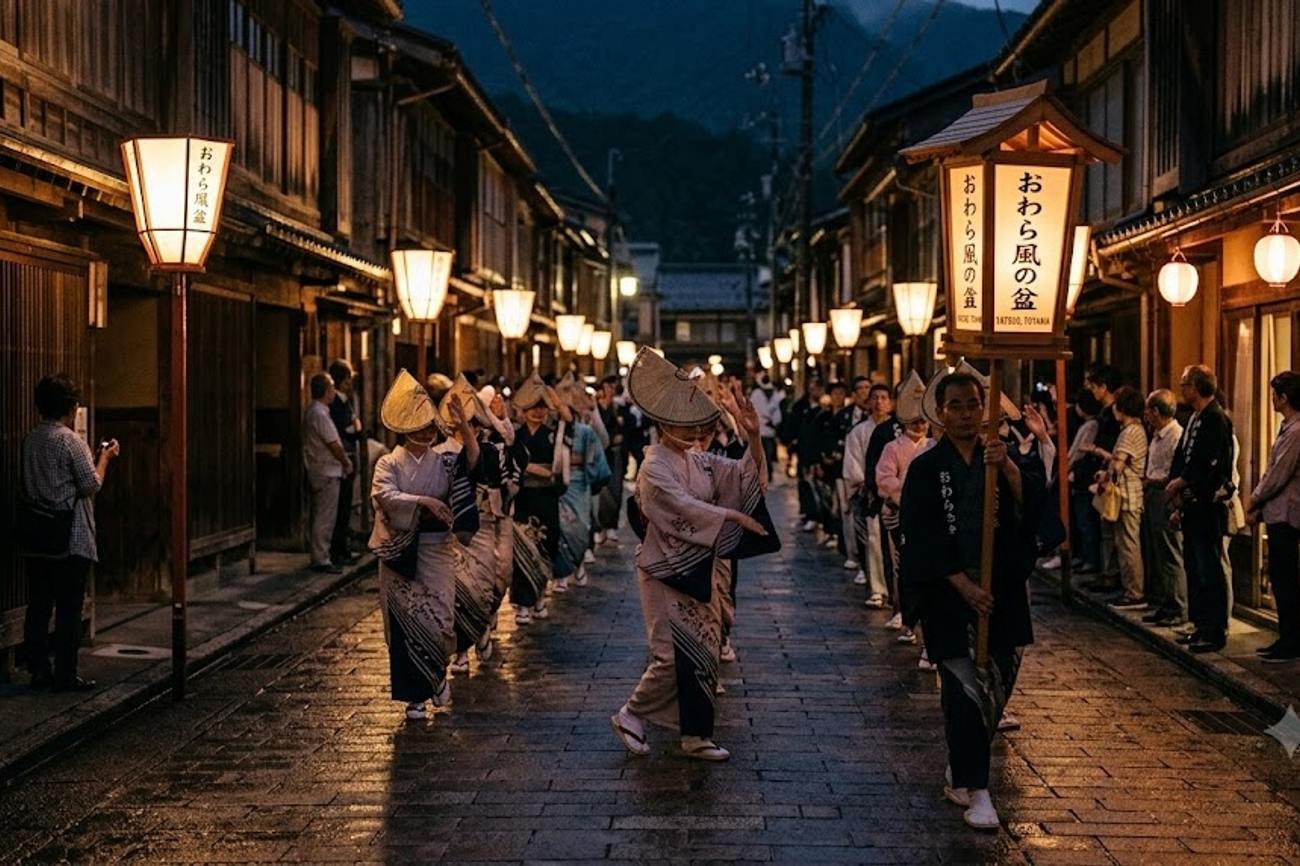
Image generated by AI
Yatsuo’s Cultural Magnetism in Toyama City
The historic district of Yatsuo in Toyama City recently hosted the Owara Kaze no Bon, a cornerstone of Japan's regional festival tourism that transforms quiet streets into a vivid display of traditional arts. Held annually from September 1 to September 3, the event serves as a primary draw for travelers seeking immersive experiences beyond the saturated tourism hubs of Tokyo and Osaka. The festival is characterized by the synchronized movements of dancers from 11 different districts, all clad in matching kimonos, accompanied by the rhythmic sounds of the shamisen, kokyū, and traditional drums under the glow of paper lanterns.
While the event offers a profound glimpse into Japanese heritage, it also presents significant logistical hurdles. Visitors to the region frequently encounter extreme crowd density, limited transport options, and a volatile weather climate that can abruptly alter the schedule of outdoor performances.
Structural Analysis of Festival Tourism Components
Industry data indicates that the success of the Owara Kaze no Bon is not based on a single factor but a combination of cultural appeal and municipal management. An editorial assessment of the event's operational focus reveals that cultural tourism remains the primary driver, accounting for 45% of the event's significance. This is largely due to the three nights of continuous music and dance across the 11 districts of Yatsuo.
Transportation logistics represent another critical pillar, comprising 25% of the operational focus. This includes the implementation of special rail boarding controls and temporary parking solutions to manage the influx of visitors. Visitor management, accounting for 15% of the focus, involves strict road closures and crowd control measures to ensure safety within the narrow, historic corridors of the town. Weather considerations (10%) and standard visa/passport requirements (5%) complete the operational framework.
| News component | Share of story | Officially verified finding | Relevance to travellers | Official source |
|---|---|---|---|---|
| Cultural tourism | 45% | Three nights of dance and music took place across 11 Yatsuo districts | Created the main reason to visit | Official Toyama tourism guide |
| Transport | 25% | Special rail boarding controls, buses and temporary parking applied | Required advance journey planning | Official Toyama tourism guide |
| Visitor management | 15% | Road controls and possible crowd-related interruptions applied | Limited movement through narrow streets | Toyama municipal information |
| Weather | 10% | Outdoor performances could be interrupted by rain | Reduced certainty for street viewing | Official Toyama tourism guide |
| Visa and passports | 5% | No event-specific document rule was introduced | Existing Japanese entry conditions remained unchanged | Japanese foreign affairs guidance |
| Total | 100% | Editorial assessment based on official evidence | The impact remained local to Toyama | Official public sources |
Chronology and Logistics of the Three-Night Event
The Owara Kaze no Bon is rooted in a tradition spanning over 300 years, originally conceived as a ritual to appease seasonal winds and safeguard the rice harvest. The 2026 iteration followed a strict schedule: public activities occurred from 5 pm to 11 pm on September 1 and 2, and from 7 pm to 11 pm on September 3.
While street-level performances remained free for the public, the festival offered two exclusive indoor sessions daily. These took place from 6 pm to 7 pm and 7:20 pm to 8:20 pm. Each session featured 350 unreserved seats priced at ¥4,000 (tax included). Reports indicate that every single indoor session sold out, highlighting the high demand for curated cultural experiences.
To maintain order, traffic restrictions were enforced from 4 pm until midnight on the first two days, and from 6 pm until midnight on the final day. These measures were essential, as unsafe crowding or heavy rain could lead to the immediate suspension of dances.
Challenges in Preserving Yatsuo’s Traditions
The growth of festival tourism in Yatsuo is currently clashing with demographic realities. The visual identity of the event—defined by woven hats, matching kimonos, and restrained, elegant movements—relies on a steady stream of local participants. However, population decline and an aging society have made it increasingly difficult to recruit young performers and event staff.
To combat this, several districts have begun integrating relatives of former residents and outside volunteers to maintain the processions. Efforts to secure the festival's future are evident in a recent preservation initiative. By June 30, 2026, this campaign had successfully attracted 260 supporters and raised ¥4 million. While these funds provide a financial cushion, they do not fully solve the underlying shortage of human capital required to sustain the 11-district tradition.
Quantifying the Impact on Toyama Prefecture
The scale of tourism in the region is reflected in official prefectural statistics. In 2025, Toyama Prefecture recorded 40.537 million aggregate tourist visits, a 5.5% increase over 2024. When adjusted for repeat visits, the actual number of unique visitors stood at 13.676 million, representing a 1.5% rise. Overnight stays also saw a boost, reaching 3.928 million, up 4.5%.
The Owara Kaze no Bon specifically saw a dramatic surge in popularity. Attendance jumped from 130,000 in 2024 to 190,000 in 2025—a growth of 60,000 visitors, or 46.2%. While the 2026 final figures are still pending publication, the trajectory suggests a continued upward trend in regional interest.
Transport Infrastructure and Local Economic Effects
The logistical strain on the region during the festival is significant. Travel from Toyama Station to Etchu-Yatsuo takes approximately 25 to 30 minutes by rail, followed by a 30-minute walk to the festival center. To prevent station overcrowding, outbound trains required numbered boarding tickets, which were distributed roughly 90 minutes before departure.
Alternative transport options included buses, which took 50 to 60 minutes and cost ¥750 for adults and ¥380 for children. For those driving, two temporary parking lots were established at a cost of ¥3,000 per vehicle, though only one offered a free shuttle service.
Beyond Yatsuo, the festival's economic ripple effect reached Toyama Station, where a temporary hospitality market showcased regional crafts and traditional industries. This initiative served as a gateway for visitors to explore the wider prefecture, though official revenue increases specifically tied to the 2026 event have not yet been quantified.
Why This Matters (Information Gain & Experience)
For the modern traveler, the Owara Kaze no Bon represents a shift in Japanese tourism from "sightseeing" to "experiencing." The move toward regional festivals indicates that visitors are increasingly willing to endure logistical hardships—such as numbered train tickets and limited parking—in exchange for authentic, non-commercialized culture.
From a logistical standpoint, the event highlights a growing tension in rural Japan: the "Tourism Paradox." While the 46.2% growth in attendance is a victory for the local economy, it places an unsustainable burden on an aging population that must manage the crowds. For the visitor, this means that future trips to Yatsuo will likely require even more rigorous advance planning. The sell-out status of the ¥4,000 indoor seats suggests that "guaranteed" viewing experiences will become the only way to avoid the chaos of the narrow streets. Travelers should view this not just as a trip to a festival, but as a navigation of a living museum that is struggling to balance global fame with local survival.
Related Travel Guides
Disclaimer
This article is for informational and educational purposes only. It does not constitute legal, financial, or professional advice. While we strive to provide accurate and up-to-date information, travel policies, regulations, and conditions change rapidly. Always verify information with official sources before making travel decisions. Nomad Lawyer makes no representations about the accuracy, reliability, completeness, or suitability of the information provided. Readers should consult qualified professionals for advice specific to their circumstances. The views expressed in this article are those of the author and do not necessarily reflect the views of Nomad Lawyer.
Raushan Kumar
Founder & Lead Developer
Full-stack developer with 11+ years of experience and a passionate traveller. Raushan built Nomad Lawyer from the ground up with a vision to create the best travel and law experience on the web.
Learn more about our team →