
US Heritage Hospitality Shift: The Rise of Cinematic Tourism in 2026
Explore the 2026 surge in Wes Anderson-style cinematic hospitality. Analysis of the $638.87B heritage market and US regional economic drivers.

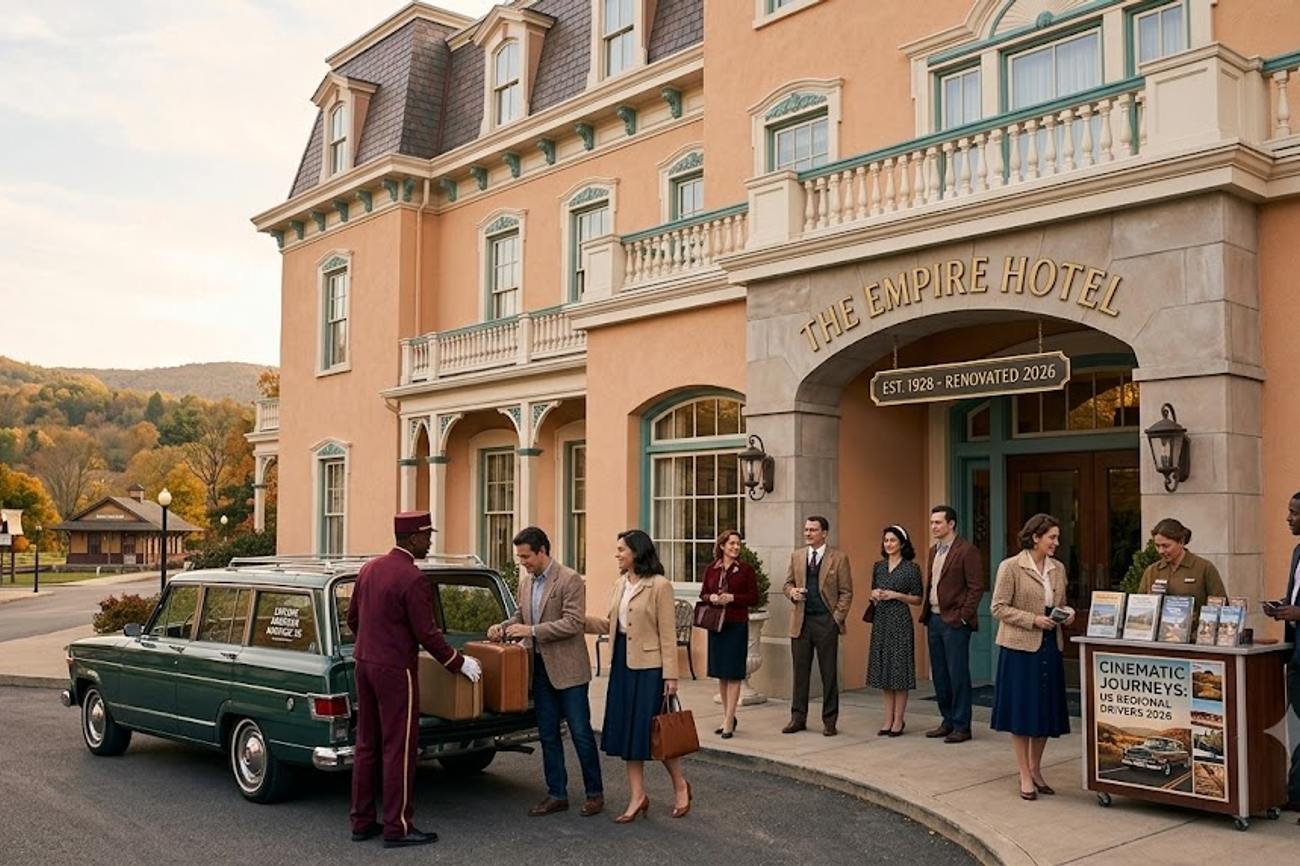
Image generated by AI
The Shift to Cinematic Hospitality
As of September 7, 2026, US travel trends show a decisive move away from corporate uniformity toward immersive, curated environments. This phenomenon, often termed "Wes Anderson style," prioritizes symmetry, bright color palettes, and analog nostalgia. This is not merely a cosmetic update; it is a structural shift in the hospitality economy where historic properties leverage genuine heritage to create auteur-driven guest experiences.
True cinematic hospitality is defined by a commitment to thematic consistency. Key markers include:
- Analog Integration: Replacement of digital key cards with physical room keys and the installation of rotary dial phones.
- Theatrical Service: Staff in period-accurate uniforms executing high-detail service protocols.
- Digital Detox Spaces: Large public areas designed for social interaction or reflection, intentionally devoid of electronic distractions.
Data from 2025 and 2026 indicate that Millennials and Gen Z travelers now prefer these unique boutique designs over traditional luxury resorts, driving significant private and public investment into regional landmarks.
Heritage Tourism Economic Data
The financial viability of this trend is supported by verified economic forecasts from August 2026. Heritage tourism has become a primary driver of regional stability and job creation in the United States.
| Metric | Value / Statistic | Period/Year |
|---|---|---|
| Global Heritage Tourism Market Value | USD 638.87 Billion | 2025 |
| Projected Global Market Value | USD 954.07 Billion | 2034 |
| US Heritage Site Total Economic Output | USD 56.3 Billion | 2024 |
| Jobs Generated (US Heritage/Gateway Communities) | 340,100 | 2024 |
Traveler Logistics Guide
From a ground-level perspective, navigating the shift toward boutique heritage properties requires a different approach than booking corporate chains.
Booking & Connectivity
- Avoid Peak Season: To experience the "cinematic" atmosphere without crowds, book during autumn or winter. State tourism boards are currently incentivizing off-season travel to reduce summer congestion.
- Connection Planning: Many of these properties are located in "gateway communities" near national monuments. Ensure your transit plan includes a rental vehicle or local shuttle, as these historic districts often have limited ride-share availability.
- Digital Expectations: Be aware that "analog" themes may mean limited in-room tech. Confirm Wi-Fi availability in public areas if you are traveling for business.
Compliance & Access
- Historic Site Regulations: When visiting properties listed on the National Register of Historic Places, be mindful of structural conservation rules. Some areas may have restricted access to preserve original flooring or facades.
Infrastructure & Policy Impact
The preservation of these properties is governed by the National Historic Preservation Act (NHPA) and the National Register of Historic Places. To access federal and state tax credits, hoteliers must ensure all renovations align with the building's original architectural vernacular.
This creates a complex engineering challenge: integrating modern plumbing and electrical grids into vintage structures without altering the exterior. In 2025 and 2026, state tourism ministries expanded cultural preservation grants to help independent owners balance contemporary safety standards with strict architectural conservation.
The result is a "multiplier effect" where expenditure at these resorts supports local artisans and independent service providers, stabilizing rural and coastal municipal economies.
Related Travel Guides
Disclaimer
This article is for informational and educational purposes only. It does not constitute legal, financial, or professional advice. While we strive to provide accurate and up-to-date information, travel policies, regulations, and conditions change rapidly. Always verify information with official sources before making travel decisions. Nomad Lawyer makes no representations about the accuracy, reliability, completeness, or suitability of the information provided. Readers should consult qualified professionals for advice specific to their circumstances. The views expressed in this article are those of the author and do not necessarily reflect the views of Nomad Lawyer.
Preeti Gunjan
Contributor & Community Manager
A passionate traveller and community builder. Preeti helps grow the Nomad Lawyer community, fostering engagement and bringing the reader experience to life.
Learn more about our team →