
US Heritage Hotels Fuel Surge in Cultural Tourism Across Massachusetts, New York, and New Mexico
Historic hotels in Massachusetts, New York, and New Mexico are revitalizing US cultural tourism, attracting a projected 70.5 million international visitors in 2
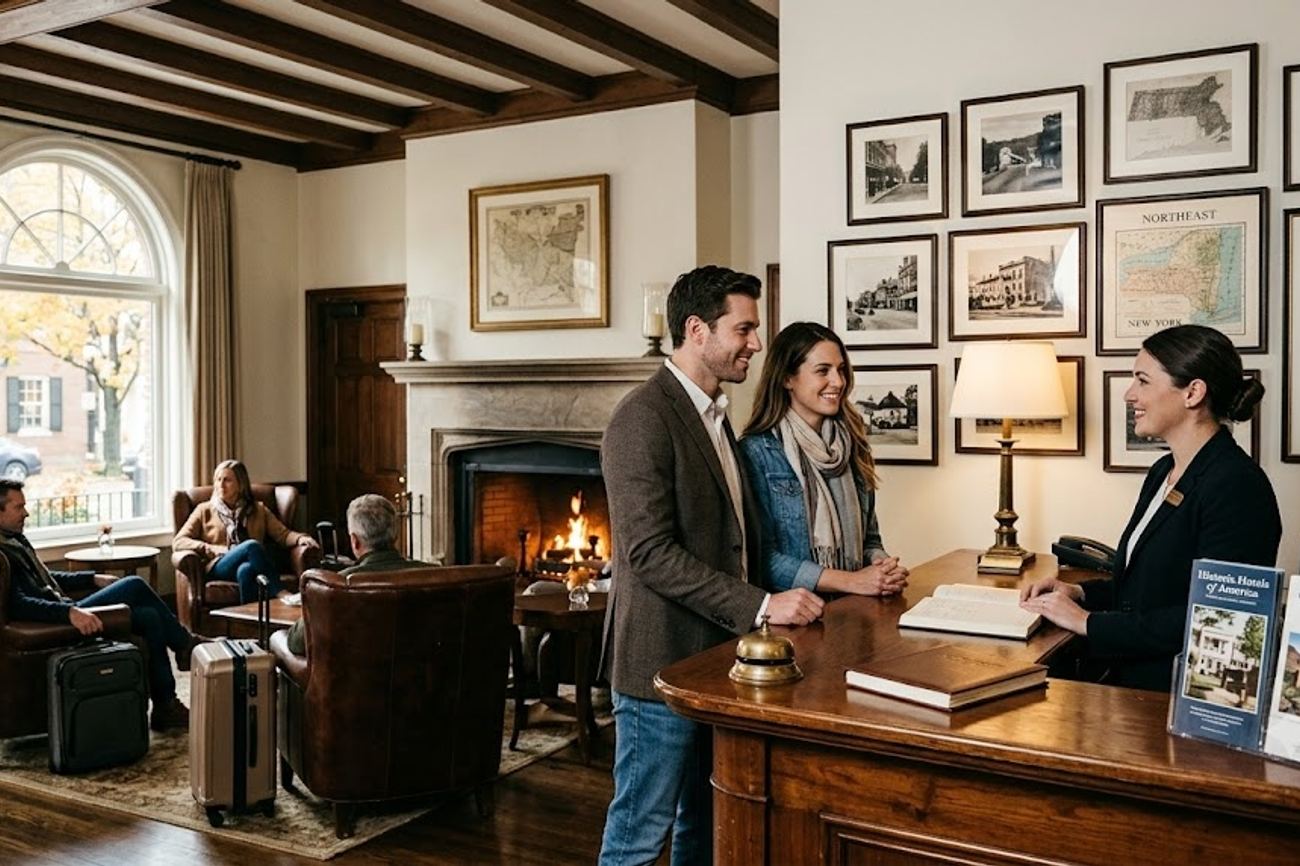
Image generated by AI
US Heritage Properties Redefine the Modern Travel Experience
The American hospitality sector is witnessing a significant pivot as travelers increasingly abandon standardized hotel chains in favor of immersive journeys into local traditions, colonial architecture, and national history. Across the United States, historic hotels are no longer merely places to sleep; they have evolved into cultural anchors that revitalize the broader tourism industry. By offering guests a tangible connection to the past, these recognized heritage properties are preserving destination identities while attracting a demographic of travelers seeking "off the beaten path" narratives and authentic community engagement.
This trend is particularly evident in the rise of heritage tourism, where the accommodation itself serves as the primary attraction. By integrating lodging with historical context, these properties allow visitors to explore landmarks and ancestral stories from a position of intimacy. This shift reflects a global movement in international travel toward meaningful, experience-based journeys that prioritize local identity over mass-market tourism.
National Trends in Heritage Tourism and Visitor Projections
The appetite for cultural immersion is reflected in recent industry forecasts. According to the National Travel and Tourism Office (NTTO), international visitation to the United States is on a steady upward trajectory. Projections indicate that approximately 70.5 million international visitors will enter the U.S. in 2026, marking a notable increase over 2025 figures.
Central to this growth is the Historic Hotels of America program, managed by the National Trust for Historic Preservation. This initiative identifies and recognizes hundreds of properties that have successfully maintained their historic character while adapting to modern hospitality standards. These hotels act as gateways, encouraging tourists to extend their stays and explore regional areas beyond the typical high-traffic city centers.
| Heritage Tourism Indicator | 2026 Relevance |
|---|---|
| US International Visitors Forecast | Around 70.5 million visitors expected in 2026 |
| Historic Hotels of America | 280+ recognised historic properties |
| Main Tourism Segment | Heritage, cultural and experience-based travel |
| Preservation Organisation | National Trust for Historic Preservation |
| Visitor Motivation | History, architecture and authentic experiences |
Massachusetts Preserves Revolutionary War and Literary Legacies
Massachusetts continues to hold a dominant position in the U.S. heritage market, leveraging its dense concentration of colonial towns and revolutionary landmarks. A primary example of this is Concord’s Colonial Inn, a property with roots stretching back to 1716.
The inn is deeply woven into the fabric of the American Revolution; during the pivotal events of the Battle of Concord in 1775, one of the property's wings served as a critical military storage facility. Beyond its military significance, the inn is a landmark for literary tourism, having maintained strong associations with influential figures such as Henry David Thoreau. Today, the property serves as a hub for educational tourism, drawing visitors who wish to experience the preserved streets and colonial architecture of Concord.
| Feature | Details |
|---|---|
| Property | Concord’s Colonial Inn |
| Location | Concord, Massachusetts |
| Historic Origin | 1716 |
| Historical Connection | American Revolution |
| Tourism Theme | Colonial and educational travel |
New York’s Hudson Valley Integrates History with Regional Exploration
In New York, the synergy between historic lodging and regional tourism is exemplified by the Beekman Arms and Delamater Inn in Rhinebeck. With hospitality origins dating back to a tavern established in 1704, this property represents one of the oldest continuous hospitality traditions in the country.
The Beekman Arms has evolved from a colonial-era waypoint for travelers into a luxury heritage destination. Its history is intertwined with the political figures and military movements of the Revolutionary War, making it a cornerstone of the Hudson Valley's cultural appeal. The region, known for its scenic vistas and historic villages, benefits significantly from such properties, which encourage "slow travel"—a trend where visitors spend more time engaging with local culture and nature.
The state’s broader tourism strategy, championed by I LOVE NY, emphasizes the importance of these heritage attractions. By promoting historic communities alongside major urban centers, New York is diversifying its visitor base and spreading economic benefits into rural areas.
| New York Heritage Tourism Element | Visitor Benefit |
|---|---|
| Hudson Valley | Scenic and cultural travel |
| Historic Inns | Authentic stays |
| Heritage Towns | Local exploration |
| Museums | Educational tourism |
| Architecture | Cultural experiences |
New Mexico Blends Spanish Colonial and Indigenous Heritage
The Southwest offers a distinct variation of heritage tourism, where the focus shifts to the intersection of Spanish colonial influence and Indigenous culture. In Santa Fe, the Hilton Santa Fe Historic Plaza provides a window into a 400-year legacy.
The site's origins trace back to 1625, beginning as a hacienda associated with the Ortiz family. This property exemplifies how historic hotels in New Mexico preserve traditional architecture and cultural narratives, offering a stay experience that is inextricably linked to the region's complex colonial and native history.
Why This Matters: The Impact on the Modern Traveler
For the contemporary traveler, the rise of heritage hotels signifies a move away from "checklist tourism"—where the goal is simply to see a landmark—toward "integrated tourism," where the stay itself is part of the education. When a guest sleeps in a room that may have housed a revolutionary soldier or a 19th-century author, the history becomes visceral rather than academic.
From a logistical and economic standpoint, this trend decentralizes tourism. By placing high-value accommodations in towns like Rhinebeck or Concord, the economic impact of travel is distributed away from overcrowded hubs and into local communities. This supports the preservation of historic buildings that might otherwise be demolished for modern development, ensuring that architectural heritage is funded by the very people who come to admire it.
Ultimately, this evolution in the hospitality sector creates a sustainable loop: preservation attracts visitors, and visitor spending funds further preservation.
Related Travel Guides
Disclaimer
This article is for informational and educational purposes only. It does not constitute legal, financial, or professional advice. While we strive to provide accurate and up-to-date information, travel policies, regulations, and conditions change rapidly. Always verify information with official sources before making travel decisions. Nomad Lawyer makes no representations about the accuracy, reliability, completeness, or suitability of the information provided. Readers should consult qualified professionals for advice specific to their circumstances. The views expressed in this article are those of the author and do not necessarily reflect the views of Nomad Lawyer.