
Portugal's 10 Most Stunning Natural Wonders: From Benagil Caves to Mount Pico in 2026
Explore Portugal's most breathtaking natural landmarks, cultural treasures, and hidden gems across the Iberian Peninsula—a complete guide to the country's top 10 wonders.

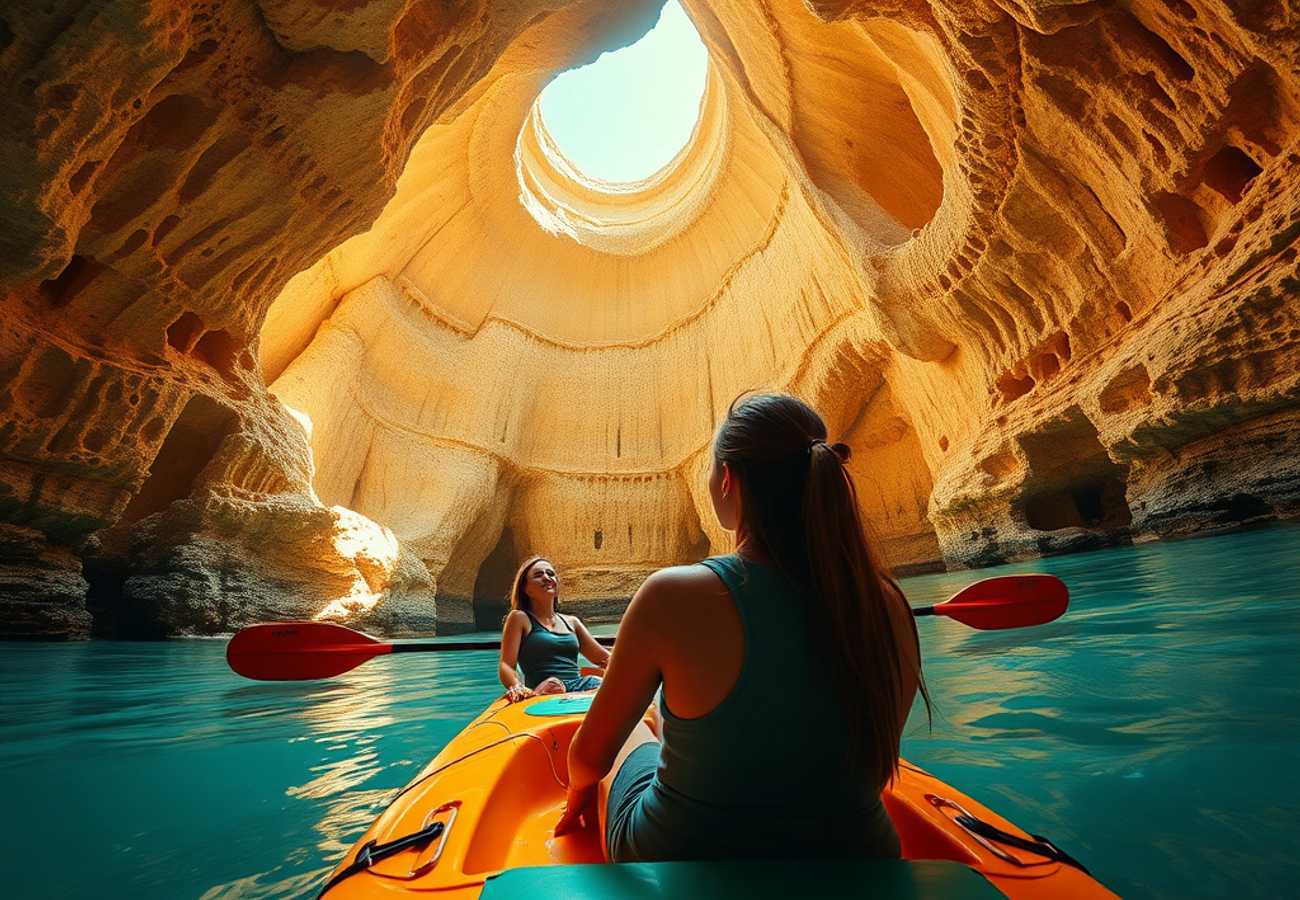
Image generated by AI
Portugal's Hidden Crown Jewels: A Complete Guide to the Nation's 10 Greatest Natural Wonders
I've spent weeks researching Portugal's most spectacular destinations, and what strikes me most is how this small nation on the Iberian Peninsula manages to pack such dramatic geological variety into just 92,000 square kilometers. From volcanic peaks to cave-carved coastlines, Portugal delivers wonders that rival destinations ten times its size.
Portugal isn't just about history—though its cultural treasures run deep. It's about raw, untamed landscapes that make even seasoned travelers pause and stare. Let me walk you through the ten absolute must-see natural wonders that define this European gem.
1. Benagil Cave: The Algarve's Underwater Cathedral
Reddit: "Benagil Cave isn't just beautiful—it's life-changing. Went on a kayak tour and my jaw stayed on the floor for hours." — r/travel
The Benagil Cave sits quietly along the Algarve coast, a small fishing village that's become a pilgrimage site for adventure travelers. This isn't just any sea cave—it's a 100-meter cathedral carved by millennia of Atlantic tides, with a natural skylight that floods golden afternoon light across turquoise waters.
Here's what you need to know: kayaking is the best approach. Swimming directly from the beach? The strong tides make it genuinely dangerous. A guided kayak tour (typically 2-3 hours, starting around ₹2,689-₹4,860) gets you safe, dry access while a local guide explains the geology and sea life.
The cave's real magic happens between 11 AM and 2 PM when sunlight penetrates the opening and illuminates the sand floor below. Go earlier or later, and you'll miss it.
2. Pena Palace: 19th-Century Romanticism on a Mountaintop
Pena Palace in Sintra is the postcard Portugal—and it completely lives up to the hype. Built starting in the Middle Ages but reimagined during the 19th century, this UNESCO World Heritage Site features wildly romantic architecture that feels half-Disney, half-Dracula's summer home.
The real secret? Skip the crowded palace interior and spend two hours exploring Pena Park. This sprawling 85-hectare garden hides mysterious pathways, exotic plants, and hidden lake valleys that most visitors never find. The park alone justifies the visit.
Pro tip: Day visits run around ₹1,296 for palace and park access. The combo tours from Lisbon (around ₹3,897-₹5,616 for 9-hour excursions) bundle in nearby Regaleira and Cabo Roca cliff walks—far better value.
3. Serra da Estrela: Portugal's Alpine Crown
At 1,993 meters, Serra da Estrela isn't towering, but it's rugged. This protected 888 square-kilometer park features Portugal's only alpine ecosystem—granite peaks, glacial lakes, and valleys that feel more Nordic than Mediterranean.
The village of Piódão is your destination. This hillside settlement has houses stacked like a Jenga puzzle, built vertically to maximize space on steep terrain. Hikers rave about the trekking routes (guided tours around ₹8,101) and the local Serra da Estrela cheese—a dense, nutty wheel that's been made here for centuries.
Visit in summer when weather is stable. Winter turns this into serious mountaineering territory.
4. Parque Nacional da Peneda-Gerês: Where Wolves Still Roam
Just an hour north of Porto, Penada-Gerês National Park covers over 270 square miles and remains Portugal's most wild region. This is where the country's reintroduction program has brought brown bears and wolves back from extinction—sightings are rare but possible.
The park also preserves Neolithic tombs scattered across forested valleys, evidence of human habitation dating back to 6000 B.C. The landscape is a patchwork of ancient trails, swimming holes, and mountain pastures.
Summer gets crowded, but it's also the safest season for hiking. According to Portugal's tourism board, the park attracts over 1.5 million visitors annually—most clustered between July and August. Guided day tours from Porto (around ₹7,020-₹11,341) include kayaking, picnics, and swimming.
5. Douro Valley: Terraced Vineyards and Ancient Wine Culture
The Douro Valley is UNESCO-protected for good reason. Rows of vineyard terraces carved into impossible slopes create a landscape that looks hand-painted. The Douro River winds through it all, reflecting golden afternoon light off ancient stone walls.
This is port wine country—the only place on Earth where authentic port is produced. But beyond wine, it's the ritual that matters. Locals head to neighborhood tascas (small wine bars) to taste regional dishes paired with glasses of whatever's open. This is where real Portuguese food lives: simple, seasonal, and perfect.
Boat tours with lunch (around ₹12,475-₹18,901) offer the full sensory experience. Train rides combine valley views with gourmet meals. The Douro was Portugal's first UNESCO World Heritage cultural landscape, and once you see those terraces, you understand why.
6. Belém Tower: Lisbon's 16th-Century Guardian
Standing on the Tagus River's banks, the Belém Tower is more than a monument—it's a statement. Built in 1514 to defend Lisbon from naval invasion, this Manuelino-style structure (a uniquely Portuguese architectural movement mixing Gothic, Renaissance, and maritime motifs) has watched four centuries of history unfold.
The rooftop terrace offers views of the bridge, the river, and the nearby Jerónimos Monastery—another UNESCO treasure. Most visitors miss the architectural details carved into the stone: armillary spheres (symbols of Portuguese exploration) and maritime ropes woven into the facade.
Guided walking tours bundling the tower, monastery, and pastry tastings run around ₹2,571-₹6,048. The tower itself closes at 5 PM, so arrive early.
7. Sete Cidades: The Azores' Most Photographed Crater Lake
Travel to the Azores—specifically São Miguel Island—and you reach Sete Cidades (Seven Cities), a volcanic crater that's become the most Instagram'd location in the archipelago.
This isn't a coincidence. The crater is 4 kilometers long, 2 kilometers wide, and 30 meters deep. Two lagoons sit within it, connected by a narrow channel. The optical illusion that makes Sete Cidades famous? The lagoons appear different colors—one greenish, one blue—due to variations in light reflection and mineral content.
Visit July-August for the most dramatic color contrast. Full-day tours with lunch (around ₹8,641) depart from Ponta Delgada and include stops at the volcanic waterfall of Ribeira dos Caldeirões. The Azores sit roughly 1,500 kilometers west of mainland Portugal, making them geographically Portugal but climatically subtropical.
8. Mount Pico: Portugal's Tallest Peak at 2,351 Meters
Mount Pico stands on its own island in the Azores—a dormant volcano that's the highest point in all of Portugal and the entire Atlantic island chain. The hike is brutal: 2,351 meters of elevation gain, hard volcanic rock, and weather that changes in minutes.
Most people don't summit. Instead, they hike to Casa da Montanha, the official starting point shelter, where rangers explain the mountain's geology, volcanic history, and the unique alpine plants that survive on the exposed slopes. Even partial hikes offer panoramic island views.
Full summit attempts (8-10 hours round-trip, around ₹9,613-₹10,693) require serious fitness and stable weather. Book guides locally—they know wind patterns and safe routes. Winter climbing is genuinely dangerous.
9. Pico do Arieiro: Madeira's Dramatic Third-Highest Peak
Moving to Madeira Island, Pico do Arieiro offers everything Mount Pico delivers but with more accessible terrain. At 1,861 meters, it's the third-highest peak on the island and rewards hikers with 360-degree panoramic views across Madeira's fractured volcanic landscape.
The trek from the summit parking area takes 2-3 hours and passes through cloud forests, alpine heathland, and dramatic ridges. On clear days, you can see Pico Ruivo (Madeira's highest peak) to the north.
Sunrise hikes are popular—arrive at 5:30 AM to catch the light breaking across the Atlantic. Afternoon clouds often obscure views by 2 PM.
10. Completing Portugal's Wonder Tour: Lesser-Known Gems Worth Your Time
Beyond these nine headline destinations, Portugal hides dozens of secondary wonders: the Peniche sea caves, the Nazaré beach cliffs (where big-wave surfers tackle 80-meter swells), the Monsanto granite boulder village, and the Lagos limestone lagoons of the Algarve interior.
The pattern? Portugal rewards curiosity. Major destinations handle crowds well. But venture 30 kilometers inland from any coastal resort, and you'll find landscapes that feel completely untouched.
Practical Notes for Your Portugal Adventure
Timing matters. Summer (July-August) brings weather reliability but massive crowds. May-June and September-October offer perfect temperatures with 40% fewer tourists. Winter (November-March) is cheap but wet and unstable for mountain visits.
Getting around requires either rental cars or guided tours. Portugal's public transit connects major cities but misses natural attractions. Many wonders (Benagil, Sete Cidades, Mount Pico) need specialized local guides—use established operators with strong safety records.
Budget roughly ₹3,000-₹6,000 per person daily for mid-range travel. Guided tours run ₹7,000-₹15,000 per day but include transportation and expertise that independently navigating would consume.
Portugal punches above its weight in natural wonders. What it lacks in size, it more than compensates for with variety, accessibility, and that indefinable quality that makes travelers keep returning.
Portugal isn't a destination—it's a series of surprises that keep unfolding the longer you stay.
Related Travel Guides
Disclaimer
This article is for informational and educational purposes only. It does not constitute legal, financial, or professional advice. While we strive to provide accurate and up-to-date information, travel policies, regulations, and conditions change rapidly. Always verify information with official sources before making travel decisions. Nomad Lawyer makes no representations about the accuracy, reliability, completeness, or suitability of the information provided. Readers should consult qualified professionals for advice specific to their circumstances. The views expressed in this article are those of the author and do not necessarily reflect the views of Nomad Lawyer.
Raushan Kumar
Founder & Lead Developer
Full-stack developer with 11+ years of experience and a passionate traveller. Raushan built Nomad Lawyer from the ground up with a vision to create the best travel and law experience on the web.
Learn more about our team →