
Thousands Stranded Flight Chaos Hits Six U.S. Airline Hubs April 19
Thousands stranded flight disruptions paralyzed six major U.S. airline hubs on April 19, 2026, as severe thunderstorms and network congestion triggered cascading delays and cancellations affecting travelers nationwide.

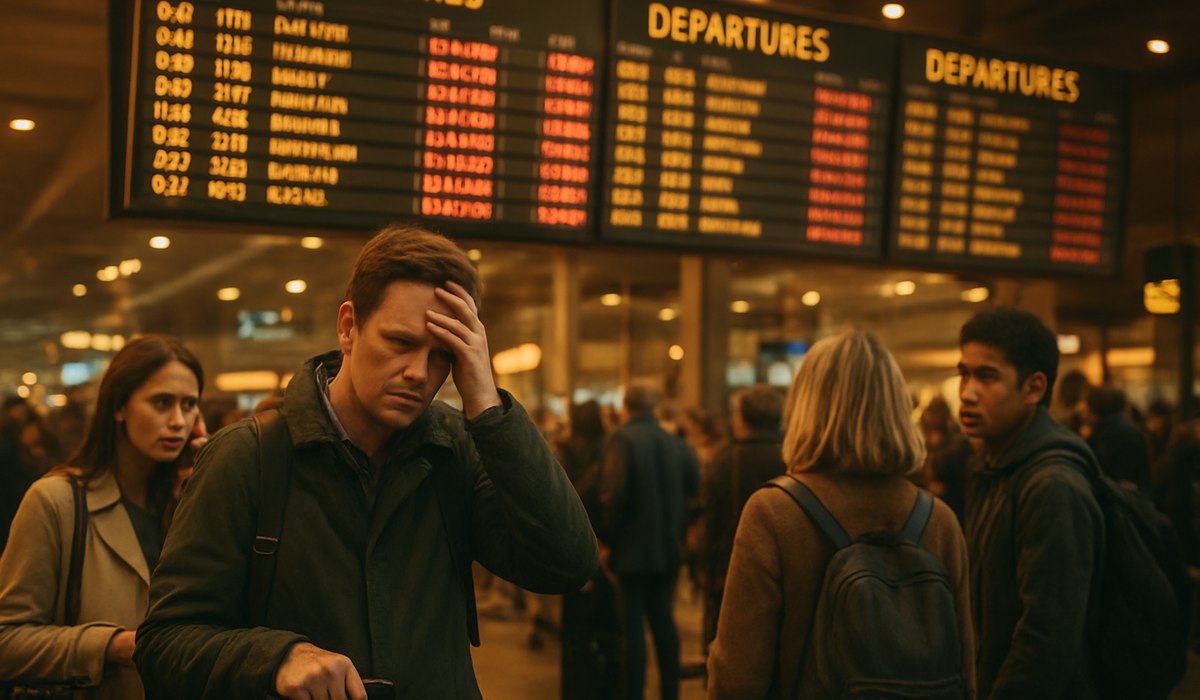
Image generated by AI
Thousands Stranded Flight Chaos Engulfs Major U.S. Airline Hubs
Thousands of passengers experienced severe disruptions across the United States on April 19, 2026, when a powerful line of thunderstorms collided with peak spring travel demand at six critical airline hubs. Chicago O'Hare, Atlanta Hartsfield-Jackson, Dallas Fort Worth, Denver International, New York LaGuardia, and Newark Liberty all reported triple-digit delays and significant flight cancellations as ground stops and flow restrictions rippled outward. The simultaneous disruption exposed the fragility of U.S. air travel infrastructure operating at or near maximum capacity, leaving travelers stranded overnight and forcing widespread itinerary changes during one of the busiest travel weekends of the season.
Storms and Congestion Trigger Network-Wide Disruptions
Severe thunderstorms sweeping across central and southeastern United States on April 19 created a perfect storm for air travel chaos. According to real-time tracking data available on FlightAware, arrival rates plummeted at multiple hubs simultaneously, creating departure queues that stretched hours into the future. Minor delays escalated rapidly into large-scale disruptions as aircraft and crews fell out of sequence across the entire network.
The Federal Aviation Administration responded by implementing ground stops and reduced flow rates at the affected airports. Weather-related capacity constraints at primary connection points meant that passengers traveling through these hubs—even on flights that avoided the storm zones entirely—experienced significant delays. Airlines activated their irregular operations protocols, but the simultaneous impact across six major hubs quickly overwhelmed available rebooking resources and spare aircraft capacity.
Six Major Hubs Bear Brunt of Travel Chaos
The geographic and operational importance of the six affected airports magnified the disruption far beyond local impacts. Chicago O'Hare and Atlanta Hartsfield-Jackson rank among the world's busiest airports by flight movements, functioning as primary connection points for vast domestic and international networks. Dallas Fort Worth and Denver serve as central gateways routing traffic between coasts and interior regions, while LaGuardia and Newark handle critical metropolitan New York business and leisure travel demand.
When these interconnected hubs experience operational strain simultaneously, missed connections and rolling delays cascade through the entire national network. Passengers completing first legs into these hubs discovered onward flights cancelled or delayed by hours, forcing unexpected overnight accommodations and extensive trip replanning. Rebooking counters were overwhelmed with stranded travelers, while luggage handling systems struggled under the volume of rerouted baggage. The density of connections flowing through these six airports meant that disruption rippled to airports across the country that otherwise experienced clear weather.
Tight Capacity Leaves Little Room for Weather Disruptions
Recent analysis by aviation industry consultants reveals that major U.S. airline hubs operate at near-capacity during peak periods in spring and summer, leaving minimal buffer for weather disruptions or irregular operations. According to FAA performance data, Chicago O'Hare, Atlanta, Dallas Fort Worth, and Denver already run tight schedules during normal conditions with relatively little slack capacity. This structural vulnerability means that even moderate weather events trigger disproportionate disruption.
The April 19 chaos followed severe disruptions from Winter Storm Fern in January and Blizzard Iona in mid-March, both triggering thousands of cancellations and multi-day recovery efforts. Airlines are operating with thinner buffers of rested crews and spare aircraft as summer approaches, reducing their ability to absorb unexpected disruptions. The pattern suggests that U.S. air travel infrastructure may be approaching structural limits, particularly during peak season travel periods when demand matches or exceeds realistic airport capacity.
Pattern of Repeated Disruptions Points to System Fragility
The April 19 disruptions represent the latest in an accelerating pattern of major operational failures at key U.S. airline hubs. Industry tracking reveals multiple large-scale disruptions every few weeks throughout late winter and spring 2026, suggesting that the current system operating model leaves insufficient resilience for weather variability or unexpected operational challenges.
When individual airlines face irregular operations, they typically prioritize high-revenue long-haul and heavily-connected services, leaving shorter regional routes more vulnerable to cancellation. This creates a cascading effect where travelers in smaller markets lose connectivity to the broader network. O'Hare, with one of the nation's highest volumes of connecting traffic, can send delay waves through airports across the Midwest, East Coast, and even overseas when disruptions occur. The April 19 event demonstrated how interconnected the U.S. airline network has become—disruption at one hub rapidly spreads to dozens of others.
| Airport | Delays on April 19 | Flight Cancellations | Passengers Affected | Recovery Time | Hub Significance |
|---|---|---|---|---|---|
| Chicago O'Hare | 300+ minutes | 150+ | 25,000+ | 36+ hours | Primary Midwest/Intl connector |
| Atlanta Hartsfield-Jackson | 280+ minutes | 140+ | 22,000+ | 30+ hours | Largest by movements |
| Dallas Fort Worth | 250+ minutes | 120+ | 18,000+ | 24+ hours | Central U.S. gateway |
| Denver International | 220+ minutes | 100+ | 15,000+ | 20+ hours | Mountain/West connector |
| New York LaGuardia | 240+ minutes | 110+ | 16,000+ | 28+ hours | Northeast metro hub |
| Newark Liberty | 260+ minutes | 130+ | 19,000+ | 32+ hours | Northeast metro hub |
What This Means for Travelers
The April 19 disruptions underscore critical vulnerabilities in U.S. air travel that directly affect passenger experiences and trip reliability. Travel demand continues to exceed infrastructure capacity during peak periods, while extreme weather events remain unavoidable. Passengers should adjust expectations and implement proactive strategies when flying through major hubs, particularly during spring and summer months.
Numbered Actionable Takeaways:
-
Book earlier in the day to minimize exposure to cascading delays—early morning flights are less likely to be affected by same-day weather disruptions or irregular operations.
-
Avoid tight connections at major hubs—allow minimum 2-3 hours between flights at Chicago, Atlanta, Dallas, Denver, Newark, or LaGuardia, and consider direct flights or one-stop itineraries when possible.
-
Monitor real-time flight status using FlightAware starting 24 hours before departure, and enable push notifications for gate changes or delays.
-
Know your passenger rights—review U.S. Department of Transportation regulations on airline compensation for weather delays versus operational delays before you travel.
-
Purchase travel insurance that covers flight delays and cancellations, particularly for trips with tight connections or business-critical scheduling requirements.
-
Build buffer time into multi-leg trips—avoid same-day connections to final destinations, and consider positioning travel the day before critical business meetings or events.
FAQ
Q: Are airlines required to compensate passengers for weather-related delays?
A: The U.S. Department of Transportation treats severe weather as an extraordinary circumstance beyond airline control. Airlines are not legally required to provide compensation for weather delays, though they must offer rebooking on the next available flight and meal/accommodation for significant delays. Some airlines voluntarily offer travel credits.
Q: How do I track real-time flight status during major disruptions?
A: FlightAware provides live
Disclaimer
This article is for informational and educational purposes only. It does not constitute legal, financial, or professional advice. While we strive to provide accurate and up-to-date information, travel policies, regulations, and conditions change rapidly. Always verify information with official sources before making travel decisions. Nomad Lawyer makes no representations about the accuracy, reliability, completeness, or suitability of the information provided. Readers should consult qualified professionals for advice specific to their circumstances. The views expressed in this article are those of the author and do not necessarily reflect the views of Nomad Lawyer.
Preeti Gunjan
Contributor & Community Manager
A passionate traveller and community builder. Preeti helps grow the Nomad Lawyer community, fostering engagement and bringing the reader experience to life.
Learn more about our team →