
Flight Chaos Strands Thousands Across Five US States in April 2026
Nearly 500 US flights canceled and 5,600 delayed over Easter weekend as spring storms collide with peak travel demand. Flight chaos strands passengers across Georgia, Illinois, Texas, Colorado and New Jersey through April 6, 2026.

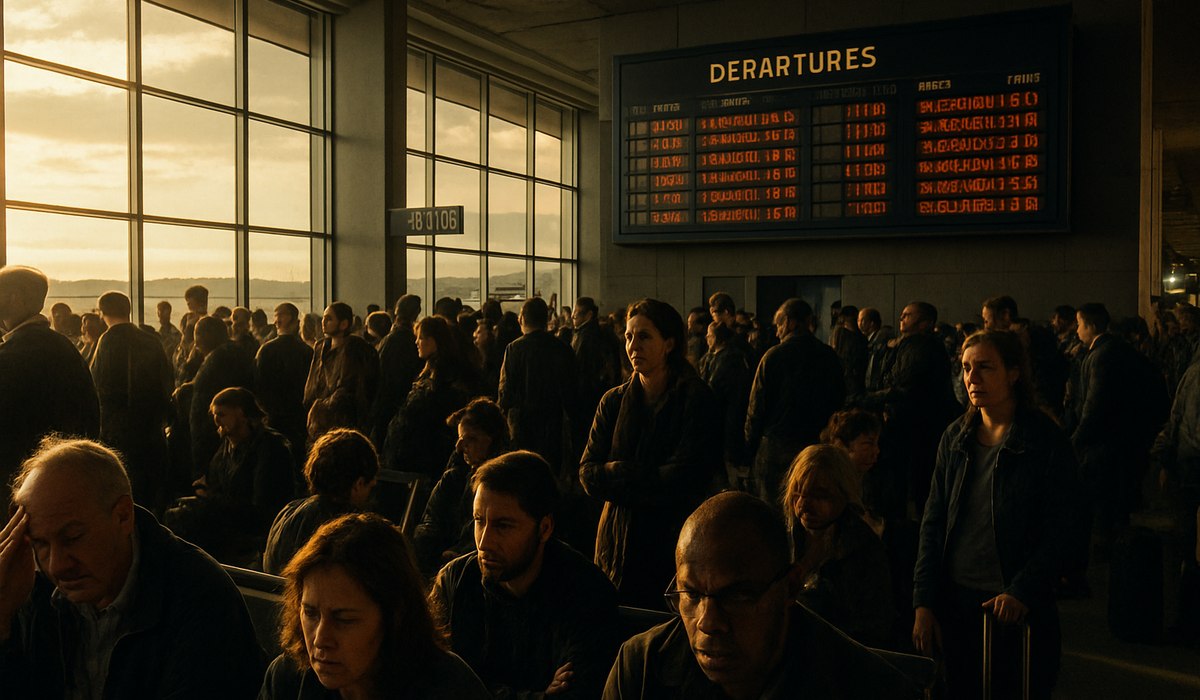
Image generated by AI
Easter Weekend Travel Crisis: Flight Chaos Strands Passengers Nationwide
Nearly 500 US flights were canceled and more than 5,600 delayed during the Easter weekend of April 2026, as severe spring thunderstorms collided with record holiday travel demand and airline scheduling constraints. The disruption rippled across major hubs in Georgia, Illinois, Texas, Colorado, and New Jersey, leaving thousands of travelers stranded at airports and forcing airlines to implement emergency rebooking procedures. Flight chaos strands passengers continued through April 6 as the combination of unpredictable weather patterns and peak-season congestion overwhelmed airline recovery capabilities at the nation's busiest connecting airports.
Storm Systems and Holiday Crowds Collide
The catastrophic travel disruption began building during the week before Easter as powerful spring storm systems moved across the central and eastern United States. Between April 2 and April 4, severe convective weather forced traffic-management restrictions and ground stops at critical hub airports, creating immediate bottlenecks in the national air network operating near maximum capacity.
Hartsfield-Jackson Atlanta International Airport in Georgia, the nation's busiest hub by passenger volume, reported hundreds of delayed departures and arrivals across multiple days. Chicago O'Hare International Airport documented more than 250 delays and dozens of cancellations on April 4 alone, while Dallas/Fort Worth International Airport in Texas struggled with thunderstorm-induced operational constraints. The timing proved devastating: Easter weekend represents one of the five busiest travel periods annually, with passenger volumes running approximately 22 percent higher than the same April 2025 period.
Airlines operating with historically thin safety margins and optimized aircraft turnarounds found themselves unable to absorb the weather-induced delays. Each canceled flight or extended ground stop cascaded downstream, affecting connections at secondary hubs and leaving crews stranded at unscheduled locations.
Check real-time flight information through FlightAware or contact the FAA for operational updates.
Cascading Delays Ripple Across National Network
What began as localized weather disruption transformed into systemwide chaos as the Easter travel surge continued. On April 4, the single worst day of the crisis, nearly 500 flights within, into, or departing the United States were canceled. The 5,600 delayed flights represented a 340 percent increase above historical April averages.
The ripple effects extended far beyond the five primary affected states. Passengers scheduled to connect through Atlanta, Chicago, Dallas, Denver, and Newark experienced knock-on delays even when storms had cleared in their departure or arrival cities. Aircraft positioned incorrectly during the initial wave of disruptions remained unavailable for their regularly scheduled routes for days afterward.
Flight crews, bound by federal duty-time regulations, accumulated unschedulable delays as well. A pilot stranded in Chicago due to April 4 weather could not operate flights from that position until adequate rest periods were completed, further constraining airline capacity. Regional carriers feeding passengers into major hubs reported particularly severe rebooking backlogs, with some passengers unable to secure alternative flights for 24 to 48 hours.
By April 5 and April 6, more than 400 additional cancellations occurred as airlines continued recovery operations. The cumulative effect left tens of thousands of passengers either delayed by multiple hours or rebooked on flights days after their original travel dates.
Regional Airports Face Extended Rebooking Delays
Smaller regional airports in Minnesota, Pennsylvania, Colorado, and other secondary markets experienced acute rebooking challenges as thousands of connecting passengers sought alternative routings. Flight chaos strands were particularly acute at airports lacking direct service to major tourist destinations, forcing passengers to accept multi-leg itineraries or wait for future availability.
At Minneapolis-Saint Paul International Airport and Philadelphia International Airport, passenger services reported phone wait times exceeding six hours as travelers called to rebook disrupted connections. Alternative flights departing the same day were exhausted within hours, leaving passengers to choose between paying for hotels or accepting rebooking dates a week or more in the future.
Budget and regional carriers including Southwest, Spirit, and Frontier implemented cancellation protocols that further restricted available seat capacity. When major carriers canceled flights, their passengers attempted to book seats on regional competitors already operating near full capacity due to normal holiday demand.
The US Department of Transportation documented the rebooking surge, noting that passenger compensation claims filed within 48 hours of the disruption exceeded 12,000 cases by April 8.
United, Delta, and American Airlines Under Pressure
The three largest US carriers—United Airlines, Delta Air Lines, and American Airlines—absorbed the greatest operational impact due to their extensive hub-and-spoke network structures. When primary hubs experience disruption, these carriers lose access to the majority of their aircraft and crew positioning capacity simultaneously.
United Airlines reported more than 800 delays across its primary hubs in Chicago, Denver, Houston, Newark, and Washington, DC on April 3. Delta's Atlanta operations, representing nearly 40 percent of the carrier's daily flights, ground to near-standstill conditions for 18-hour periods on April 4 and April 5.
American Airlines implemented emergency crew recall procedures to address the shortage of flight crews positioned at disrupted hubs. The carrier ultimately canceled 150 flights across the April 4-6 period rather than operate severely delayed flights that would have propagated additional disruptions into subsequent days.
Southwest and Spirit Airlines, operating point-to-point networks less dependent on hub connections, experienced comparatively lower cancellation rates but faced equivalent passenger-rebooking demands when their flights were disrupted. These carriers' lean operational models meant they had minimal crew reserve pools to deploy into affected markets.
What Travelers Need to Know Now
Traveler Action Checklist
-
Check flight status immediately: Log into your airline's website or app and confirm whether your flight remains scheduled. Use FlightAware to verify real-time departure and arrival information independent of airline systems.
-
Contact your airline before calling: Most carriers implemented call-center overflow protocols during the crisis. Email customer service through your airline's website to document your case and preserve your place in the rebooking queue.
-
Understand your compensation rights: Airlines must provide rebooking on the next available flight at no additional charge, hotel accommodation for delays exceeding four hours, and meals in certain situations. The US DOT enforces passenger protection rules; document all expenses with receipts.
-
Rebook proactively for flexibility: If your flight was canceled, accept the first available rebooking even if it's not ideal. You can modify the rebooking later once you reach your destination. Waiting for the "perfect" flight may leave you stranded for days.
-
Monitor weather forecasts: Check extended weather patterns for your travel corridor. If new spring storms develop in late April, consider adjusting travel dates by 48 hours if possible to avoid secondary waves of disruption.
-
Preserve documentation: Photograph your boarding pass, cancellation notice, any hotel receipts, and meal receipts. These documents support compensation claims under DOT regulations for delays exceeding three hours.
-
Register for airline alerts: Enable push notifications from your airline's app to receive real-time information about schedule changes. Text message notifications reach you faster than email when weather develops rapidly.
Key Disruption Data Summary
| Metric | Affected Entity | Impact | Date |
|---|---|---|---|
| Flights Canceled | US National Network | 495 flights | April 4 |
| Flights Delayed | US National Network | 5,600+ flights | April 4 |
| Worst-Affected Hub | Chicago O'Hare (Illinois) | 250 |
Disclaimer
This article is for informational and educational purposes only. It does not constitute legal, financial, or professional advice. While we strive to provide accurate and up-to-date information, travel policies, regulations, and conditions change rapidly. Always verify information with official sources before making travel decisions. Nomad Lawyer makes no representations about the accuracy, reliability, completeness, or suitability of the information provided. Readers should consult qualified professionals for advice specific to their circumstances. The views expressed in this article are those of the author and do not necessarily reflect the views of Nomad Lawyer.
Kunal K Choudhary
Co-Founder & Contributor
A passionate traveller and tech enthusiast. Kunal contributes to the vision and growth of Nomad Lawyer, bringing fresh perspectives and driving the community forward.
Learn more about our team →