
Thousands Stranded Flight Chaos Sweeps U.S. Hubs in April 2026
More than 3,000 flight delays and 63 cancellations swept seven major U.S. hubs in April 2026, stranding thousands of passengers and disrupting connections across the domestic network.

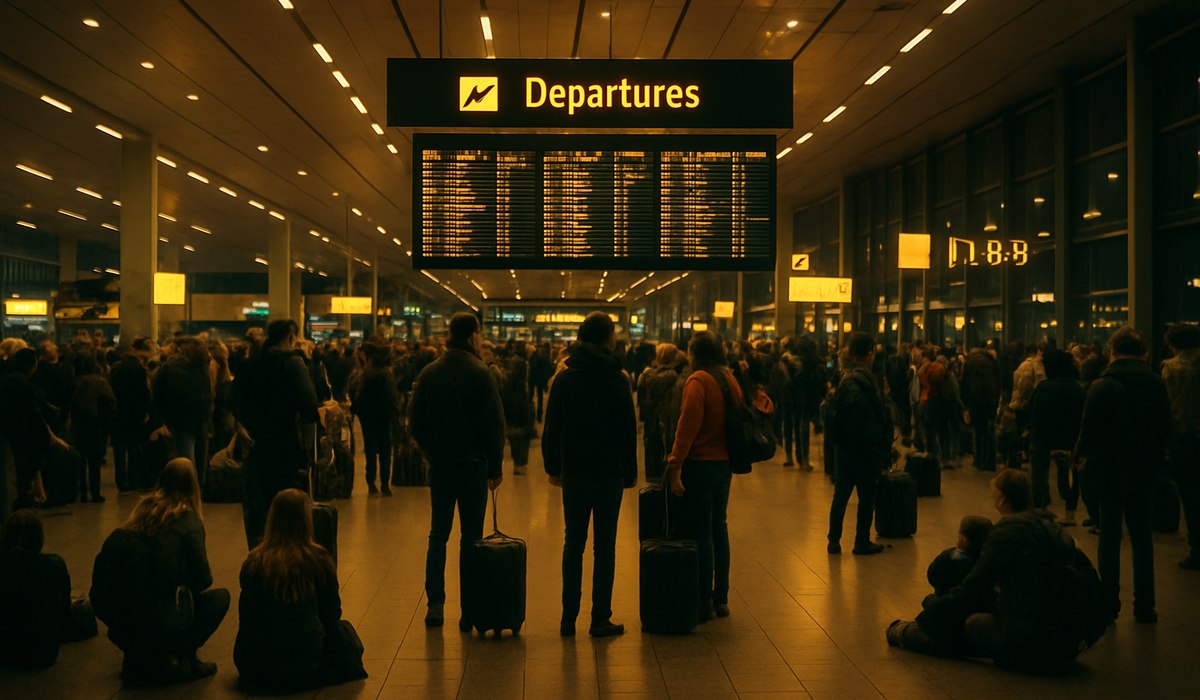
Image generated by AI
Thousands Stranded as Flight Chaos Sweeps Seven Major U.S. Hubs
Over 3,000 flight delays and dozens of cancellations paralyzed Atlanta, Houston, Chicago, Orlando, New York, San Francisco, and Philadelphia on April 8, 2026, leaving passengers facing extended waits, missed connections, and unplanned overnight airport stays. The coordinated operational failure across America's busiest aviation corridors created a cascading ripple effect that extended to regional airports in Boston, Los Angeles, Seattle, and Newark. Both low-cost carriers and full-service airlines—including Spirit, American, Southwest, United, and JetBlue—reported simultaneous irregular operations, limiting rebooking options for stranded travelers.
Scope of Disruption: 3,000+ Delays Across Seven Major Hubs
The April 8 operational collapse represents one of the most significant multi-hub disruption events of the year, with flight tracking systems documenting more than 3,000 delayed departures concentrated at the nation's most critical gateway airports. Thousands stranded flight situations developed rapidly as morning delays compounded into afternoon cancellations, overwhelming airline customer service infrastructure. Atlanta Hartsfield-Jackson, Houston's IAH, Chicago O'Hare, Orlando International, LaGuardia and Newark in New York, San Francisco, and Philadelphia International all reported elevated disruption levels simultaneously. The synchronized nature of the failure suggests systemic pressure points rather than isolated airport incidents.
Data from flight tracking services shows that 63 cancellations were recorded during the peak disruption window, with the majority affecting transcontinental and high-demand regional routes. The relatively modest cancellation figure masked the true impact—when wide-body aircraft or high-frequency services get canceled, hundreds of passengers per flight require immediate rebooking. Airlines operating under tight scheduling margins found themselves unable to absorb the initial delays, creating a domino effect through interconnected networks.
Which Airlines and Routes Are Most Affected
All five of America's largest carriers experienced simultaneous operational challenges on April 8. Southwest's Denver-to-Atlanta and Chicago-to-Florida routes reported particularly severe delays, with some passengers waiting 8+ hours for departure. American Airlines struggled to manage its hubs at Dallas-Fort Worth and Charlotte, while delays rippled eastward to New York and Philadelphia. United's San Francisco operations cascaded disruptions to Midwest connections, and JetBlue's Northeast corridor experienced significant compression as aircraft rotations fell behind schedule.
Spirit Airlines, operating on narrower utilization margins, reported some of the highest delay percentages relative to scheduled departures. The simultaneous pressure on five major carriers eliminated the traditional airline-switching option for stranded passengers. Typically, travelers can rebook onto a competitor's flight during irregular operations, but when every carrier experiences simultaneous delays, alternative capacity disappears instantly.
Routes connecting major hubs to leisure destinations—particularly Florida airports—experienced the worst cascading failures. The convergence of spring break travel demand and coordinated delays created perfect conditions for airport chaos to unfold rapidly.
Weather, Network Congestion, and Tight Schedules Converge
Spring 2026 weather systems triggered the initial disruption, with severe thunderstorms affecting Florida and the Southeast while unsettled conditions impacted the Northeast and Midwest corridors. When precipitation reduces landing capacity at major hubs even temporarily, air traffic control applies flow restrictions that propagate backward through entire airline networks. A single hour of weather-restricted landings at Atlanta translates into cascading departures delays across the country within minutes.
The timing proved catastrophic because March 2026 performance data already showed elevated delay rates across North American carriers. Airlines were operating with minimal schedule buffers entering April, meaning weather disruptions couldn't be absorbed by built-in recovery time. Modern airline networks maximize aircraft utilization by scheduling planes for five-to-six flights daily with minimal turnaround time. When an early flight runs two hours late, subsequent departures using that same aircraft compress into impossible sequences.
Crew scheduling compounds the problem—pilots and flight attendants follow complex rotation patterns designed to eliminate idle time. A delayed flight throws multiple crew assignments into conflict, reducing available crew pairs for rebooking operations. Add tight landing slots at congested hubs, and the network simply cannot flex fast enough to absorb weather-induced disruptions.
Ripple Effects: Regional Airports and Connection Impacts
The chaos sweeps far beyond the seven primary hubs. Passengers connecting through Chicago to Denver faced cascading five-hour delays. Milwaukee-to-Atlanta flights experienced secondary disruptions as crews assigned to subsequent flights got stuck by earlier delays. Salt Lake City saw demand spikes as stranded passengers attempted to reroute via alternative hubs, only to find those airports equally congested.
Secondary cities like Buffalo, Providence, and Hartford experienced unexpected volume surges as airlines rerouted traffic around the major hub bottlenecks. However, smaller airports lack the infrastructure to absorb unexpected capacity swings, creating localized congestion. Ground services at regional airports struggled to handle aircraft that suddenly diverted, compressing gate availability and catering resources.
Connection passengers suffered disproportionately—those with tight 60-minute connections found themselves rebooking onto flights 18-24 hours later. International travelers whose onward flights were significantly delayed faced missed connections in European hubs, creating secondary disruptions on transatlantic routes.
What Stranded Travelers Should Know Now
Passengers affected by April 8 disruptions should understand their rights under U.S. Department of Transportation regulations. The DOT requires airlines to provide meals, lodging, and ground transportation when delays exceed three hours for domestic flights and exceed certain conditions for international service. Airlines must also offer rebooking on competitor carriers when they cannot accommodate passengers on their own flights within a reasonable timeframe.
Check FlightAware for real-time departure status and estimated departure windows before visiting the airport. Call your airline directly rather than relying on mobile app notifications, which often lag actual operations by 15-20 minutes. Request written confirmation of rebooking details and compensation eligibility from airline customer service representatives.
Document all expenses related to the disruption—receipts for meals, hotels, ground transportation, and any other ancillary costs. File compensation claims directly with airlines within 60 days of your scheduled departure date. The airline must respond within 30 days with either compensation or a detailed explanation of why compensation is not owed.
For ongoing disruptions extending beyond 24 hours, contact the U.S. Department of Transportation Civil Rights Division to report potential consumer protection violations. Keep detailed notes of timeline, personnel contacted, and promises made by airline representatives.
Traveler Action Checklist
-
Verify current flight status by visiting FlightAware or calling your airline directly before heading to the airport.
-
Request immediate rebooking onto the next available flight on your airline or a partner carrier—do not accept standby lists for flights departing more than four hours later.
-
Document airline accommodations by requesting written confirmation of hotel, meal, and transportation provisions in writing via airline email channels.
-
Collect all receipts for out-of-pocket expenses including meals, ground transportation, phone calls, and any lodging costs incurred during the disruption.
-
Photograph departure boards and gate information showing your original flight and cancellation/delay notice as evidence for compensation claims.
-
File written complaints with your airline within 60 days, citing specific DOT regulation violations and requesting compensation per Part 259 regulations.
-
Report unresolved complaints to the DOT Civil Rights Division at https://www.transportation.gov/airconsumer if airlines do not respond within 30 days.
-
Consider credit card chargebacks if airlines refuse eligible compensation and you booked with a rewards credit card—many cards provide purchase protection.
-
**Contact your travel insurance
Disclaimer
This article is for informational and educational purposes only. It does not constitute legal, financial, or professional advice. While we strive to provide accurate and up-to-date information, travel policies, regulations, and conditions change rapidly. Always verify information with official sources before making travel decisions. Nomad Lawyer makes no representations about the accuracy, reliability, completeness, or suitability of the information provided. Readers should consult qualified professionals for advice specific to their circumstances. The views expressed in this article are those of the author and do not necessarily reflect the views of Nomad Lawyer.
Preeti Gunjan
Contributor & Community Manager
A passionate traveller and community builder. Preeti helps grow the Nomad Lawyer community, fostering engagement and bringing the reader experience to life.
Learn more about our team →