
Germany Flight Chaos: 284 Delays Snarl Major Hubs in May 2026
Germany flight chaos disrupted thousands of travelers as 284 delays and six cancellations swept through Berlin, Hamburg, Frankfurt, and Munich on Thursday and Friday, May 8-9, 2026, signaling ongoing strain in European aviation networks.

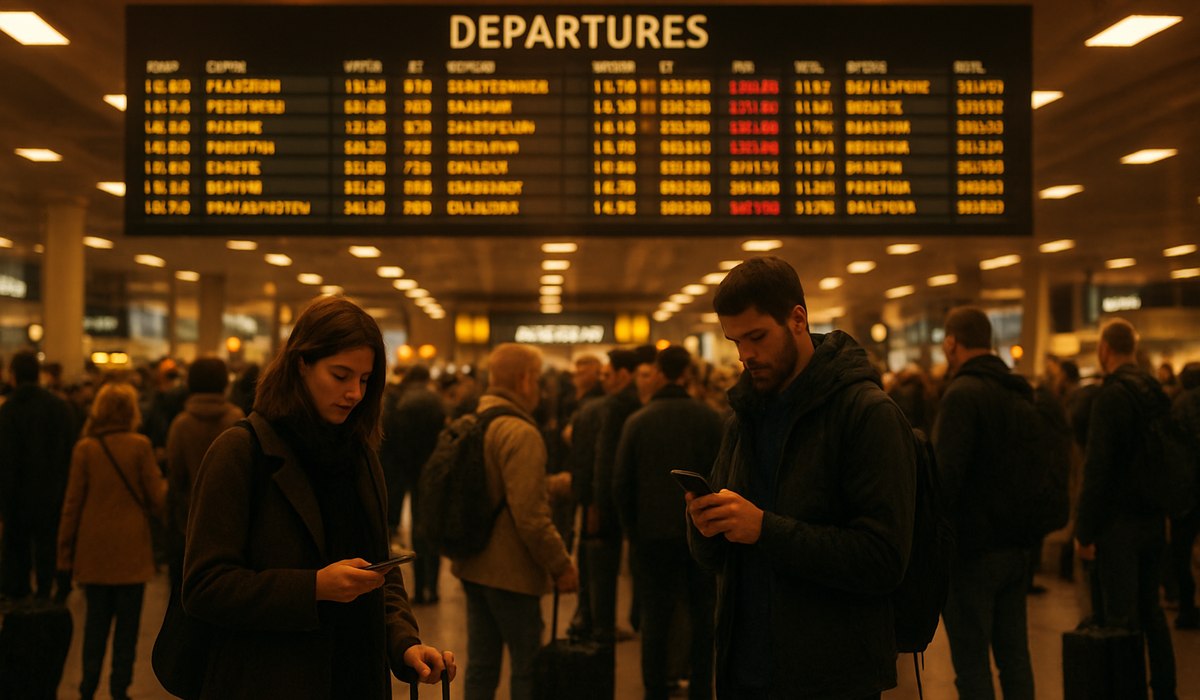
Image generated by AI
Germany's Aviation Network Buckles Under Record Disruption
Germany's four busiest airports collapsed under operational strain Thursday and Friday, with 284 flight delays and six cancellations rippling through Berlin, Hamburg, Frankfurt, and Munich. Thousands of passengers faced hours of disruption as major carriers including Lufthansa, easyJet, Ryanair, and Air France scrambled to manage cascading disruptions across Europe's most critical hub system. The incident underscores mounting pressure in European aviation as networks struggle to absorb weather, staffing constraints, and infrastructure bottlenecks simultaneously.
Widespread Delays Hit Berlin, Hamburg, Frankfurt and Munich
The Germany flight chaos concentrated its impact across four metropolitan aviation centers simultaneously. Berlin's Tegel and Brandenburg facilities processed delayed traffic throughout the two-day period, while Hamburg endured significant knock-on effects from both domestic and international connections. Frankfurt, Europe's third-largest airport, saw its dense feeder network compound the disruption, as Lufthansa's hub operations magnified every delay across connecting flights. Munich's parallel situation created a dual pressure point, forcing ground crews and airline staff to manage simultaneous bottlenecks across separate terminals and holding patterns.
Flight-tracking data from FlightAware documented the full scope of disruption, showing 284 delayed departures and arrivals concentrated within a 36-hour window. The relatively modest six cancellations masked the cascading effect of late-running aircraft, as single-digit cancellations often prevent dozens of downstream services from resuming normal schedules. Passengers reported waits exceeding three hours for rebooked connections, with ground staff overwhelmed by rebooking requests across multiple airlines and route networks.
Ripple Effects: Missed Connections and Extended Waits
The operational snarl spread far beyond Germany's borders. Passengers booked on onward flights to Switzerland, Austria, and northern Europe found themselves stranded in Frankfurt and Munich transfer zones. International routes to Paris, London, and Amsterdam experienced secondary delays as connecting passengers missed their flights and required rebooking onto later services. Some travelers waited until Friday evening or Saturday morning for available seating, creating a compounding burden on accommodation and ground services.
Airlines reported that crew duty time restrictions prevented quick repositioning of aircraft. A single three-hour delay on an early-morning service cascaded into five or six subsequent flight delays as the same aircraft and crew cycled through their daily rotations. This knock-on effect proved particularly severe at Lufthansa's Frankfurt and Munich hubs, where the carrier maintains dozens of tightly scheduled feeder flights per hour. easyJet and Ryanair, operating with higher aircraft utilization and minimal buffer time between flights, experienced similar amplification of disruption across their German networks.
Operational Stress Continues Across European Aviation
Germany's latest aviation disruption reflects broader systemic challenges facing European networks in 2026. Earlier industrial action at Lufthansa in April had left schedules brittle and crew rosters stretched thin. Winter weather in January had already consumed significant operational slack at Hamburg and Berlin, requiring weeks of schedule recovery. The combination of lingering recovery periods and compressed maintenance windows left airlines vulnerable when the Thursday-Friday disruption spike occurred.
Air traffic control capacity constraints compounded the situation. German airspace operates near saturation during peak hours, particularly on routes connecting Frankfurt and Munich to Central European cities. Any delay in ground operations directly translates into holding patterns at departure airports, as incoming flights queue for gates and turnaround crews face compressed service intervals. Published reports from the FAA and European aviation authorities note that German airports rank among Europe's most congested, with limited ability to absorb capacity shocks.
The incident raises questions about medium-term aviation infrastructure across Germany. Current ground handling capacity, gate availability, and air traffic management systems operate near design limits during peak seasons. Airlines face pressure to maintain aggressive schedules to compete on cost and frequency, leaving minimal buffer for weather, mechanical issues, or staffing gaps. Industry analysts suggest that Germany's aviation network requires either significant capacity expansion or coordinated schedule rationalization to prevent recurring disruption cycles.
What Travelers Can Expect Going Forward
Recovery from the May 8-9 disruption continued through the weekend, with most airlines operating normal schedules by Monday, May 12. However, the incident highlights persistent vulnerabilities in European aviation that travelers should anticipate. Spring and summer peaks will likely generate additional disruption as networks operate at maximum capacity.
Passengers planning travel through German hubs should monitor schedules closely and consider building extra connection time into itineraries. Airlines continue implementing operational safeguards, including additional buffer time between flights and reinforced crew scheduling protocols. However, no single carrier can fully mitigate disruption driven by shared infrastructure constraints and external weather or air traffic management decisions.
For business travelers and those with strict arrival deadlines, rebooking insurance and flexible ticket options provide meaningful protection. The U.S. Department of Transportation's consumer rights guidance applies to European carriers operating U.S.-bound flights, ensuring compensation eligibility for weather-related disruptions. European carriers must comply with EU Regulation 261/2004, which mandates compensation for delay-causing disruptions within airline operational control, though weather events typically exempt carriers from payment obligations.
Traveler Action Checklist
-
Monitor Your Flight 72 Hours Ahead: Use airline apps and FlightAware to track real-time delay patterns at German hubs.
-
Add Connection Buffer Time: Build minimum 2.5-hour windows between flights at Frankfurt and Munich, 2-hour windows elsewhere in Germany.
-
Confirm Rebooking Terms: Understand your airline's rebooking policy before travel—some offer paid alternatives, others operate on availability-only basis.
-
Document Expenses: Retain receipts for meals, accommodation, and transportation incurred during delays exceeding two hours.
-
Know Compensation Thresholds: Delays over three hours may trigger EU compensation (€250-600) if within airline operational control; weather events typically exempt carriers.
-
Request Rebooking Confirmation: Always obtain written confirmation of rebooking to alternative flights rather than relying on verbal agent assurances.
-
Register for Alerts: Enable airline and airport notifications to receive real-time disruption information rather than discovering delays at departure terminals.
FAQ
What caused the Germany flight chaos on May 8-9, 2026? Multiple factors converged: recovering operations from April strikes at Lufthansa, earlier winter weather disruption at northern hubs, and constrained air traffic control capacity across German airspace. No single cause triggered the snarl; rather, reduced operational slack combined with normal weather and scheduling created a cascading disruption.
Which airlines were most affected by the delays? Lufthansa faced the most impact due to its large presence at Frankfurt and Munich, though easyJet, Ryanair, and Air France also reported significant delays. The distributed disruption across all major carriers reflected shared infrastructure constraints rather than airline-specific failures.
How long did passengers typically wait for rebooking? Ground staff reported average rebooking times of 45 minutes to 2 hours during peak disruption periods. Some passengers waited until the following day for available seating on less-congested flights, particularly those holding budget airline tickets with limited alternative routing options.
What compensation am I eligible for if I was delayed? Under EU Regulation 261/2004, passengers delayed over three hours receive €250-€600 depending on flight distance, unless weather or air traffic management factors are proven responsible. Weather-related disruptions typically exempt airlines from compensation obligations. Check your airline's specific policy and consider filing claims through passenger rights platforms.
Key Data Table
| Metric | Value | Notes |
|---|---|---|
Disclaimer
This article is for informational and educational purposes only. It does not constitute legal, financial, or professional advice. While we strive to provide accurate and up-to-date information, travel policies, regulations, and conditions change rapidly. Always verify information with official sources before making travel decisions. Nomad Lawyer makes no representations about the accuracy, reliability, completeness, or suitability of the information provided. Readers should consult qualified professionals for advice specific to their circumstances. The views expressed in this article are those of the author and do not necessarily reflect the views of Nomad Lawyer.
Raushan Kumar
Founder & Lead Developer
Full-stack developer with 11+ years of experience and a passionate traveller. Raushan built Nomad Lawyer from the ground up with a vision to create the best travel and law experience on the web.
Learn more about our team →