
Athens vs Thessaloniki: A Comparative Analysis for First-Time Greek City Travelers in 2026
An expert comparison of Athens and Thessaloniki, evaluating historical density, culinary landscapes, and cost of living to determine the ideal entry point for travelers visiting Greece in 2026.

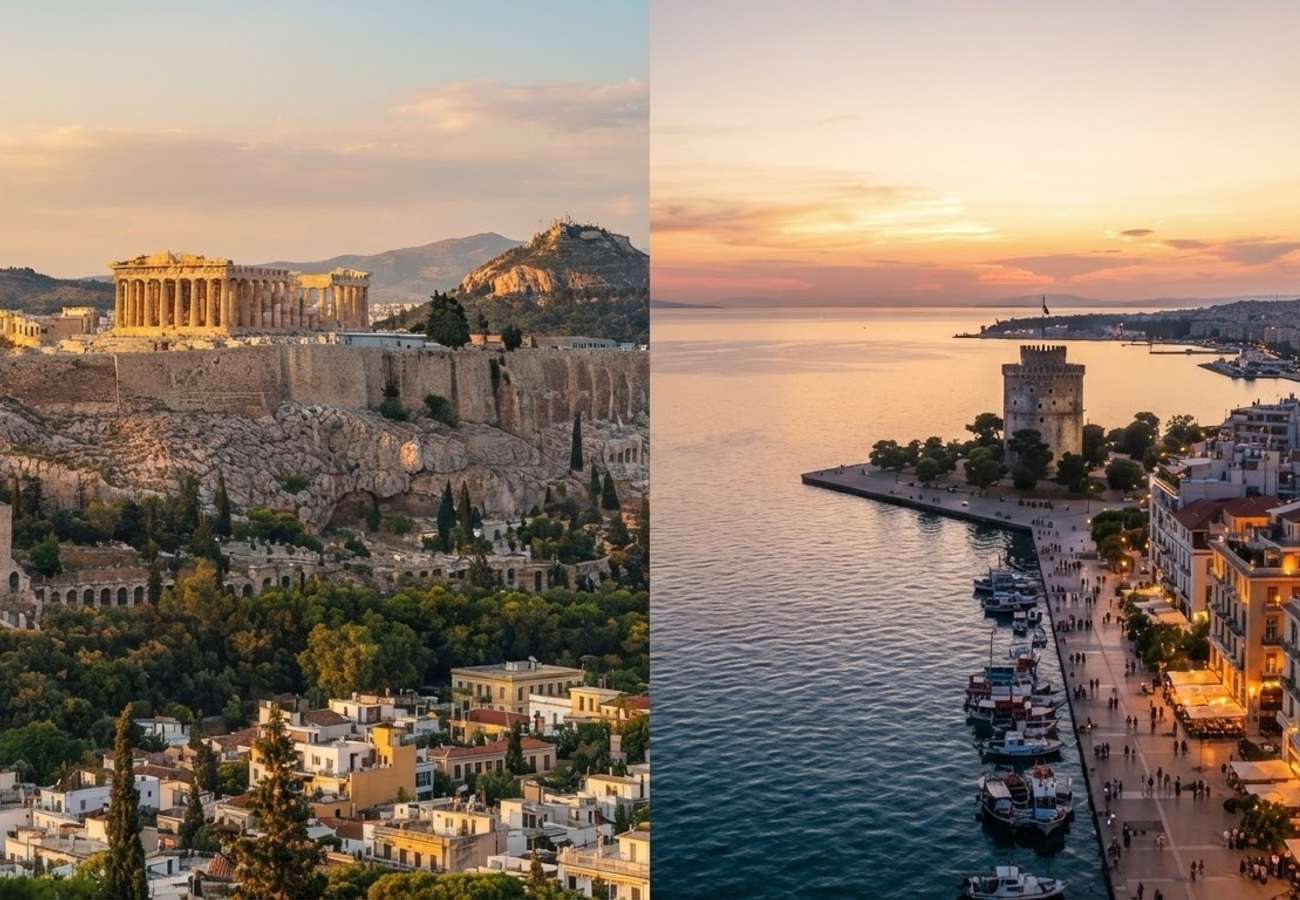
Image generated by AI
Choosing between Athens and Thessaloniki for a primary Greek gateway depends entirely on whether a traveler prioritizes monumental classical history or a lived-in, local urban atmosphere.
Urban Dynamics and First Impressions
Athens presents as a high-energy, layered metropolis of over three million people. The experience is defined by the intensity of Syntagma Square and Monastiraki, where traffic noise and street protests often blend with the flow of global tourism. For those seeking a "big city" pulse where the center of Greek political and social life converges, Athens provides an immediate, visceral impact.
Thessaloniki offers a contrasting, looser vibe. The city is oriented toward the Thermaic Gulf rather than a central ancient citadel. Aristotelous Square serves as the social hub, characterized by a slower pace and a heavy influence from its large student population. While Athens feels like a global capital, Thessaloniki feels like a Mediterranean port city where local routines—specifically the pervasive café culture—take precedence over tourist checklists.
Historical Depth: Monumental vs. Layered
The two cities offer fundamentally different approaches to archaeology and heritage.
Athens: The Classical Powerhouse Athens is the definitive choice for those prioritizing world-famous ruins. The city's core is a concentrated hub of classical sites:
- The Acropolis and Parthenon
- The Ancient Agora
- The Temple of Olympian Zeus
- The Acropolis Museum
Thessaloniki: The Cultural Palimpsest Thessaloniki lacks a single "mega-site" like the Acropolis but offers a denser layering of eras. In a few city blocks, travelers encounter:
- Roman ruins (The Rotunda and Arch of Galerius)
- Byzantine walls and churches (including the 7th-century Agia Sophia)
- Ottoman-era architecture
- The Ano Poli (Upper Town) district
Gastronomy and Nightlife Analysis
While both cities are culinary destinations, their strengths diverge by scale and style.
Thessaloniki is widely regarded as the food capital of Greece. The Ladadika district and the Modiano and Kapani markets emphasize authentic meze—such as bougiourdi (baked feta with peppers) and grilled octopus—often at a lower price point than in Athens. The city is also famous for its morning bougatsa (cream or cheese pastry) and koulouri (sesame bread).
Athens offers a broader spectrum of high-end dining. In neighborhoods like Kolonaki and Koukaki, inventive bistros blend traditional Greek flavors with modern techniques. While casual spots in Psiri and Exarchia remain affordable, the "view-heavy" dining experiences near the Acropolis command a premium.
Nightlife in Athens is diverse, ranging from rooftop cocktail bars in Monastiraki to live rebetiko music in Psiri. Thessaloniki's nightlife is more concentrated around Valaoritou and the seafront, where cafés transition into bars that stay active until the early hours, particularly from Thursday to Saturday.
Logistics, Costs, and Infrastructure
From a budgetary perspective, Thessaloniki generally provides better value. Accommodation near the waterfront or in Ladadika is typically more affordable than comparable hotels in the Plaka or Monastiraki districts of Athens.
Comparative City Metrics
| Feature | Athens | Thessaloniki |
|---|---|---|
| Primary Vibe | High-energy, Monumental | Relaxed, Student-led |
| Key Landmark | The Acropolis | The White Tower / Waterfront |
| Transport | Extensive Metro, Tram, Bus | Bus, Taxi, Walking (Metro limited) |
| Cost Level | Higher (especially high season) | Moderate / More affordable |
| Beach Access | Athenian Riviera (via tram/bus) | Promenade (swimming requires travel) |
| Top Neighborhoods | Plaka, Koukaki, Monastiraki | Ladadika, Ano Poli, Waterfront |
Why This Matters: Industry Implication
From a logistical perspective, the choice between these cities dictates the entire pace of a Greek itinerary. Athens is an "efficiency" city; its concentrated ruins allow travelers to check off major historical milestones in 48 hours. However, the "tourist tax" is evident in hotel pricing and restaurant menus in the center.
Thessaloniki represents a shift toward "slow travel." Because the city is more compact and less reliant on massive monuments, it encourages wandering and local integration. For the modern traveler—especially digital nomads or those avoiding "over-tourism"—Thessaloniki provides a more sustainable and authentic entry point into Greek culture.
Forward Outlook
As Thessaloniki continues to finalize its metro expansion, the city's accessibility will improve, potentially narrowing the infrastructure gap with Athens. However, Athens will likely maintain its status as the primary hub due to the sheer gravity of the Acropolis. Travelers should expect Athens to remain the high-cost, high-reward gateway, while Thessaloniki evolves into the preferred alternative for those seeking culinary depth and a more relaxed urban experience.
The decision ultimately rests on whether you want to see the history Greece created, or experience the history Greece still lives in.
Related Travel Guides
Disclaimer
This article is for informational and educational purposes only. It does not constitute legal, financial, or professional advice. While we strive to provide accurate and up-to-date information, travel policies, regulations, and conditions change rapidly. Always verify information with official sources before making travel decisions. Nomad Lawyer makes no representations about the accuracy, reliability, completeness, or suitability of the information provided. Readers should consult qualified professionals for advice specific to their circumstances. The views expressed in this article are those of the author and do not necessarily reflect the views of Nomad Lawyer.
Naina Thakur
Contributor & Travel Specialist
Travel enthusiast and legal writer covering visa regulations, responsible tourism, and cultural journeys across global destinations.
Learn more about our team →