
Ground Crews Reveal Striking Operational Differences Between Airbus A320neo and Boeing 737 MAX
Breaking airline news and aviation industry updates for 2026.

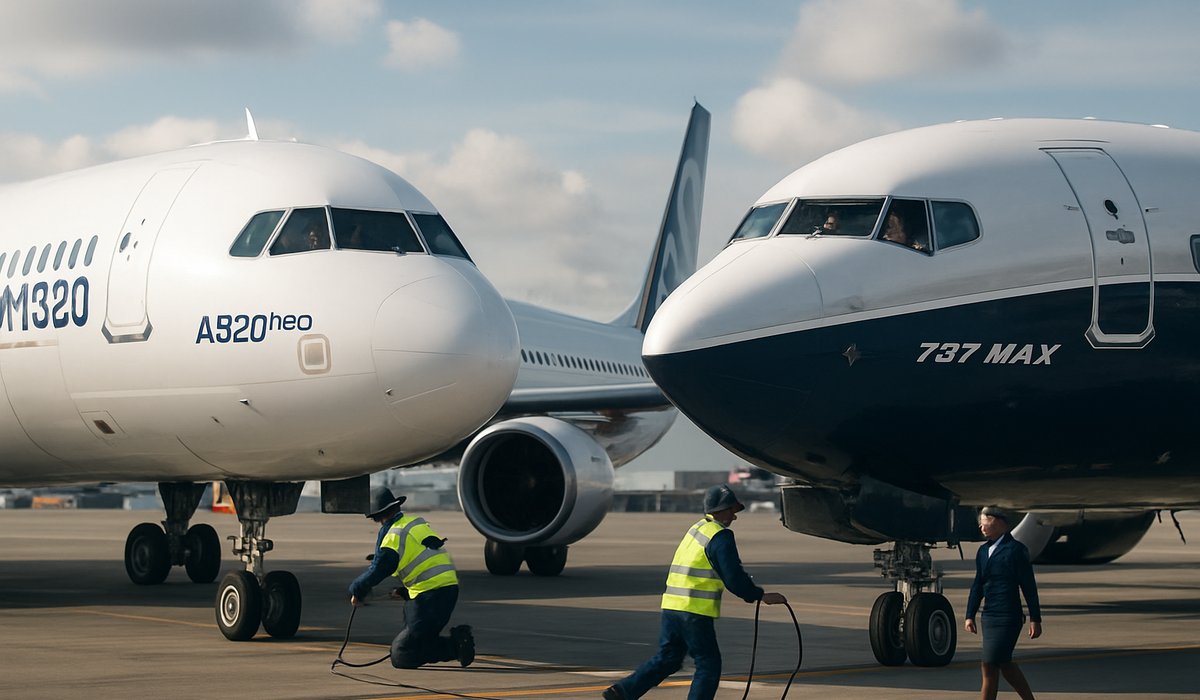
Image generated by AI
Ground Crews Reveal Striking Operational Differences Between Airbus A320neo and Boeing 737 MAX
Aviation maintenance teams highlight fundamental engineering divergences as both narrowbodies dominate global airline fleets
Physical Design Creates Practical Challenges for Airport Operations
The Airbus A320neo and Boeing 737 MAX may appear superficially similar to passengers boarding through airport terminals, but ground crews working rapid turnarounds tell a dramatically different story about how these aircraft fundamentally differ in design philosophy and operational execution.
At busy airport ramps worldwide, the distinctions become immediately apparent. The A320neo presents a tall, vertically-oriented profile that sits level when parked, whereas the 737 MAX exhibits a noticeably lower stance with a characteristic nose-high pitch—a design quirk that traces back to the 737's origins in the 1960s and has persisted through multiple generations of upgrades.
Operational Implications for Ground Personnel
For maintenance teams and ground handlers executing 25-minute turnarounds on regional routes, these physical differences translate into tangible workflow variations. The A320neo's elevated fuselage geometry affects catering vehicle positioning, cargo loading procedures, and general accessibility around the aircraft. The 737 MAX's lower profile and aggressive nose angle, meanwhile, present distinct challenges for ladder placement, door servicing, and coordination with ground support equipment.
The engineering decisions embedded in each aircraft's design reflect broader strategic philosophies: Airbus's approach emphasizes accessibility and standardization across its narrowbody family, while Boeing's 737 MAX development prioritized backward compatibility with existing 737 infrastructure and pilot familiarity—a decision that has both operational advantages and maintenance complications.
Impact on Aviation Maintenance Economics
These ground-level observations underscore why airlines' fleet standardization choices carry significant operational weight beyond fuel efficiency metrics and seating capacity. The physical characteristics of each platform influence training requirements for ground personnel, spare parts inventory management, and the speed at which aircraft can be serviced between flights.
As global airlines continue evaluating narrowbody procurement for their networks, ground crew feedback regarding practical handling differences between the A320neo and 737 MAX has become increasingly relevant to total cost-of-ownership calculations—a factor gaining prominence as carriers scrutinize every efficiency gain amid volatile fuel prices and competitive pressure on jet fuel surcharges.
Both aircraft now represent the modern aviation landscape's competing visions of how to optimize the narrow-body segment that comprises roughly 70% of commercial aviation operations worldwide.
Frequently Asked Questions
What are the main physical differences between the A320neo and 737 MAX? The A320neo sits tall and level when parked, while the 737 MAX has a lower profile with a nose-high pitch angle. These differences affect ground handling, maintenance access, and vehicle positioning around the aircraft.
How do design differences impact airline operational costs? Physical design variations influence ground crew training, equipment compatibility, turnaround times, and maintenance accessibility—factors that directly affect an airline's daily operating expenses and schedule reliability.
Why does the 737 MAX have a nose-high design? The distinctive pitch angle traces to the original 737's 1960s design and has been maintained through generations to preserve backward compatibility with existing airport infrastructure and pilot training protocols.
Which aircraft is easier for ground crews to service? The A320neo's elevated, level design generally provides superior accessibility for catering, cargo, and maintenance operations, while the 737 MAX requires specialized procedures adapted to its lower stance and nose positioning.
Do these design differences affect passenger comfort or flight operations? While design differences primarily impact ground operations and maintenance, they don't significantly affect passenger experience or flight performance—both aircraft meet identical regulatory standards and operational requirements.
Related Travel Guides
Flight Delay Compensation Guide 2026
Understanding Airline Route Changes
Airport Security Process Updated (2026)
External Resources
Disclaimer
This article is for informational and educational purposes only. It does not constitute legal, financial, or professional advice. While we strive to provide accurate and up-to-date information, travel policies, regulations, and conditions change rapidly. Always verify information with official sources before making travel decisions. Nomad Lawyer makes no representations about the accuracy, reliability, completeness, or suitability of the information provided. Readers should consult qualified professionals for advice specific to their circumstances. The views expressed in this article are those of the author and do not necessarily reflect the views of Nomad Lawyer.
Preeti Gunjan
Contributor & Community Manager
A passionate traveller and community builder. Preeti helps grow the Nomad Lawyer community, fostering engagement and bringing the reader experience to life.
Learn more about our team →