
Boeing's MAX 7 and MAX 10 Aircraft Secured for 2026 Certification, Ending Years of Regulatory Delays
Breaking airline news and aviation industry updates for 2026.

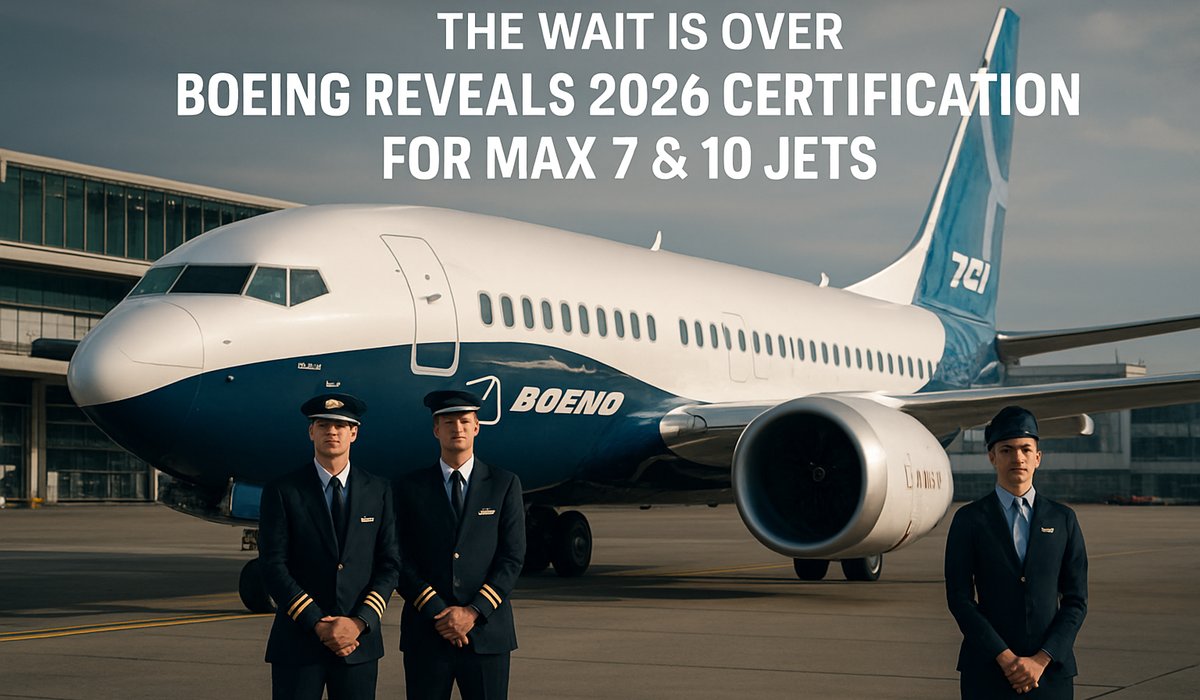
Image generated by AI
Boeing's MAX 7 and MAX 10 Aircraft Secured for 2026 Certification, Ending Years of Regulatory Delays
The aircraft manufacturer unveils timeline for two critical narrowbody jets amid ongoing industry pressure for fleet modernization
Long-Awaited Approval Path Finally Emerges
Boeing has formally outlined its certification pathway for the delayed MAX 7 and MAX 10 narrowbody aircraft, projecting regulatory approval by 2026, according to detailed disclosures within the company's first-quarter financial results. The announcement marks a critical turning point for the aviation manufacturer following years of production bottlenecks, regulatory scrutiny, and competitive pressure from rival Airbus.
The MAX 7 and MAX 10 variants represent Boeing's answer to market demand for fuel-efficient, next-generation regional and high-capacity narrowbody aircraft. Both jets have faced extended certification timelines due to regulatory reviews and engineering requirements imposed by the Federal Aviation Administration (FAA) and international aviation authorities.
Timeline and Strategic Implications
The 2026 certification target provides airlines with concrete visibility into fleet expansion opportunities. For carriers planning capital expenditures and route network strategies, the confirmed delivery window signals that Boeing's MAX family expansion can finally proceed after years of regulatory uncertainty.
Industry analysts note that delays in these certifications have created competitive advantages for Airbus, whose A321 and other narrowbody offerings have captured significant order momentum. The MAX 7 and MAX 10 certifications are essential for Boeing to recapture market share in a segment that represents the backbone of global commercial aviation.
Market Context and Industry Recovery
The certification announcements arrive as the aviation sector navigates elevated operational costs driven by fluctuating jet fuel prices and sustained inflationary pressures. Airlines have increasingly relied on baggage charges and ancillary revenue streams to offset expenses, making fuel-efficient aircraft models especially critical for profitability.
Boeing's financial performance and aircraft delivery schedules directly influence airline purchasing decisions, fleet modernization timelines, and ultimately, ticket pricing and airline fees that passengers encounter globally. Faster certification of these fuel-efficient variants could help carriers reduce per-seat operating costs, potentially moderating fare increases.
Looking Forward
The MAX 7 and MAX 10 certifications represent milestones beyond Boeing's immediate financial recovery. These aircraft variants are foundational to the commercial aviation industry's transition toward more sustainable, cost-efficient operations during a period of heightened geopolitical complexity affecting global supply chains and fuel markets.
Boeing's quarterly disclosures offered no revision to the 2026 timeline, suggesting regulatory progress remains on track despite ongoing industry challenges.
Frequently Asked Questions
When will Boeing MAX 7 and MAX 10 aircraft receive FAA certification? Boeing projects certification approval for both narrowbody variants by 2026, as detailed in the company's Q1 financial results.
How do aircraft certification delays affect airline ticket prices and fees? Delayed certifications extend the timeline for fleet modernization, forcing airlines to operate aging, less fuel-efficient aircraft longer, which increases operational costs and can lead to higher baggage charges and base fares.
What is the difference between MAX 7 and MAX 10 aircraft? The MAX 10 is the larger variant designed for higher-capacity routes, while the MAX 7 targets regional and medium-range markets. Both feature improved fuel efficiency compared to earlier Boeing narrowbody generations.
How does Boeing's certification timeline compare to Airbus competitors? Airbus has already established market presence with certified A321 variants, giving the European manufacturer a competitive advantage while Boeing awaits MAX 7 and MAX 10 approval.
Why are fuel-efficient aircraft important during current economic conditions? Rising jet fuel costs directly impact airline profitability. Modern, efficient aircraft reduce per-seat fuel consumption, helping carriers manage expenses and potentially stabilize ticket pricing.
Related Travel Guides
Flight Delay Compensation Guide 2026
Understanding Airline Route Changes
Airport Security Process Updated (2026)
External Resources
Disclaimer
This article is for informational and educational purposes only. It does not constitute legal, financial, or professional advice. While we strive to provide accurate and up-to-date information, travel policies, regulations, and conditions change rapidly. Always verify information with official sources before making travel decisions. Nomad Lawyer makes no representations about the accuracy, reliability, completeness, or suitability of the information provided. Readers should consult qualified professionals for advice specific to their circumstances. The views expressed in this article are those of the author and do not necessarily reflect the views of Nomad Lawyer.
Raushan Kumar
Founder & Lead Developer
Full-stack developer with 11+ years of experience and a passionate traveller. Raushan built Nomad Lawyer from the ground up with a vision to create the best travel and law experience on the web.
Learn more about our team →