
Australian Startup Pursues Breakthrough Hypersonic Hydrogen Jet Technology That Could Reshape Commercial Aviation
Breaking airline news and aviation industry updates for 2026.

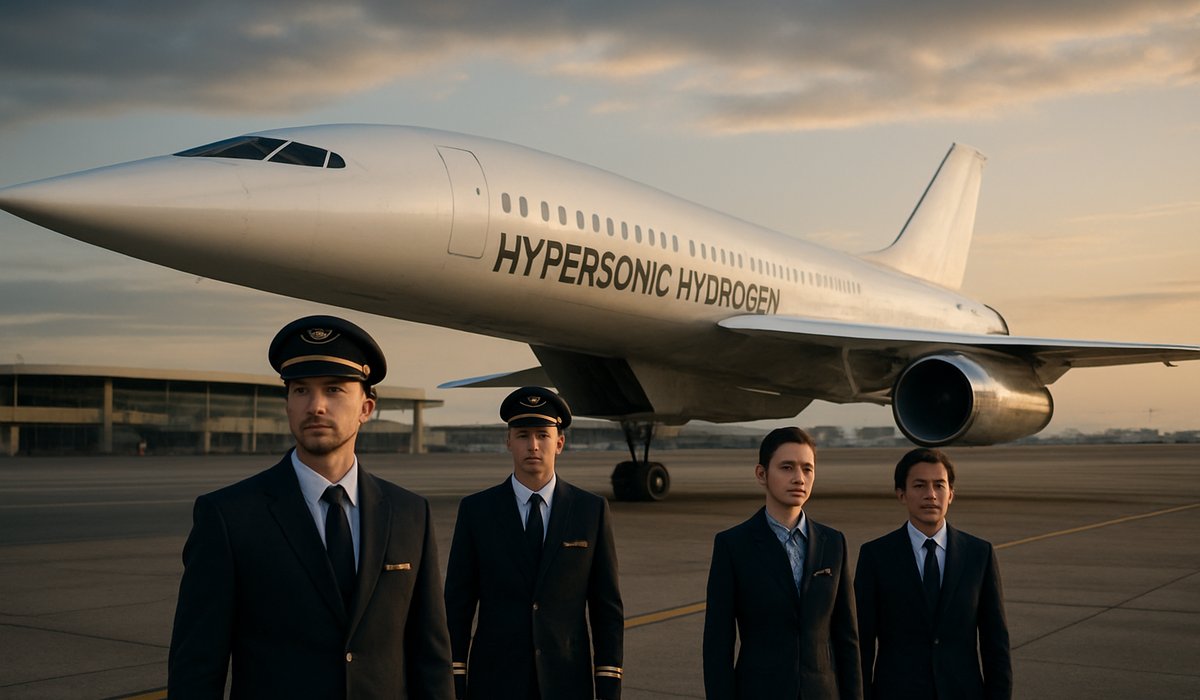
Image generated by AI
Australian Startup Pursues Breakthrough Hypersonic Hydrogen Jet Technology That Could Reshape Commercial Aviation
Hypersonix Launch Systems develops next-generation scramjet engines amid growing industry push toward sustainable aviation fuels
Emerging Player Challenges Traditional Aerospace Paradigm
An Australian aerospace startup is making significant strides in hypersonic propulsion technology, positioning itself at the forefront of a transformative shift in aviation engineering. Hypersonix Launch Systems has unveiled a portfolio of experimental unmanned aircraft systems powered by proprietary hydrogen-fueled scramjet engines, marking a critical milestone in the race to commercialize hypersonic travel for civilian passengers.
The company's development pipeline includes three demonstrator platforms—designated DART, VISR, and Delta Velos—each utilizing the company's proprietary Spartan scramjet propulsion system. These vehicles represent a departure from conventional jet engine design, incorporating hydrogen as a primary fuel source in response to mounting pressure across the aviation sector to reduce carbon emissions and operational costs tied to volatile jet fuel markets.
Strategic Partnerships Accelerate Technology Validation
Hypersonix's current trajectory focuses on unmanned aerial systems developed through collaborative agreements with defense ministries of allied nations and the United States National Aeronautics and Space Administration (NASA). These partnerships provide critical funding, technical expertise, and testing infrastructure necessary to mature the technology from prototype phase toward potential operational deployment.
The shift toward hydrogen propulsion addresses a fundamental challenge confronting the global aviation industry: traditional jet fuel pricing, historically volatile and subject to geopolitical disruptions, has compounded operational pressures on airlines already grappling with elevated baggage fees and ancillary charges necessary to maintain profitability. Hydrogen-powered alternatives could theoretically decouple commercial aviation from petroleum market fluctuations while reducing the carbon intensity of long-haul flights.
Commercial Aviation Applications on the Horizon
While military and research applications dominate Hypersonix's near-term roadmap, company leadership has articulated ambitions to eventually introduce hypersonic passenger services to the commercial aviation market. Such a transition would require substantial regulatory approval, passenger safety validation, and infrastructure development—hurdles that typically span multiple decades in aerospace commercialization.
Industry analysts note that successful hydrogen propulsion integration in hypersonic aircraft could fundamentally alter competitive dynamics within the aviation sector, particularly if emerging technologies can achieve cost parity with conventional jet fuel while delivering significant emissions reductions. This technological evolution occurs amid broader industry momentum toward sustainable aviation fuels (SAF) and next-generation propulsion systems.
The development of viable hypersonic passenger aircraft remains theoretical, yet Hypersonix's current trajectory suggests the technical barriers—once considered insurmountable—are gradually yielding to sustained engineering innovation and strategic investment.
Frequently Asked Questions
What is a hypersonic scramjet engine and how does it differ from conventional turbofan propulsion? Scramjet engines operate at supersonic speeds (Mach 5 and beyond) without moving mechanical parts, allowing fuel to combust within the airstream itself. Unlike traditional turbofans reliant on compressed air from spinning compressors, scramjets are theoretically lighter and more efficient at extreme velocities, though they remain nascent technology.
Why is hydrogen fuel gaining traction in aerospace development? Hydrogen produces zero carbon emissions upon combustion, addresses jet fuel price volatility, and reduces operational sustainability concerns. However, storage, infrastructure, and energy density challenges currently limit widespread commercial adoption.
When could hypersonic passenger flights become commercially available? Most aerospace experts project 15-25+ years before regulatory certification and commercial viability. Current timelines focus on unmanned military and research applications as validation platforms.
How could hypersonic aviation impact airline pricing and travel costs? Hypersonic technology could theoretically reduce flight times substantially, potentially offsetting premium ticket pricing through operational efficiencies, though current development costs remain extraordinarily high.
What role do government partnerships play in hypersonic aircraft development? Defense ministries and NASA provide essential funding, testing facilities, and safety oversight that individual companies cannot furnish independently, accelerating technology maturation cycles.
Related Travel Guides
Flight Delay Compensation Guide 2026
Understanding Airline Route Changes
Airport Security Process Updated (2026)
External Resources
Disclaimer
This article is for informational and educational purposes only. It does not constitute legal, financial, or professional advice. While we strive to provide accurate and up-to-date information, travel policies, regulations, and conditions change rapidly. Always verify information with official sources before making travel decisions. Nomad Lawyer makes no representations about the accuracy, reliability, completeness, or suitability of the information provided. Readers should consult qualified professionals for advice specific to their circumstances. The views expressed in this article are those of the author and do not necessarily reflect the views of Nomad Lawyer.
Raushan Kumar
Founder & Lead Developer
Full-stack developer with 11+ years of experience and a passionate traveller. Raushan built Nomad Lawyer from the ground up with a vision to create the best travel and law experience on the web.
Learn more about our team →