
Airbus Unveils Radical First-Class Redesign for A350-1000 as Premium Travel Gets a Luxury Overhaul
Breaking airline news and aviation industry updates for 2026.

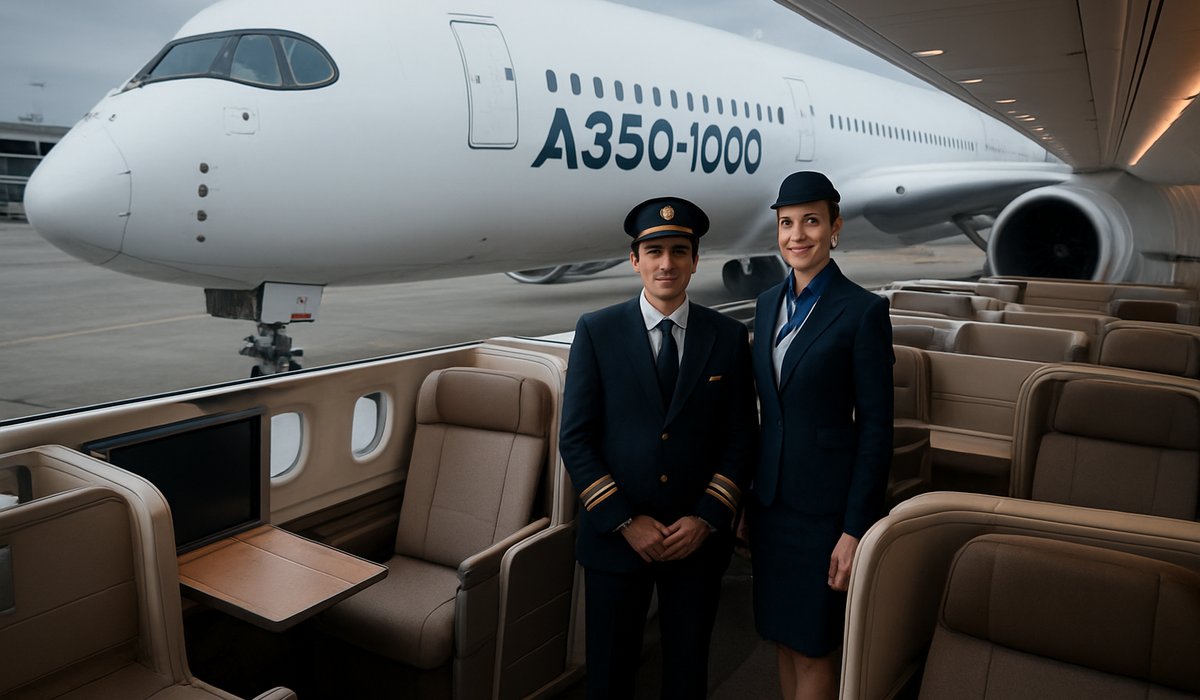
Image generated by AI
Airbus Unveils Radical First-Class Redesign for A350-1000 as Premium Travel Gets a Luxury Overhaul
Aircraft manufacturer reimagines ultra-premium cabin experience to justify premium fares in competitive long-haul market
Revolutionary Cabin Concept Challenges Traditional First-Class Design
Airbus is fundamentally reimagining the first-class experience aboard its flagship A350-1000 wide-body aircraft, moving beyond incremental seat improvements to conceptualize an entirely new approach to ultra-premium cabin design. Rather than simply enhancing existing seating configurations, the European manufacturer is positioning the forward cabin as a bespoke luxury environment tailored specifically for the most discerning long-haul travelers.
The strategic initiative underscores a critical moment in global aviation, where premium cabin differentiation has become essential to airline profitability and brand positioning. As carriers compete fiercely on international routes—particularly across the Atlantic, Asia-Pacific, and Middle East corridors—the ability to justify first-class fares against business-class alternatives has become paramount.
Emphasis on Space, Privacy, and Wellness Integration
The conceptual redesign prioritizes spatial openness and passenger privacy as core differentiators, recognizing that modern luxury travelers increasingly value seclusion and personalized experiences over ostentatious furnishings. The cabin layout emphasizes ergonomic comfort on flights exceeding 16 hours, addressing the specific physiological demands of ultra-long-haul journeys that can strain even premium travelers.
Airbus's approach reflects broader industry trends showing that premium-cabin passengers—who generate disproportionate revenue for carriers despite representing only 5-10% of total capacity—are willing to invest in demonstrably superior experiences. Airlines including Emirates, Singapore Airlines, and Lufthansa have invested heavily in first-class suites with doors and premium amenities, generating significant demand on flagship international routes.
Strategic Implications for Airline Competitiveness
The A350-1000, which entered service with Qatar Airways in 2018, represents one of aviation's most technologically advanced platforms. Its superior fuel efficiency and extended range make it ideal for implementing premium cabin innovations without compromising operational economics—a critical consideration as airlines balance luxury positioning with fiscal discipline.
Airbus's vision signals confidence that premium cabin travel remains a viable revenue driver, even as low-cost carriers and business-class products continue capturing market share. The manufacturer's emphasis on differentiating the entire forward-cabin environment—rather than individual seat features—suggests a fundamental belief that first-class, when executed at the highest level, maintains strategic value in airline brand architecture.
The competitive landscape for ultra-premium travel will intensify as Boeing's 777X and additional A350 deliveries expand manufacturer options for carriers seeking next-generation cabin experiences. This announcement positions Airbus as actively shaping the premium-travel narrative during a critical market inflection point.
Frequently Asked Questions
What is the Airbus A350-1000 and why is first-class redesign significant? The A350-1000 is Airbus's flagship ultra-long-range wide-body aircraft used on international routes exceeding 16 hours. Redesigning its first-class cabin allows airlines to justify premium pricing and enhance brand prestige on the world's most profitable routes.
How does this cabin concept differ from current first-class offerings? Rather than upgrading individual seats, Airbus is reimagining the entire forward cabin as an integrated luxury environment emphasizing privacy, openness, wellness, and personalized experiences—addressing the expectations of ultra-premium travelers.
Which airlines operate the A350-1000 and might benefit from this redesign? Qatar Airways, Singapore Airlines, Emirates, and Lufthansa operate A350 variants on long-haul routes. Airlines taking future deliveries could implement this new premium concept to enhance competitiveness.
How does premium cabin design impact airline revenue? First-class passengers generate 30-40% of long-haul revenue despite occupying only 5-10% of capacity. Superior cabin experiences justify higher fares and strengthen brand loyalty among high-value travelers.
What market trends are driving this innovation? Intensifying competition on premium routes, evolving passenger expectations for personalized luxury, and the need for airlines to differentiate from business-class alternatives are pushing manufacturers to fundamentally rethink cabin architecture.
Related Travel Guides
External Resources
Disclaimer
This article is for informational and educational purposes only. It does not constitute legal, financial, or professional advice. While we strive to provide accurate and up-to-date information, travel policies, regulations, and conditions change rapidly. Always verify information with official sources before making travel decisions. Nomad Lawyer makes no representations about the accuracy, reliability, completeness, or suitability of the information provided. Readers should consult qualified professionals for advice specific to their circumstances. The views expressed in this article are those of the author and do not necessarily reflect the views of Nomad Lawyer.
Kunal K Choudhary
Co-Founder & Contributor
A passionate traveller and tech enthusiast. Kunal contributes to the vision and growth of Nomad Lawyer, bringing fresh perspectives and driving the community forward.
Learn more about our team →