
Thailand Dominates China National Day Travel as Bangkok Emerges as Top Overseas Destination for 2026 Golden Week

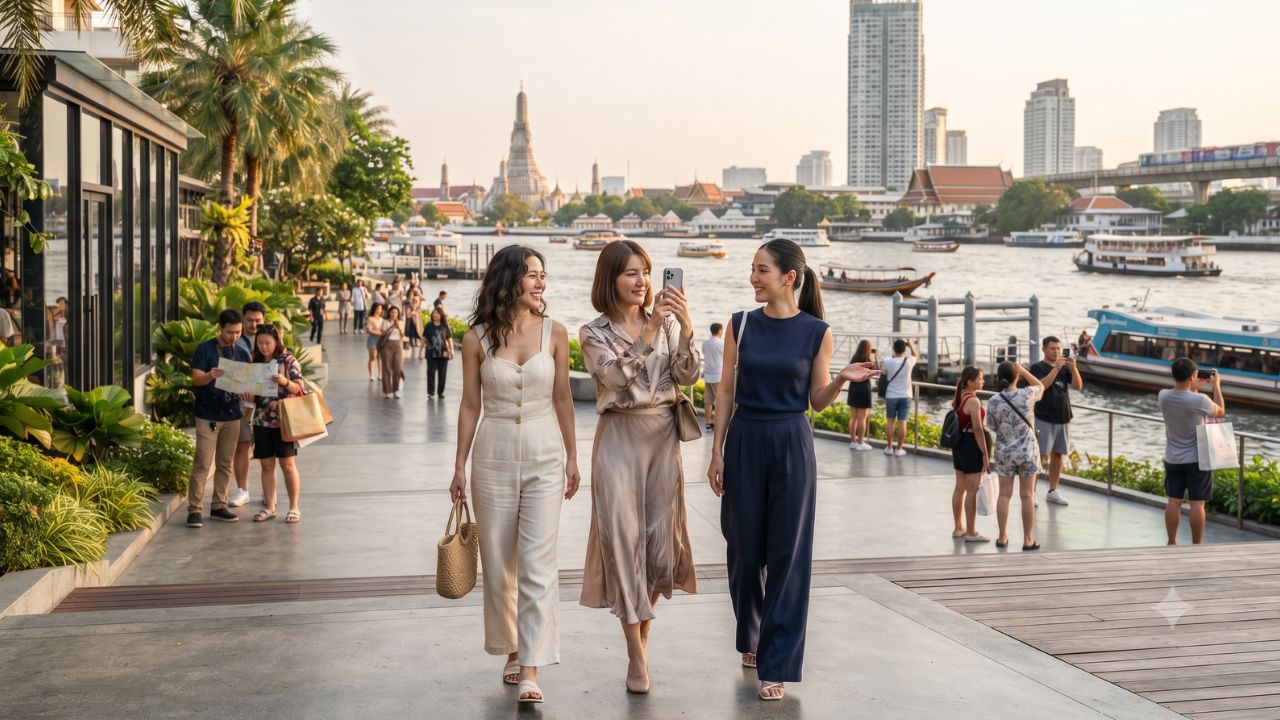
While Japan held the crown as the premier overseas holiday destination for Chinese travelers in 2025, a dramatic 56.4% collapse in arrivals during the first half of 2026 knocked Tokyo and Osaka completely out of the top ten rankings. In their place, Bangkok surged to the absolute number one position worldwide for China's October 1–7 National Day Golden Week, spearheading a massive regional tourism pivot into Southeast Asia.
The shift in outbound holiday movement reveals how quickly international travel patterns can reorient when flight capacity and visa accessibility align. As millions of holidaymakers take advantage of an extended 13-day travel window created by pairing the September 25–27 Mid-Autumn Festival break with the seven-day National Day holiday, Southeast Asia has established itself as the primary overseas beneficiary. International air bookings out of Chinese gateways climbed 22.5% year over year, with aviation regulators tracking roughly 31.19 million passenger journeys between September 25 and October 7—a 3.6% uptick over the previous year. Within this continental movement, the Thai capital ranks ahead of Kuala Lumpur in second place and Seoul in third, with Singapore, Bali, and Ho Chi Minh City cementing Southeast Asia's regional dominance.
Bangkok and Southeast Asia Capture the 2026 Golden Week Shift
To accommodate the intense demand, scheduled airline capacity between mainland China and key Southeast Asian destinations—including Thailand, Malaysia, Vietnam, and Laos—expanded by a collective 20% for the holiday corridor. By comparison, long-haul flight capacity connecting China to the United Kingdom, Germany, and Spain registered a 15% increase. The proximity of Southeast Asian hubs, combined with short flight times and well-developed hospitality networks, makes cities like Bangkok exceptionally competitive for travelers looking to maximize their time away.
This international outbound momentum unfolds alongside historic domestic transit volumes inside China. The Ministry of Transport projected approximately 2.13 billion domestic journeys across the seven-day holiday, averaging roughly 300 million trips daily—about 70% higher than standard non-holiday volumes. The holiday began with an intense peak on October 1, when an estimated 340 million passenger journeys occurred in a single 24-hour span. Road networks carried over 90% of those domestic journeys, aided by toll waivers on national expressways for passenger vehicles with seven seats or fewer from October 1 through October 7. On the rails, China Railway Beijing Group prepared to handle 22.32 million passenger journeys between September 23 and October 8, led by a single-day high of 1.79 million departures on October 1. To convert this transit wave into sustained consumer activity, local authorities rolled out over 20,000 cultural tourism programs and distributed more than 310 million yuan in shopping and hospitality vouchers.
Yet for travelers crossing borders, Bangkok represents the prime gateway to the wider region. Beyond the capital's retail districts and riverside quarters, arriving visitors are using Bangkok as a springboard to connect directly to southern beach enclaves like Phuket and Koh Samui, as well as northern cultural centers.
What Makes Bangkok Different for Regional Holiday Travelers
Bangkok's enduring appeal lies in its multi-layered urban structure, where historic canal networks, century-old markets, and street-level food culture operate alongside state-of-the-art transit systems. Unlike destinations that rely strictly on isolated resort enclaves, the Thai capital functions as a complete sensory environment where travelers can move effortlessly between sacred temple complexes and cutting-edge creative quarters in a single afternoon.
The official initiatives promoted by the Tourism Authority of Thailand have placed special emphasis on dispersing visitors beyond typical retail hubs. Independent explorers now combine morning walks through the centuries-old alleyways of Talat Noi and Kudi Chin with culinary excursions along Charoen Krung Road. Furthermore, Bangkok acts as an accessible railway launchpad: travelers can easily board morning intercity trains toward the Historic City of Ayutthaya, the former Siamese capital and UNESCO World Heritage site, experiencing ancient brick chedis and riverside ruins before returning to the capital by dusk.
2026 Golden Week Tourism and Transit Performance
The 2026 National Day holiday illustrates contrasting trajectories between regional short-haul corridors and traditional international destinations.
| Travel Sector / Corridor | 2025 Baseline or Benchmark | 2026 Holiday Performance | Year-on-Year Trend / Impact |
|---|---|---|---|
| China International Flight Bookings | Standard holiday volume | 22.5% increase | Strong rebound in outbound vacation travel |
| Aviation Passenger Departures | Approx. 30.1 million journeys | 31.19 million journeys (Sept 25–Oct 7) | +3.6% growth across cross-border routes |
| Southeast Asia Flight Capacity | Standard scheduled services | 20% capacity increase (TH, MY, VN, LA) | Major boost for Bangkok, KL, and HCMC |
| European Long-Haul Capacity | Baseline scheduled flights | 15% increase (UK, Germany, Spain) | Moderate expansion for multi-week itineraries |
| China Domestic Journey Total | Regular daily operations | 2.13 billion trips across 7 days | ~300 million daily trips (+70% over baseline) |
| Peak Single-Day Travel (Oct 1) | Previous holiday high | 340 million nationwide trips | Heaviest transit day of the Golden Week |
| Beijing Rail Passenger Volume | 2025 holiday schedule | 22.32 million journeys (Sept 23–Oct 8) | Peak of 1.79 million on October 1 |
| National Tourism Stimulus | Standard promotional campaigns | Over 20,000 events; 310M+ yuan vouchers | Direct subsidies across dining and lodging |
| Japan Inbound Travel Market | #1 overseas outbound spot (2025) | Fell outside Top 10 rankings (2026) | -56.4% Chinese visitor drop in first half 2026 |
Visitor Insider Tips
Experiencing Bangkok during peak holiday weeks requires smart scheduling and a firm grasp of local transit dynamics. Use these practical strategies to navigate the capital smoothly:
- Master the River and Rail Networks: Avoid afternoon road congestion along Sukhumvit and Rama I by using the elevated Bangkok Mass Transit System (BTS Skytrain) and the MRT Blue Line. For north-south transit along the Chao Phraya River, board the public Chao Phraya Express Boat (look for the orange flag boat, fixed fare around 16 THB) rather than overpriced private charters.
- Beat Temple Crowds with Dawn Timing: The Grand Palace and Wat Pho open at 08:30. Arrive by 08:00 to enter immediately as the gates open. By 10:30, group tour buses arrive in large numbers, making quiet contemplation of the Reclining Buddha impossible.
- Explore Neighborhoods Beyond the Mall Corridor: Instead of spending your entire stay around Siam Paragon or CentralWorld, base yourself near Ari (known for leafy residential avenues and independent coffee roasters) or Phra Khanong for authentic neighborhood eateries.
- Street Food Etiquette: In busy night markets like Yaowarat (Chinatown) or Ban Tad Thong, look for stalls with high local turnover. Carry small cash notes (20, 50, and 100 THB), as street vendors generally do not accept foreign credit cards, though PromptPay QR scanning is widely used by locals.
Cultural and Environmental Context
The influx of millions of holiday travelers presents both opportunities and management challenges for Bangkok's historic core. The Bangkok Metropolitan Administration has steadily worked to mitigate overtourism around Rattanakosin Island by encouraging foot traffic toward newly pedestrianized canal paths along Khlong Ong Ang and through heritage preservation projects in Charoen Chai.
Community-based tourism initiatives help channel economic benefits directly to traditional artisan families, shophouse owners, and street cooks rather than concentrating revenue solely within multinational luxury retail malls. For visitors, being mindful of local customs—dressing respectfully with covered shoulders and knees at religious compounds, removing shoes before entering residential structures and temple viharas, and supporting independent neighborhood vendors—ensures that Bangkok's living heritage remains resilient amid growing global travel volumes.
FAQ: Visiting Bangkok and Thailand in 2026
What makes October a good time to visit Bangkok? October marks the transition out of the monsoon season into cooler, drier weather. While brief late-afternoon showers can occur, daytime temperatures are manageable and city gardens are lush and green.
How do I travel from Suvarnabhumi Airport to central Bangkok quickly? Take the Airport Rail Link from the airport basement directly to Phaya Thai Station (approx. 26 minutes for 45 THB), where you can connect immediately to the BTS Skytrain network.
Do international travelers need a visa for short stays in Thailand? Travelers from dozens of countries, including China, India, and most Western nations, benefit from visa-free entry exemptions allowing stays between 30 and 60 days for tourism purposes.
Is Bangkok easy and safe to navigate for solo travelers? Yes. Bangkok is one of the safest major cities in Asia for solo explorers. English signage is universal across BTS and MRT stations, ride-hailing apps are reliable, and local hospitality is welcoming.
Smart travelers who venture beyond the typical tourist corridors will find that Bangkok's authentic soul lives in its historic canal communities, morning markets, and quiet temple courtyards.
Related Travel Guides
Disclaimer
This article is for informational and educational purposes only. It does not constitute legal, financial, or professional advice. While we strive to provide accurate and up-to-date information, travel policies, regulations, and conditions change rapidly. Always verify information with official sources before making travel decisions. Nomad Lawyer makes no representations about the accuracy, reliability, completeness, or suitability of the information provided. Readers should consult qualified professionals for advice specific to their circumstances. The views expressed in this article are those of the author and do not necessarily reflect the views of Nomad Lawyer.
Raushan Kumar
Founder & Lead Developer
Full-stack developer with 11+ years of experience and a passionate traveller. Raushan built Nomad Lawyer from the ground up with a vision to create the best travel and law experience on the web.
Learn more about our team →