
Tewkesbury Emerges as the Strategic Cotswolds Gateway for Medieval Heritage and Slow Travel in 2026
Tewkesbury is redefining the Cotswolds experience by blending medieval architectural heritage and traditional markets with strategic access to England's most iconic rural landscapes.

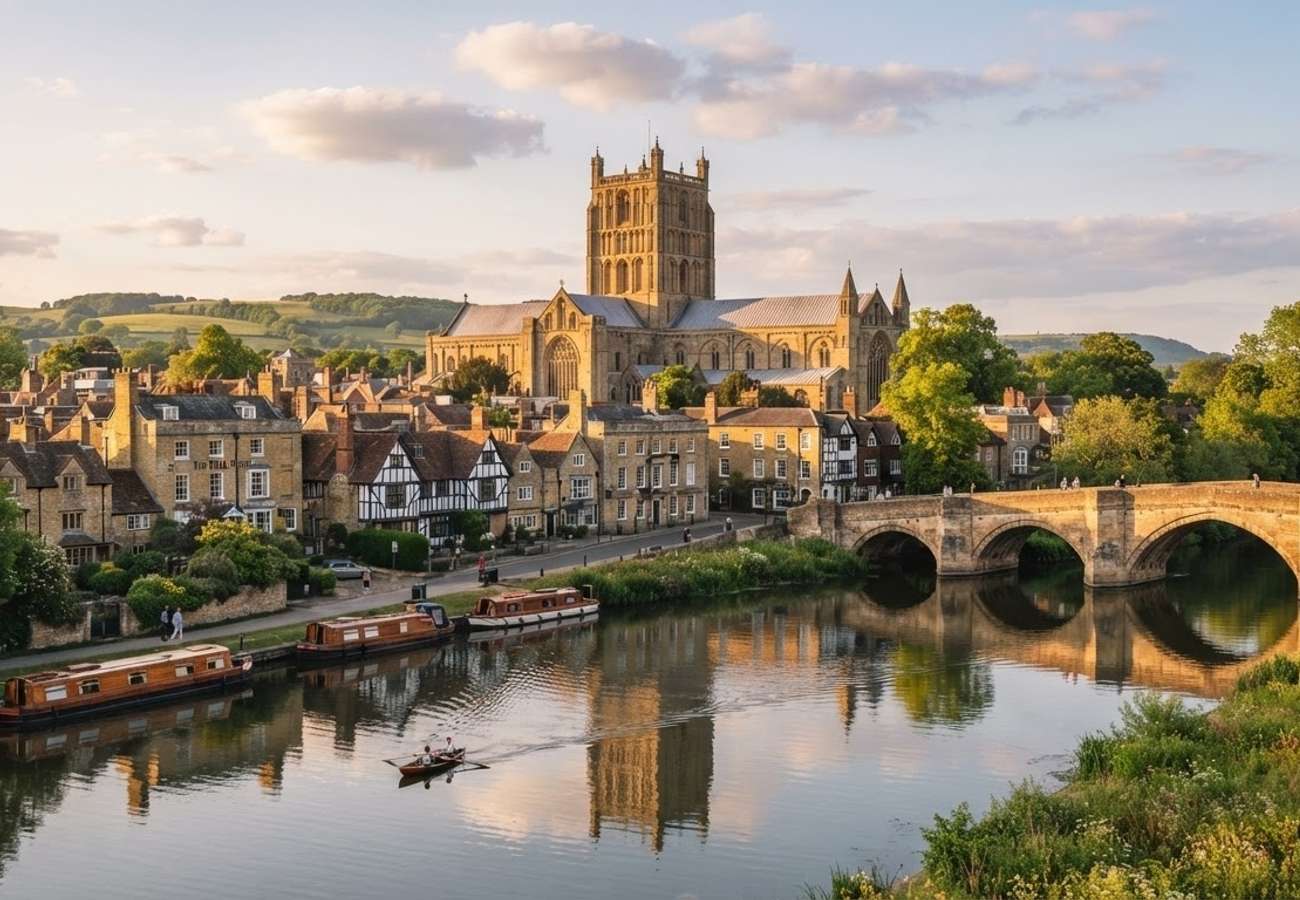
Image generated by AI
Tewkesbury is shifting from a transit stop to a primary destination, offering a strategic base that connects the architectural depth of a medieval market town with the rolling hills of the Cotswolds.
The Shift Toward Heritage-Centric Hubs
Travel patterns in 2026 show a clear preference for "hub-and-spoke" tourism, where visitors anchor themselves in a town with a distinct identity before exploring the surrounding countryside. Tewkesbury, positioned precisely between Gloucester and Worcester, has become the blueprint for this trend. Rather than hopping between overcrowded tourist villages, travelers are using this historic settlement as a base to experience a more authentic, quieter side of England.
The town's identity is forged by its location at the confluence of the Avon and Severn rivers. For the visitor, the impact is a dense concentration of medieval, Tudor, and Georgian architecture that feels lived-in rather than curated. The centerpiece is the grand abbey, dating from the early 1100s, which serves as a physical anchor for the town's Benedictine history.
Living History and Cultural Value
Tewkesbury moves beyond static sightseeing by integrating history into the modern calendar. The most significant example is the annual medieval festival in July. This is not a mere parade but a massive reenactment involving approximately 2,000 participants who recreate the 15th-century Battle of Tewkesbury. This event transforms the town's streets into a living narrative of the Wars of the Roses, pitting Yorkists against Lancastrians.
Beyond the spectacle, the town's layout encourages "slow travel." The labyrinthine alleyways and timber-framed buildings provide a sensory experience of English history that is visible in everyday commerce rather than confined to a museum.
Local Commerce and Artisan Economies
The town's commitment to local economies is evident in its market structure. The traditional markets held every Wednesday and Saturday at Spring Gardens Car Park provide a direct link between regional farmers and visitors.
For those seeking high-end regional produce, the Fine Food & Craft Market runs on seven Sundays between April and November. This focus on artisan goods extends to nearby Winchcombe (monthly farmers' markets) and Bishop’s Cleeve (art and craft markets), creating a regional network of sustainable, community-supported commerce.
Tewkesbury Visitor Experience Matrix
| Feature | Offering | Primary Appeal |
|---|---|---|
| Architectural Heritage | Medieval, Tudor, and Georgian structures | Immersive history exploration |
| Weekly Markets | Wednesday and Saturday sessions | Local produce and artisan crafts |
| Seasonal Events | Fine Food & Craft Market (Apr-Nov) | Regional gourmet and handmade goods |
| Culinary Scene | Traditional pubs to fusion dining | Diverse gastronomic itinerary |
| Regional Access | Proximity to Cheltenham (10 miles) | Gateway to Cotswold driving routes |
| Day Trip Options | Winchcombe and Bishop’s Cleeve | Expanded rural exploration |
Gastronomy: From Medieval Taverns to Global Fusion
The dining scene in Tewkesbury reflects a broader trend of blending heritage with internationalism. Visitors can navigate a varied food itinerary within the town center:
- Traditional Heritage: The Nottingham Arms offers a classic country pub experience within a timbered interior. The menu focuses on British staples: fish and chips, steak and ale pie, and the traditional Sunday roast (beef, pork, or chicken with Yorkshire puddings).
- Global Influence: Tipo Sultan provides a Bangladeshi-Indian fusion, specializing in tandoori kebabs, curries, and thalis.
- Continental Flair: The Abbot’s Table blends French, Italian, and British flavors, catering to those seeking a European-inspired menu.
Expanding the Radius: The Cotswolds Connection
Tewkesbury’s greatest asset is its proximity to Cheltenham, located roughly 10 miles south. This provides immediate access to the "Romantic Road" driving routes. These northern and southern loops lead travelers through some of England's most photographed landscapes, including:
- Iconic Villages: Upper Slaughter, Bourton-on-the-Water, and Moreton-in-Marsh.
- Rural Landmarks: Broughton Poggs and The Camp.
The journey is further enhanced by the region's burgeoning wine industry. The limestone-rich soil of the Cotswolds has birthed a sophisticated vineyard scene. While Woodchester Valley near Stroud is a primary draw, Deer Park Wines—located closer to Tewkesbury—offers tastings of sparkling cuvées, Pinot Noir, and Chardonnay.
Visitor Insider Tips
To get the most out of a Tewkesbury-based itinerary, consider these local insights:
- The "Quiet Window": Visit the abbey and the narrow alleyways on weekday mornings before 10:00 AM to avoid the midday crowds and capture the best light for photography.
- Market Strategy: If you are looking for unique antiques or second-hand clothing, the Saturday market at Spring Gardens is typically more diverse than the Wednesday session.
- Sustainable Transit: While the Cotswolds are best explored by car, the town center of Tewkesbury is highly walkable. Leave the vehicle at your hotel and explore the medieval core on foot to avoid congestion in the narrow lanes.
- Vineyard Etiquette: Most local vineyards, including Deer Park, require advanced booking for tastings. Check their seasonal hours, as many operate on a reduced schedule during the winter months.
Tourism Outlook
The long-term trajectory for Tewkesbury is one of sustainable growth. By positioning itself as a gateway rather than a destination in isolation, the town avoids the "museumification" that plagues some Cotswold villages. The integration of the 2,000-person medieval festival and the support of local artisan markets ensures that the economic benefits of tourism are distributed among local residents and traders. As slow travel continues to trend in 2026, Tewkesbury is set to remain a critical node for those seeking a balanced English experience—part urban heritage, part rural serenity.
A perfect blend of medieval grit and Cotswold grace.
Related Travel Guides
Disclaimer
This article is for informational and educational purposes only. It does not constitute legal, financial, or professional advice. While we strive to provide accurate and up-to-date information, travel policies, regulations, and conditions change rapidly. Always verify information with official sources before making travel decisions. Nomad Lawyer makes no representations about the accuracy, reliability, completeness, or suitability of the information provided. Readers should consult qualified professionals for advice specific to their circumstances. The views expressed in this article are those of the author and do not necessarily reflect the views of Nomad Lawyer.
Raushan Kumar
Founder & Lead Developer
Full-stack developer with 11+ years of experience and a passionate traveller. Raushan built Nomad Lawyer from the ground up with a vision to create the best travel and law experience on the web.
Learn more about our team →