
Strait of Hormuz Blockade Triggers Global Oil Shock as Saudi Arabia, UAE and Qatar Energy Crisis Destabilizes Global Aviation; United Airlines Leads Massive 2026 Growth Surge Amid US-Iran Conflict in May 2026
A strategic blockade of the Strait of Hormuz has ignited a global energy crisis, sending oil prices to record highs. As Saudi Arabia, the UAE, and Qatar face export disruptions, United Airlines spearheads a massive 2026 aviation expansion wave to capture market share during the 2026 oil shock.

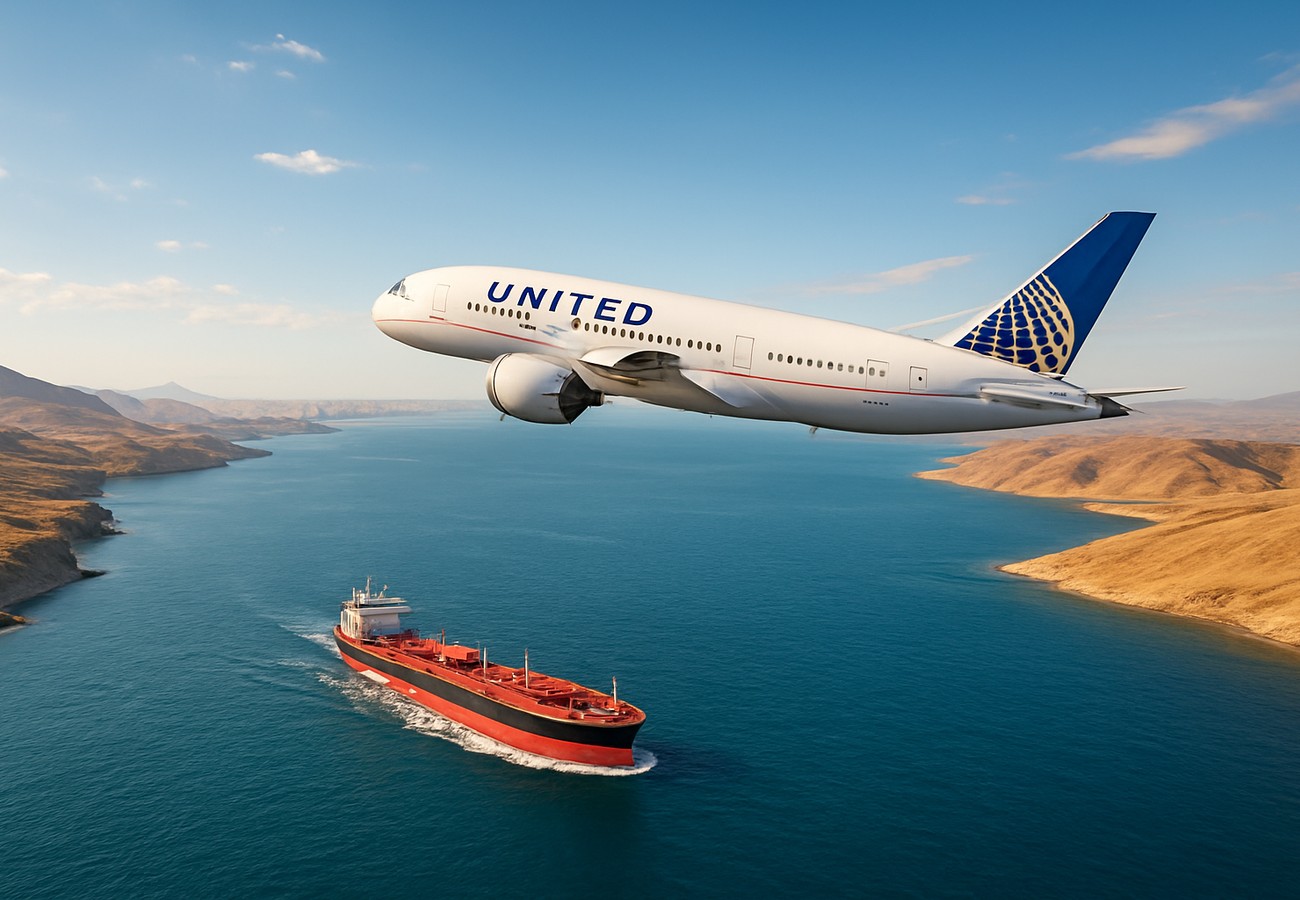
Image generated by AI
A global energy crisis of historic magnitude has erupted following the strategic blockade of the Strait of Hormuz, triggering an immediate oil price shock that is fundamentally restructuring the world’s aviation landscape. As the United States, Iran, and Gulf Cooperation Council (GCC) nations including Saudi Arabia, the UAE, and Qatar move to the brink of military conflict, the resulting travel chaos has seen many carriers retreat into survival mode. However, United Airlines has chosen a different path, spearheading a massive 2026 aviation growth surge. Today, May 10, 2026, the Chicago-based carrier unveiled its most ambitious expansion in decades, adding new routes to Europe, Asia, and Latin America while integrating 250+ new fuel-efficient aircraft. This strategic "expansion wave" represents a high-stakes play for global dominance even as the 2026 oil shock sends jet fuel prices to record highs.
The blockade of the world’s most critical energy chokepoint has sent crude prices soaring toward $200/bbl, yet United is leveraging its massive scale and next-generation fleet (A321XLR and B787-9) to capture market share from fuel-starved competitors. By positioning itself as the "primary bridge" between major financial hubs and emerging markets during the US-Iran military standoff, United is betting that its operational efficiency will allow it to thrive where others are grounded by airport disruptions.
Expanded Overview: The Fuel Shock and the Growth Monopoly
The blockade of the Strait of Hormuz — a narrow chokepoint through which 21 million barrels of oil per day (approximately 21% of global petroleum consumption) pass — represents a total collapse of international energy security. For major petroleum exporters like Kuwait, Iraq, and Bahrain, and the world’s leading LNG supplier, Qatar, the inability to access the sea has rendered their primary maritime routes unreachable.
As the International Energy Agency (IEA) activates emergency protocols, the resulting jet fuel shortage has forced a "survival of the fittest" scenario. United’s 2026 roadmap is built on "energy-resilient" technology. By deploying the A321XLR—an aircraft that offers long-range narrow-body efficiency—the airline is reaching "secondary" European markets like Bari and Split without the fuel-heavy overhead of larger wide-bodies. This allows United to maintain a monopoly on nonstop US service during the global energy crisis, forcing travelers to choose the "United Sanctuary" over the travel chaos of connecting through fuel-rationed European hubs.
Section-Wise Breakdown: The 2026 Expansion Map
Transatlantic Dominance: Reaching 46 Destinations
United has secured a record 46 transatlantic destinations, more than any other US carrier. New nonstop services to Split (Croatia), Bari (Italy), and Santiago de Compostela (Spain) are designed to bypass the traditional, fuel-congested hubs of London and Frankfurt. This strategic move ensures that premium leisure travelers can reach high-yield European vacation spots directly, even as the 2026 oil shock destabilizes secondary regional flights within Europe.
Connecting the East: The Newark-Seoul Axis
In a major transpacific move, United is launching daily nonstop service from Newark (EWR) to Seoul-Incheon (ICN). As traffic reroutes away from the contested Persian Gulf and Middle Eastern hubs, Seoul is becoming the primary transit point for Asia-bound travelers. By bypassing traditional stopovers, United is saving passengers hours of transit time and offering a "safe corridor" during the US-Iran conflict.
The Latin American Corridor: Capturing Near-Shoring Demand
Focusing on the southern hemisphere, United is expanding into Puerto Escondido and San Jose, capitalizing on the Latin American aviation boom. This move supports the region’s growing status as a hub for international trade and "near-shoring" as Western corporations move supply chains away from the high-risk zones of the Middle East and Eastern Europe during the global energy crisis.
Domestic Resilience: The O’Hare Feeder Network
At its Chicago O’Hare (ORD) hub, United is adding five new nonstop connections to mid-sized cities including Bloomington, Champaign, and Kalamazoo. This expansion of the feeder network is critical for consolidating domestic traffic onto the airline’s fuel-efficient long-haul departures, ensuring high load factors even as "war-premium" fuel surcharges impact ticket pricing.
United Airlines 2026 Global Expansion: Strategic Milestones
| Strategic Category | Key Milestone (May 2026) | Primary Hubs / Locations |
|---|---|---|
| New 2026 Routes | Nonstop service to Split, Bari, Glasgow, Santiago | SPU, BRI, GLA, SCQ |
| Fleet Update | Integration of 250+ new A321XLR and B787-9 | Global Mainline Network |
| Transpacific | New Newark (EWR) to Seoul-Incheon (ICN) nonstop | Newark, Seoul |
| Network Scale | 46 Transatlantic destinations; 3,000 weekly roundtrips | London, Paris, Frankfurt, Reykjavik |
| Technology | Deployment of SpaceX Starlink high-speed Wi-Fi | Long-haul Wide-body Fleet |
| Domestic Growth | ORD expansion: 750 daily departures; 5 new cities | Chicago, Bloomington, Lansing |
Note: Data reflects official 2026 expansion roadmap. Operational stability is subject to fuel availability during the oil shock.
Passenger & Airline Impact: The Price of Premium Growth
For travelers, the 2026 aviation growth surge represents a shift toward "high-efficiency" travel. While ticket prices are being impacted by the 2026 oil shock, the addition of nonstop long-haul routes reduces the risk of being stranded during airport disruptions at connecting hubs. The integration of SpaceX Starlink Wi-Fi and expanded Polaris pods ensures that United remains the top choice for corporate travelers who need to stay connected as the US-Iran military standoff drives high-stakes global business.
Industry Analysis: The Great Consolidation of 2026
Aviation analysts suggest that the Strait of Hormuz blockade is acting as a catalyst for a massive industry shakeout. "The global oil shock is effectively funding United’s expansion," says one senior energy strategist. "By having the most fuel-efficient fleet and the largest capital reserves, United is 'land-grabbing' routes that its competitors are too terrified to fly. They are effectively building an 'energy-safe' global bridge while the rest of the world is dealing with airline instability. This isn't just growth; it's a structural takeover of the international market."
According to the IEA, United’s commitment to Sustainable Aviation Fuel (SAF) is also positioning it as the "clean" choice for ESG-conscious investors during the 2026 energy crisis.
Conclusion: A New Global Bridge Built on Resilience
The massive 2026 growth surge is a definitive statement of United Airlines’ intent to lead the world through the 2026 oil shock. As Saudi Arabia, the UAE, and the United States navigate the military developments in the Persian Gulf, United is redrawing the aviation map. For the traveler of 2026, the message is clear: the oil shock has arrived, but United is still flying farther, faster, and more efficiently than ever before.
Key Takeaways
- Strait of Hormuz blockade continues to drive a global energy crisis, yet United Airlines leads a massive 2026 growth surge.
- Fleet Modernization: 250+ new aircraft (A321XLR and B787-9) to navigate the high-fuel-price environment.
- Transatlantic Record: Reaching 46 destinations, including new nonstop links to Split, Bari, and Santiago de Compostela.
- Seoul Expansion: New Newark-Incheon nonstop service bypasses Middle Eastern and Gulf transit risks.
- O’Hare Dominance: Chicago hub expands to 750 daily departures with new feeder routes.
- SpaceX Starlink: High-speed internet across the fleet to support high-stakes business during the US-Iran conflict.
- Sustainability: Lead the industry in SAF adoption to mitigate the environmental impact of the 2026 energy shock.
Related Travel Guides
Strait of Hormuz Blockade Triggers Global Oil Shock: 119 Flights Delayed at LAX Airport
European Aviation Chaos: 2,233 Flights Delayed as Global Energy Crisis Hits Heathrow and Frankfurt
Disclaimer: Route expansion and fleet data are based on United Airlines’ official 2026 roadmap as of May 10, 2026. Geopolitical events and their impact on global energy markets are subject to rapid change. Travelers are advised to verify all flight details directly with United Airlines and monitor official government travel advisories.
Kunal K Choudhary
Co-Founder & Contributor
A passionate traveller and tech enthusiast. Kunal contributes to the vision and growth of Nomad Lawyer, bringing fresh perspectives and driving the community forward.
Learn more about our team →