
Strait of Hormuz Blockade Triggers Global Oil Shock as Saudi Arabia, UAE and Qatar Energy Crisis Destabilizes Kuwait Aviation; Kuwait Airways and EgyptAir Cancel 10 Flights Amid US-Iran Conflict in May 2026
A strategic blockade of the Strait of Hormuz has ignited a global energy crisis, sending oil prices to record highs. As Saudi Arabia, the UAE, and Qatar face export disruptions, ten flights have been cancelled across Kuwait International Airport during the 2026 oil shock.

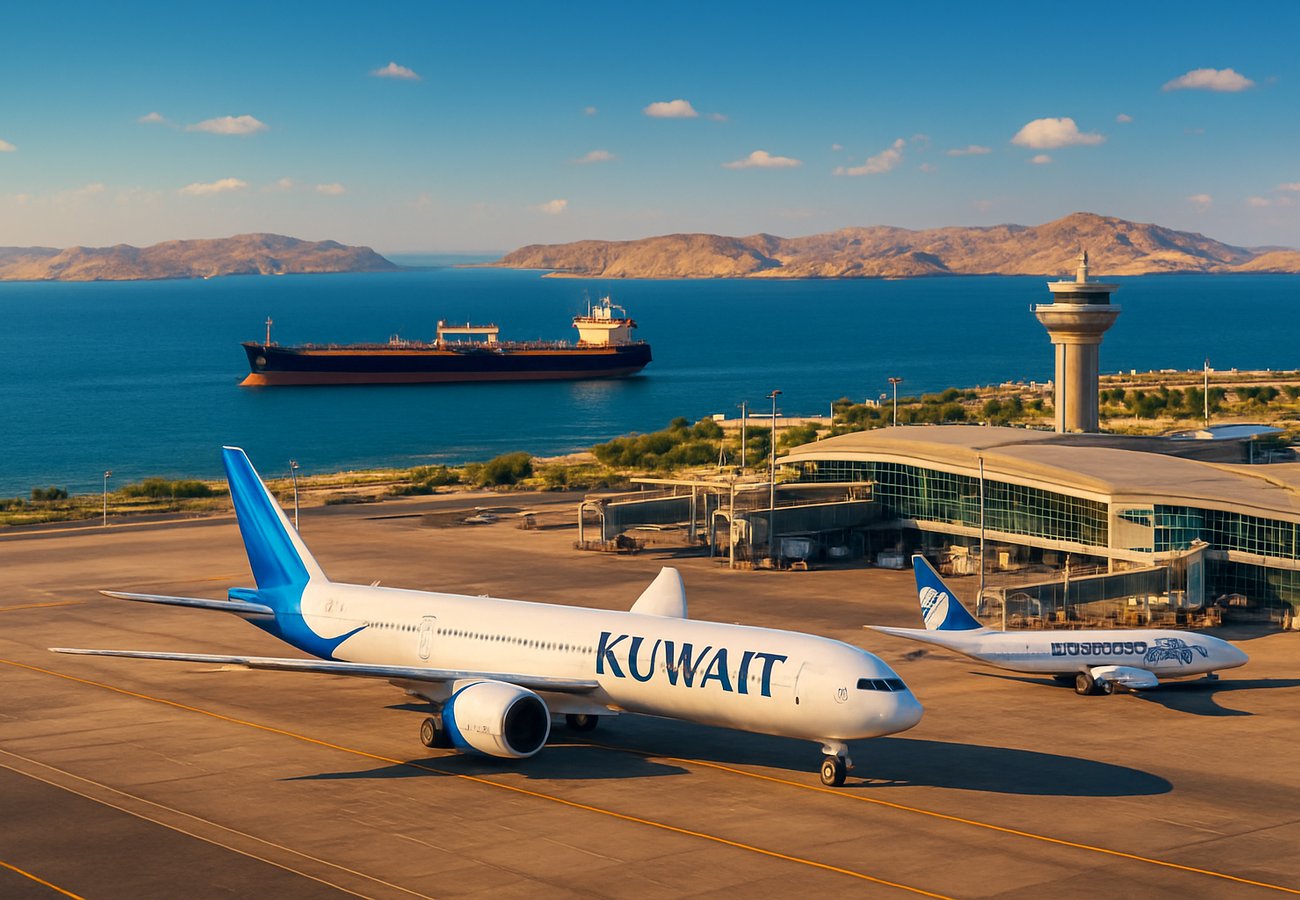
Image generated by AI
A global energy crisis of historic magnitude has erupted following the strategic blockade of the Strait of Hormuz, triggering an immediate oil price shock that is fundamentally restructuring the aviation landscape of Kuwait. As the United States, Iran, and Gulf Cooperation Council (GCC) nations including Saudi Arabia, the UAE, and Qatar move to the brink of military conflict, the resulting travel chaos has seen a wave of flight cancellations at the Kingdom's primary gateway. Today, May 10, 2026, Kuwait International Airport (KWI) reported ten major cancellations affecting routes to New York, Amsterdam, Bangkok, Istanbul, and Cairo. Major carriers including Kuwait Airways and EgyptAir were forced to ground operations as the 2026 oil shock destabilizes global fuel supply chains and triggers a state of airport disruptions.
The blockade of the world’s most critical energy chokepoint has sent crude prices soaring toward $200/bbl, creating a "jet fuel emergency" even for one of the world's leading oil-producing nations. The suspension of flagship services using Boeing 777-300ER and Airbus A330-900 aircraft indicates that the "maritime export paralysis" caused by the US-Iran military standoff is now impacting the region's ability to refine and distribute aviation spirit to its own national carriers.
Expanded Overview: The Fuel Shock and the Kuwait Hub Collapse
The blockade of the Strait of Hormuz — a narrow chokepoint through which 21 million barrels of oil per day (approximately 21% of global petroleum consumption) pass — represents a total collapse of international energy security. For major petroleum exporters like Kuwait, Iraq, and Bahrain, the inability to access maritime routes has rendered their primary economic assets unreachable.
As the International Energy Agency (IEA) activates emergency protocols, the resulting jet fuel shortage has forced Kuwait Airways to implement "fuel-preservation" schedules. This aviation update confirms that the "direct maritime blockade" of the Persian Gulf is preventing the normal flow of refined petroleum products, forcing the carrier to suspend international and regional services. The global energy crisis is effectively partitioning the Kuwaiti aviation market, as carriers ground wide-body aircraft to preserve dwindling reserves for the most "essential" state-mandated connections during the oil shock.
Section-Wise Breakdown: Hub-Specific Chaos
Kuwait Airways: The Long-Haul Network Fractures
Kuwait Airways, the nation’s flagship carrier, recorded multiple flagship cancellations. The suspension of KAC117 to New York (JFK) and KAC127 to Amsterdam (AMS) using the Boeing 777-300ER and Airbus A330-900 respectively, indicates a total withdrawal from the trans-Atlantic corridor. Furthermore, the cancellation of KAC411 and KAC413 to Bangkok has severed a vital link for South Asian trade and tourism. Analysts suggest that the 2026 oil shock has made these fuel-heavy rotations economically unviable as the carrier consolidates its operations to the most local corridors.
EgyptAir: The Cairo Labor Bridge Fails
Regional connectivity between Kuwait and Egypt faced a total shutdown as EgyptAir cancelled three separate services to Cairo International (MSR621, MSR611, and MSR613). As a critical link for the massive Egyptian expatriate labor force in Kuwait, the loss of these Boeing 737-800 and Airbus A320neo rotations has created a massive backlog of stranded passengers. The US-Iran conflict has made the "thin-margin" Gulf-Cairo corridor the first casualty of the current fuel-pricing crisis.
Istanbul: The Narrow-Body Stability Crisis
Kuwait Airways also suspended its KAC157 service to Istanbul Sabiha Gökçen on consecutive days, using both Airbus A321neo and A330-800 aircraft. The repeated nature of these cancellations suggests that the "war-premium" fuel surcharges have made the Turkish market unreachable for many regional travelers during the global energy crisis.
Kuwait International Airport: Cancelled Flights Summary (May 2026)
| Flight Number | Airline | Aircraft Type | Destination Hub | Status |
|---|---|---|---|---|
| KAC117 | Kuwait Airways | Boeing 777-300ER | New York (JFK) | CANCELLED |
| KAC127 | Kuwait Airways | Airbus A330-900 | Amsterdam (AMS) | CANCELLED |
| KAC411 / 413 | Kuwait Airways | Boeing 777-300ER | Bangkok (BKK) | CANCELLED |
| KAC157 | Kuwait Airways | A321neo / A330-800 | Istanbul (SAW) | CANCELLED |
| MSR621 / 611 | EgyptAir | Boeing 737-800 | Cairo (CAI) | CANCELLED |
| MSR613 | EgyptAir | Airbus A320neo | Cairo (CAI) | CANCELLED |
Note: A total of 10 cancellations were recorded across these flagship routes during the May 10 operations period.
Passenger & Transit Impact: Stranded in a Post-Fuel Reality
For the thousands of passengers stranded at Kuwait International, the ten cancellations represent a total collapse of movement. With rebooking options limited by the global jet fuel shortage, travelers are facing multi-day delays and skyrocketing costs for alternative routing. The US-Iran conflict means that transit through Kuwait City—traditionally a safe and reliable hub—is now a gamble, as the carrier's wide-body fleet is grounded by the realities of maritime insecurity.
Industry Analysis: The End of the "Regional Hub" Ambition?
Aviation analysts suggest that the Strait of Hormuz blockade is forcing a "hard reset" for Kuwaiti aviation. "The global oil shock has proved that being an oil producer does not insulate you from a maritime blockade," says one senior energy strategist. "At $200/bbl, the operational margins for carriers like Kuwait Airways are being vaporized. We are seeing a structural contraction where only the most 'essential' regional flights will survive the 2026 energy crisis."
According to the IEA, the "direct maritime threat" in the Persian Gulf is creating a refined-product deficit that is affecting the very nations that produce the crude.
Conclusion: A Desert Gateway Grounded by Geopolitics
The ten flight cancellations at Kuwait are a devastating reminder that the region's aviation prosperity is tied to the security of the 21-mile-wide Strait of Hormuz. As Saudi Arabia, the UAE, and the United States monitor the military developments in the Persian Gulf, the Kuwaiti aviation sector remains in a state of high-alert. For travelers, the oil shock has changed the rules of the game, and the "Gateway to the Gulf" is feeling the full weight of a world without maritime security.
Key Takeaways
- Strait of Hormuz blockade continues to drive a global energy crisis, grounding 10 major flights from Kuwait International Airport.
- Kuwait Airways: Suspends flagship services to New York, Amsterdam, and Bangkok, prioritizing fuel for essential regional corridors.
- EgyptAir: Cancels three consecutive Cairo flights, severing the critical North African labor bridge.
- US-Iran Conflict: Geopolitical instability is forcing a "direct maritime fuel deficit" even in one of the world's leading oil nations.
- Regional Isolation: Low-cost regional rotations to Istanbul and Cairo are being slashed to conserve dwindling fuel reserves.
- Jet Fuel Crisis: Skyrocketing costs are making premium wide-body and narrow-body regional rotations economically unviable.
- Travelers are advised to confirm flight status 24 hours prior to departure and verify all schedules directly with Kuwait Airways or EgyptAir.
Related Travel Guides
Strait of Hormuz Blockade Triggers Global Oil Shock: 119 Flights Delayed at LAX Airport
European Aviation Chaos: 2,233 Flights Delayed as Global Energy Crisis Hits Heathrow and Frankfurt
The Kuwait Aviation Resilience Guide: Navigating Kuwait City During the 2026 Energy Shock
Disclaimer: Flight cancellation data is based on Kuwait International Airport reports as of May 10, 2026. Geopolitical events and their impact on global energy markets are subject to rapid change. Travelers are advised to monitor official government travel advisories and verify all flight details directly with their carrier.
Kunal K Choudhary
Co-Founder & Contributor
A passionate traveller and tech enthusiast. Kunal contributes to the vision and growth of Nomad Lawyer, bringing fresh perspectives and driving the community forward.
Learn more about our team →