
Strait of Hormuz Blockade Triggers Global Oil Shock as Saudi Arabia, UAE and Qatar Energy Crisis Destabilizes Global Aviation; SAS Crowned World's Most Punctual Airline Amid US-Iran Conflict in May 2026
A strategic blockade of the Strait of Hormuz has ignited a global energy crisis, sending oil prices to record highs. As Saudi Arabia, the UAE, and Qatar face export disruptions, SAS (Scandinavian Airlines) emerges as the world's most punctual carrier, defying the 2026 oil shock with an 89.53% on-time rate.

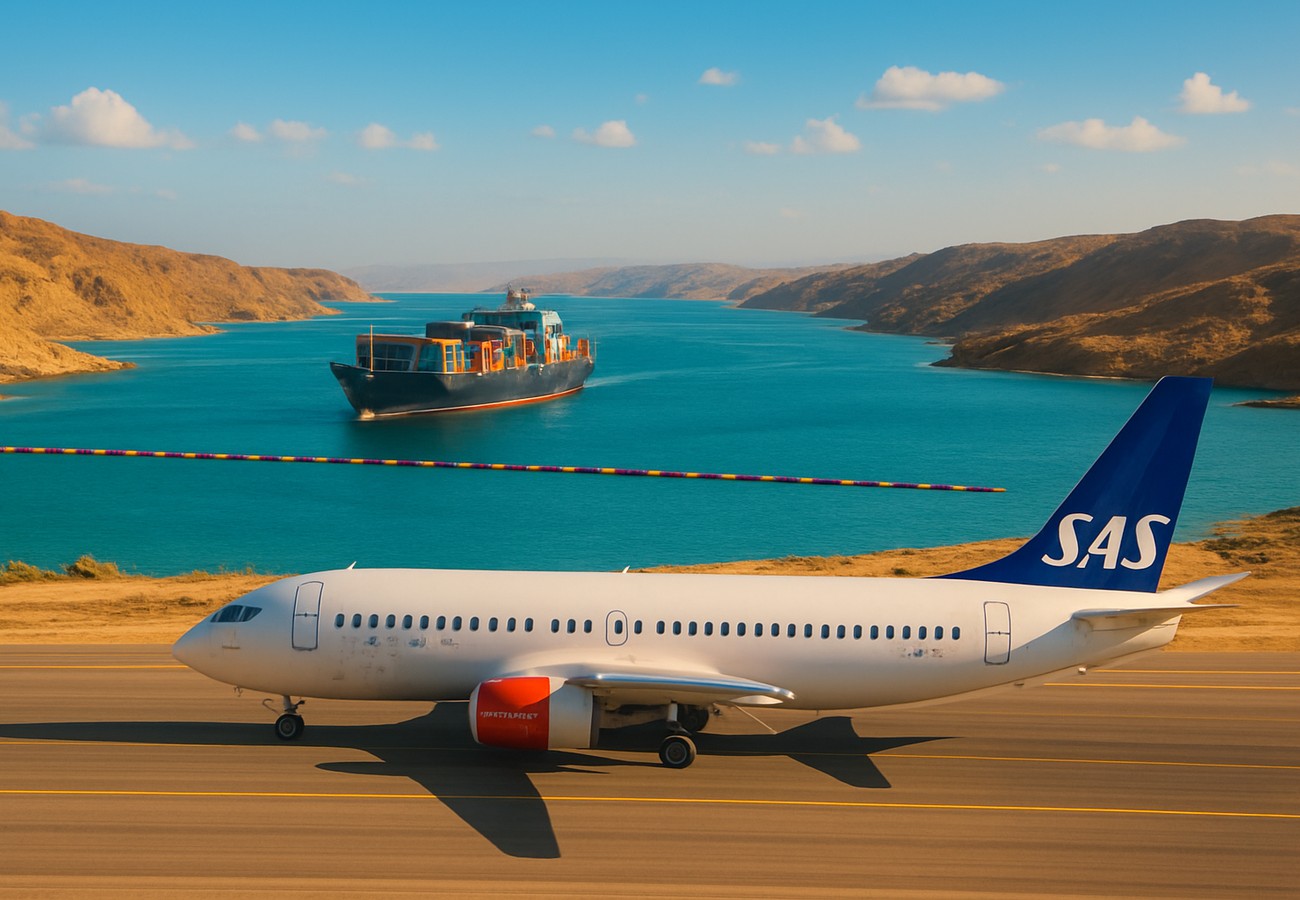
Image generated by AI
A global energy crisis of historic magnitude has erupted following the strategic blockade of the Strait of Hormuz, triggering an immediate oil price shock that is fundamentally restructuring the world’s aviation hierarchy. As the United States, Iran, and Gulf Cooperation Council (GCC) nations including Saudi Arabia, the UAE, and Qatar move to the brink of military conflict, the resulting travel chaos has seen global on-time performance (OTP) plummet for most major carriers. However, SAS (Scandinavian Airlines) has defied the odds, officially clinching the title of the World’s Most Punctual Airline for April 2026. Today, May 10, 2026, the carrier reported a staggering 89.53% on-time arrival rate, a feat of operational excellence achieved even as skyrocketing jet fuel prices and the 2026 oil shock destabilize the global aviation landscape.
The blockade of the world’s most critical energy chokepoint has sent crude prices soaring toward $200/bbl, providing a severe test for airline scheduling systems. SAS’s ability to maintain its leadership position globally and in Europe—ranking #1 in Cirium’s performance metrics—is a strategic victory during its 80th anniversary year, offering a rare sanctuary of reliability in an industry currently plagued by airport disruptions and flight cancellations.
Expanded Overview: The Fuel Shock and the SAS Resilience Model
The blockade of the Strait of Hormuz — a narrow chokepoint through which 21 million barrels of oil per day (approximately 21% of global petroleum consumption) pass — represents a total collapse of international energy security. For major petroleum exporters like Kuwait, Iraq, and Bahrain, and the world’s leading LNG supplier, Qatar, the inability to access the sea has rendered their primary maritime routes unreachable.
As the International Energy Agency (IEA) activates emergency protocols, the aviation industry is facing a "fuel burn" crisis. The US-Iran conflict has forced many carriers to implement fuel-conservation holding patterns, leading to systemic delays at major Western hubs. SAS, however, has leveraged its modern, fuel-efficient fleet—dominated by the Airbus A320neo family—to maintain schedule integrity. By optimizing turnaround processes and implementing a "virtual-first" operational coordination system, SAS has insulated its passengers from the worst effects of the global energy crisis.
Section-Wise Breakdown: Defying the Geopolitical Storm
Operational Excellence Amid Middle East Volatility
While the geopolitical crisis in the Middle East has sent "ripple effects" across the industry, SAS has maintained a laser focus on stability. The airline’s President and CEO, Anko van der Werff, emphasized that this punctuality is the result of "unsung heroes" across the operation who have worked tirelessly to maintain reliability during a period where Middle Eastern export halts have made jet fuel both scarce and prohibitively expensive.
Cirium OTP Leadership: A Rare Dual Victory
Mike Malik, Chief Industry Officer at Cirium, noted that SAS’s performance in April 2026 is "unprecedented" given the global circumstances. To secure the #1 spot both in Europe and globally simultaneously—especially during a period of high travel demand and energy-security threats—reflects an operational consistency that very few airlines can maintain across global cycles. This dual ranking is a rare milestone that few carriers have achieved in the history of the Cirium OTP awards.
The Foundation of Trust: Predictability as a Premium
As SAS enters its 80th year, the focus on "predictability" has become a core competitive advantage. In a high-risk era where airline news is dominated by fuel surcharges and travel chaos, SAS has doubled down on offering a predictable travel experience. This commitment to safeguarding customer trust—safeguarded through meticulous planning—is now the primary driver of customer loyalty in the Scandinavian and broader European markets.
On-Time Performance (OTP) Metrics: April 2026 Global Ranking
| Airline | OTP Rate (%) | Region | Ranking | Strategic Factor |
|---|---|---|---|---|
| SAS (Scandinavian) | 89.53% | Global / Europe | #1 | Fuel-efficient fleet & turnaround optimization |
| Competitor Average | 76.40% | Global | N/A | Impacted by $200/bbl fuel surcharges & LHR delays |
| Middle East Hub Carriers | 68.20% | GCC / Regional | N/A | Direct disruption from Hormuz maritime blockade |
| European Legacy Carriers | 72.10% | Europe | N/A | Congestion at CDG and Frankfurt hubs |
Note: Data sourced from Cirium’s April 2026 On-Time Performance (OTP) report. SAS has secured 8 European and 5 global wins in the last 12 months.
Passenger & Airline Impact: Reliability as the New Luxury
For travelers, the 89.53% OTP rate of SAS represents the new "luxury" in aviation: certainty. As the US-Iran conflict makes missed connections and multi-day delays a reality for many, SAS passengers are experiencing a level of stability that is increasingly rare. This operational reliability is not just a convenience; it is a financial necessity for business travelers who cannot afford the "cascading delays" currently affecting carriers with less resilient scheduling systems during the 2026 oil shock.
Industry Analysis: The Scandinavian Fortress
Aviation analysts suggest that the Strait of Hormuz blockade is separating the "operationally elite" from the rest of the pack. "The global oil shock has proved that punctuality is directly tied to fuel efficiency and organizational agility," says one senior energy strategist. "SAS has built a 'Scandinavian Fortress' of reliability. By maintaining such high OTP rates when the world’s energy supply is being held hostage, they are effectively telling the market that their operations are decoupled from the chaos. This is a powerful signal for both investors and travelers."
According to the IEA, the integration of highly efficient narrow-body fleets is a critical component of an airline’s ability to survive a long-term energy security threat without massive schedule degradation.
Conclusion: 80 Years of Excellence, Redefined by Crisis
The crowning of SAS as the world’s most punctual airline is a testament to the resilience of the Scandinavian aviation model. As Saudi Arabia, the UAE, and the United States navigate the military developments in the Persian Gulf, SAS remains a beacon of order in a world of travel chaos. For passengers booking their summer vacations in May 2026, the message is clear: SAS is not just flying on time; they are flying against the tide of a global energy crisis.
Key Takeaways
- Strait of Hormuz blockade continues to drive a global energy crisis, yet SAS (Scandinavian Airlines) emerges as the world's most punctual carrier.
- On-Time Performance: SAS achieved a record 89.53% OTP rate in April 2026.
- Dual Victory: SAS ranked #1 globally and in Europe in Cirium’s On-Time Performance report.
- US-Iran Conflict: Geopolitical instability has failed to derail SAS’s meticulous operational scheduling.
- Fleet Resilience: The use of fuel-efficient Airbus A320neo aircraft is a key factor in maintaining reliability during the 2026 oil shock.
- 80th Anniversary: The award marks a historic milestone for the carrier as it strengthens its market position.
- Customer Trust: SAS prioritizes stability and predictability as the primary response to the global airport disruptions currently affecting competitors.
Related Travel Guides
Strait of Hormuz Blockade Triggers Global Oil Shock: 119 Flights Delayed at LAX Airport
European Aviation Chaos: 2,233 Flights Delayed as Global Energy Crisis Hits Heathrow and Frankfurt
Disclaimer: On-Time Performance data is based on the Cirium April 2026 report. Geopolitical events and their impact on global energy markets are subject to rapid change. Travelers are advised to monitor official government travel advisories and verify flight schedules directly with SAS or their travel provider.
Kunal K Choudhary
Co-Founder & Contributor
A passionate traveller and tech enthusiast. Kunal contributes to the vision and growth of Nomad Lawyer, bringing fresh perspectives and driving the community forward.
Learn more about our team →