
Strait of Hormuz Blockade Triggers Global Oil Shock as Saudi Arabia, UAE and Qatar Energy Crisis Destabilizes Global Aviation; Korean Air Clinches Sixth Consecutive Skytrax 5-Star Rating Amid US-Iran Conflict in May 2026
A strategic blockade of the Strait of Hormuz has ignited a global energy crisis, sending oil prices to record highs. As Saudi Arabia, the UAE, and Qatar face export disruptions, Korean Air secures its sixth consecutive Skytrax 5-Star rating, cementing its role as a premium sanctuary during the 2026 oil shock.

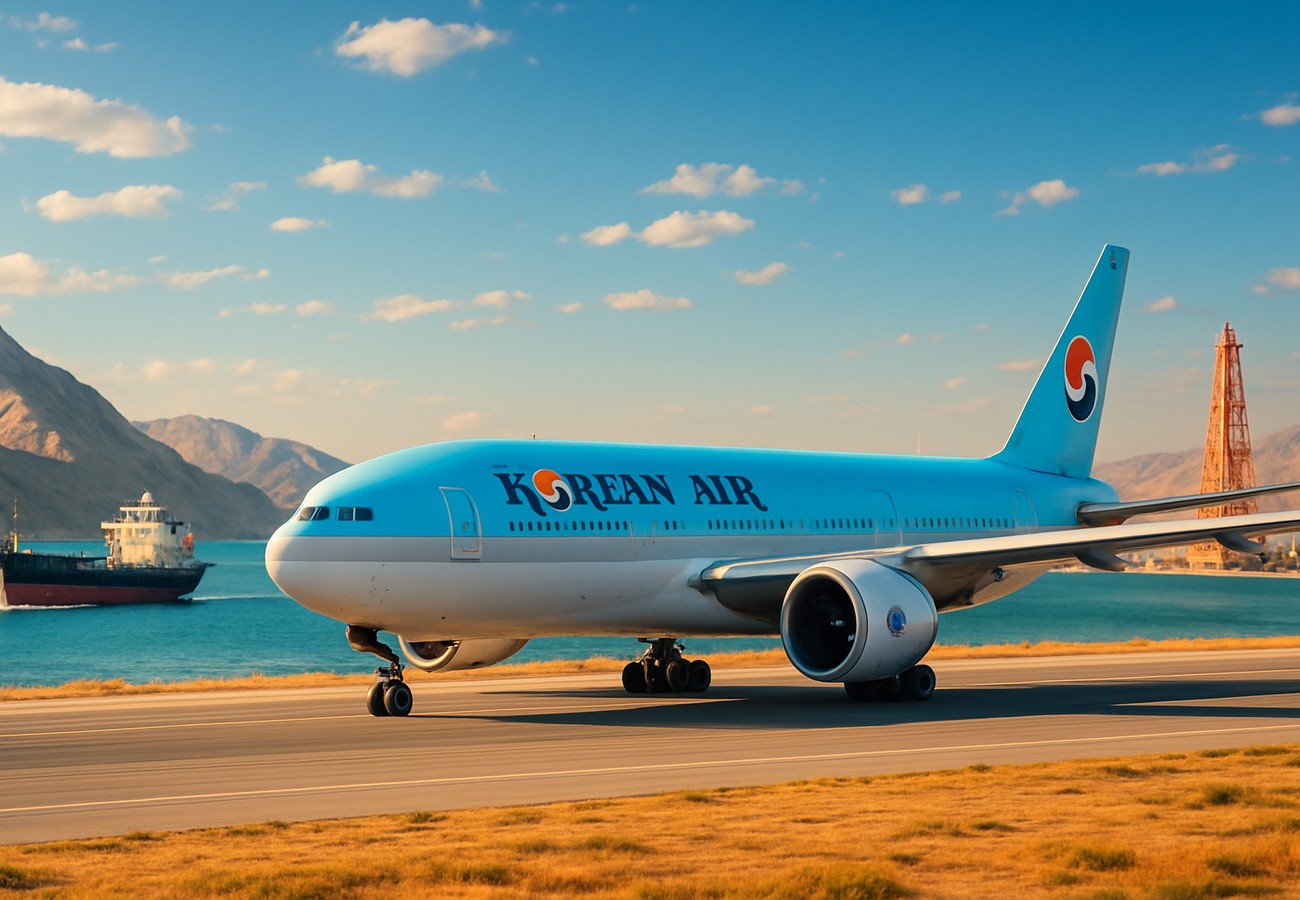
Image generated by AI
A global energy crisis of historic magnitude has erupted following the strategic blockade of the Strait of Hormuz, triggering an immediate oil price shock that is fundamentally restructuring the world’s premium aviation landscape. As the United States, Iran, and Gulf Cooperation Council (GCC) nations including Saudi Arabia, the UAE, and Qatar move to the brink of military conflict, the resulting travel chaos has seen global service standards plummet for most major carriers. However, Korean Air has defied the odds, officially clinching its sixth consecutive Skytrax 5-Star Airline Rating. Today, May 10, 2026, the South Korean flagship carrier stands as a pillar of "premium resilience," maintaining its world-class service standards even as skyrocketing jet fuel prices and the 2026 oil shock destabilize the global aviation industry.
The blockade of the world’s most critical energy chokepoint has sent crude prices soaring toward $200/bbl, providing the ultimate stress test for airline operations. Korean Air’s ability to secure the highest possible industry accolade during such a period of airport disruptions and airline news dominated by fuel emergencies is a testament to its operational stability and its unwavering commitment to the passenger-centric experience at its Seoul Incheon (ICN) hub.
Expanded Overview: The Fuel Shock and the Korean Premium Sanctuary
The blockade of the Strait of Hormuz — a narrow chokepoint through which 21 million barrels of oil per day (approximately 21% of global petroleum consumption) pass — represents a total collapse of international energy security. For major petroleum exporters like Kuwait, Iraq, and Bahrain, and the world’s leading LNG supplier, Qatar, the inability to access the sea has rendered their primary maritime routes unreachable.
As the International Energy Agency (IEA) activates emergency protocols, the aviation industry is facing a "quality crisis." The US-Iran conflict has forced many carriers to cut catering, reduce lounge services, and ground premium aircraft to conserve fuel. Korean Air, however, has leveraged its strategic positioning outside the immediate conflict zone and its highly efficient fleet to maintain a "sanctuary of excellence." By providing a seamless 5-star experience from check-in to touchdown, Korean Air is offering a reliable high-end alternative to the volatility currently affecting Middle Eastern and European hubs during the global energy crisis.
Section-Wise Breakdown: The 5-Star Resilience Strategy
Seoul Incheon: The Hub of Strategic Excellence
The success of Korean Air is inextricably linked to Seoul Incheon International Airport. During the 2026 audit, Incheon’s facilities were praised for their ability to manage increased transit volumes as traffic reroutes away from the contested Persian Gulf. The airline’s brand-new Prestige Class Lounge and its elite First Class suites have become critical assets, providing a "zero-stress" environment during a time of widespread travel chaos.
Luxury Service at Every Seat: The Economy of Comfort
In an era where many airlines are implementing "austerity measures" due to the 2026 oil shock, Korean Air received top marks for maintaining seat comfort and cabin cleanliness across all classes. The 2026 audit highlights that even in Economy, passengers enjoy gourmet meals and attentive service—a rarity as fuel surcharges force competitors to cut onboard amenities.
In-Flight Innovation: A Technological Edge
Korean Air’s investment in state-of-the-art in-flight entertainment (IFE) and enhanced connectivity has paid off. As the US-Iran military standoff makes "virtual" business more essential, the carrier’s focus on high-speed connectivity and an expansive library of international content ensures that passengers remain connected and entertained, regardless of the longer flight paths required to avoid the Hormuz conflict zone.
Skytrax 5-Star Audit: Key Evaluation Criteria (May 2026)
| Audit Category | Evaluation Points | Korean Air Performance |
|---|---|---|
| Ground Services | Check-in, Transfer Systems, Lounges | EXCEPTIONAL - Seoul Incheon Hub Excellence |
| Cabin Product | Seat Comfort, Cabin Cleanliness, Amenities | 5-STAR - Maintained despite high fuel costs |
| In-Flight Dining | Gourmet Quality, Beverage Selection | PREMIUM - Leading the "Post-Fuel Shock" Era |
| Staff Service | Cabin Crew Attention, Language Skills | WORLD-CLASS - Focus on "Hospitality Resilience" |
| Entertainment | Movie Library, Connectivity, IFE Hardware | TOP-TIER - Seamless global connectivity |
Note: The audit involved over 550 criteria evaluated across long-haul and regional operations starting in January 2026.
Passenger & Premium Impact: The Flight to Quality
For travelers, the sixth consecutive 5-star rating represents a "flight to quality" in a high-risk world. As the US-Iran conflict makes airline reliability a gamble, Korean Air passengers are experiencing a level of stability and luxury that is becoming increasingly rare. This is particularly significant for business travelers who require the "Prestige Class" environment to maintain productivity while navigating the global disruptions caused by the Hormuz blockade.
Industry Analysis: A Legacy of Resilience
Aviation analysts suggest that the Strait of Hormuz blockade is separating the "true 5-star" carriers from those who merely offer luxury when times are good. "The global oil shock has proved that Korean Air’s commitment to excellence is not just a marketing slogan; it is an operational legacy," says one senior energy strategist. "By maintaining such high standards when the world’s energy supply is being held hostage, they are effectively telling the market that their brand is immune to the chaos. This is why Seoul Incheon is rapidly becoming the world's primary premium gateway during the 2026 energy crisis."
According to the IEA, Korean Air’s focus on long-term service stability is a critical component of its ability to survive a long-term energy security threat without losing its high-yield customer base.
Conclusion: A 5-Star Future in a Post-Fuel World
The achievement of a sixth consecutive Skytrax 5-Star rating is a definitive statement of Korean Air’s global dominance. As Saudi Arabia, the UAE, and the United States navigate the military developments in the Persian Gulf, Korean Air remains a beacon of premium excellence in a world of travel chaos. For passengers seeking the ultimate in luxury air travel in May 2026, the message is clear: the oil shock has arrived, but Korean Air is still flying in a class of its own.
Key Takeaways
- Strait of Hormuz blockade continues to drive a global energy crisis, yet Korean Air secures its 6th consecutive Skytrax 5-Star rating.
- Service Stability: Korean Air maintained a 5-star experience across 550+ audit points despite the 2026 oil shock.
- Seoul Incheon Hub: The airport’s role as a "Hub of Excellence" is critical to the airline’s premium resilience.
- US-Iran Conflict: Geopolitical instability is driving travelers toward the reliability of the "Korean Sanctuary."
- Onboard Luxury: No cuts to in-flight dining or amenities, defying the industry's austerity trend.
- IFE & Connectivity: Significant investment in technology keeps passengers connected during longer conflict-avoidance routes.
- Global Standard: Korean Air remains in the elite upper echelon of world aviation, alongside the world's most exclusive airlines.
Related Travel Guides
Strait of Hormuz Blockade Triggers Global Oil Shock: 119 Flights Delayed at LAX Airport
European Aviation Chaos: 2,233 Flights Delayed as Global Energy Crisis Hits Heathrow and Frankfurt
The Korean Premium Resilience Guide: Navigating Seoul Incheon During the 2026 Energy Shock
Disclaimer: Skytrax 5-Star rating and audit data are based on official reports released on May 10, 2026. Geopolitical events and their impact on global energy markets are subject to rapid change. Travelers are advised to monitor official government travel advisories and verify all flight details directly with Korean Air.
Kunal K Choudhary
Co-Founder & Contributor
A passionate traveller and tech enthusiast. Kunal contributes to the vision and growth of Nomad Lawyer, bringing fresh perspectives and driving the community forward.
Learn more about our team →