
Strait of Hormuz Blockade Triggers Global Oil Shock as Saudi Arabia, UAE and Qatar Energy Crisis Destabilizes UK Aviation; British Airways Warns of Massive Ticket Price Surge Amid US-Iran Conflict and Global Trade Security Threat in May 2026
A strategic blockade of the Strait of Hormuz has ignited a global energy crisis, sending oil prices to record highs. As Saudi Arabia, the UAE, and Qatar face export disruptions, British Airways (IAG) warns that global ticket prices could reach historic peaks due to the 2026 jet fuel crisis and Middle East instability.

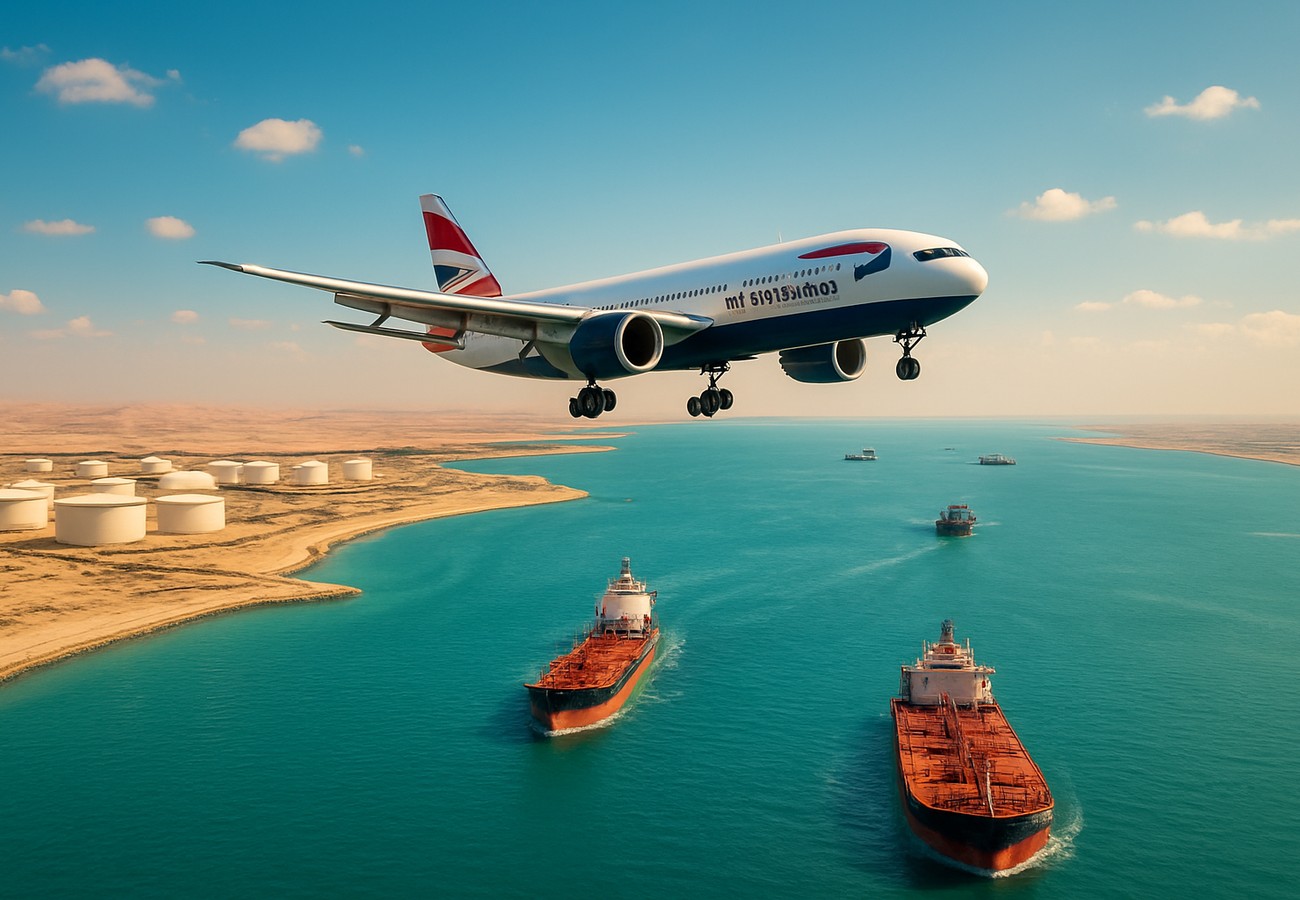
Image generated by AI
A global energy crisis of historic magnitude has erupted following the strategic blockade of the Strait of Hormuz, triggering an immediate oil price shock that is now forcing the world’s largest airlines to issue unprecedented warnings to travelers. As the United States, Iran, and Gulf Cooperation Council (GCC) nations including Saudi Arabia, the UAE, and Qatar move to the brink of military conflict, British Airways (BA) and its parent company, International Airlines Group (IAG), have confirmed that flight ticket prices are set to surge worldwide. Today, May 10, 2026, IAG warned that the total collapse in global maritime security and the resulting jet fuel crisis have made current airfare levels unsustainable, marking the beginning of a high-cost era for international aviation.
The warning from British Airways comes as the Strait of Hormuz, which handles 21% of the world’s petroleum liquids, remains effectively closed to western-bound tankers. With jet fuel prices nearly doubling in key markets, the aviation sector is facing its most significant economic challenge since the 1970s oil embargo.
Expanded Overview: The €9 Billion Fuel Bill
The blockade of the Strait of Hormuz — a narrow chokepoint through which 21 million barrels of oil per day pass — represents a total collapse of international energy security. For major petroleum exporters like Kuwait, Iraq, and Bahrain, and the world’s leading LNG supplier, Qatar, the inability to access the sea has rendered their primary economic assets unreachable.
As the International Energy Agency (IEA) activates emergency protocols, IAG Chief Executive Luis Gallego has confirmed that the group’s annual fuel bill is projected to reach nearly €9 billion in 2026. This massive spike in operational expenses is leaving airlines with no choice but to implement "emergency energy surcharges" and raise base fares across all cabins. The US-Iran conflict is no longer just a regional security threat; it is a direct tax on global mobility, with long-haul services to Asia and the Americas expected to see the most dramatic price increases.
Section-Wise Breakdown: British Airways and the Global Hub Crisis
IAG’s Strategy for Survival
Luis Gallego has stated that airlines across the industry will "need to increase fares" to offset the volatility of the energy market. IAG is currently reviewing its pricing strategies and flight capacity to ensure the group’s long-term profitability. While the group has prepared contingency plans, the scale of the oil shock following the Strait of Hormuz blockade has exceeded all previous stress-test scenarios.
Route Consolidation and Global Connectivity
In response to the crisis, British Airways is adjusting its network to maximize fuel efficiency. The airline has already increased capacity on high-demand routes such as Bangkok, Singapore, and the Maldives, which are seen as critical corridors for global trade and high-end tourism during the conflict. By consolidating its fleet on these profitable routes, BA is attempting to maintain its "operational core" even as fuel costs threaten to ground less-profitable services.
Hub Supply and Fuel Hedging
BA has reassured travelers that summer operations will continue normally, thanks to long-term fuel supply arrangements at major hubs like London Heathrow (LHR). However, the airline warns that these arrangements only provide a temporary buffer. If the US-Iran military standoff persists into late 2026, the depletion of hedged reserves will lead to a second wave of fare increases that could impact holiday bookings for 2027.
Financial Projections: IAG Fuel Cost Matrix
| Fiscal Metric | Forecasted Impact (2026) | Trend vs. 2025 |
|---|---|---|
| Total Fuel Bill | €9 Billion | ⬆️ +45% |
| Average Jet Fuel Price | +100% in certain markets | 📈 Record High |
| Emergency Surcharge | Variable by Route | 🔄 New Standard |
| Network Exposure | Low (Directly) / High (Price) | 📊 Strategic |
Note: Data based on IAG Q2 2026 projections and IATA global fuel price monitoring during the Hormuz blockade.
Passenger Impact: The High Price of Summer Travel
For passengers, the immediate reality is a more expensive travel landscape. Holidaymakers planning summer and autumn trips are already noticing a 20-30% increase in long-haul pricing. Travel experts believe that package holidays and cruises will also be affected as the global oil shock ripples through the entire tourism logistics chain.
The US-Iran conflict means that while BA is maintaining its flight schedules, the "peace of mind" of low-cost travel has vanished. Premium cabin passengers are seeing the largest absolute fare increases, as airlines attempt to recoup their €9 billion fuel costs from high-yield segments first.
Industry Analysis: The Existential Pressure on Low-Cost Carriers
Aviation analysts suggest that while major groups like IAG can survive the initial shock, smaller budget airlines may face a total wipeout. "The Strait of Hormuz blockade is a Darwinian event for the airline industry," says one senior global affairs strategist. "If you don't have the hedging depth of a British Airways or a Lufthansa, you are effectively flying toward bankruptcy at $200/bbl. We are likely to see a wave of consolidations and failures by the end of 2026."
According to the International Air Transport Association (IATA), the refining and transportation systems for jet fuel may take months to stabilize even if regional tensions ease, meaning the "high-fare era" is likely to last well into 2027.
Conclusion: Preparing for a Multi-Year Energy Crisis
The warning from British Airways is a somber reminder that the world’s energy security is deeply intertwined with its freedom of movement. As Saudi Arabia, the UAE, and the United States monitor the military developments in the Persian Gulf, the global traveler is being forced to adapt to a new economic reality. Through strategic route adjustments and massive fuel investments, IAG is attempting to keep the world connected, but the price of that connectivity has never been higher.
Key Takeaways
- Strait of Hormuz blockade continues to drive a global energy crisis, doubling jet fuel prices in some markets.
- British Airways (IAG) warns of massive flight ticket price surges worldwide.
- €9 Billion Fuel Bill: IAG projects record-high operational expenses for 2026.
- US-Iran Conflict: Geopolitical instability is the primary driver of the current aviation fuel shock.
- Route Adjustments: BA is prioritizing high-demand hubs like Singapore and Bangkok to maintain resilience.
- IATA Warning: Fuel supply shortages could persist for months, impacting global airline capacity.
- Travelers are advised to book flights earlier to avoid the next wave of energy-linked fare hikes.
Related Travel Guides
Strait of Hormuz Blockade Triggers Global Oil Shock: 119 Flights Delayed at LAX Airport
European Aviation Chaos: 2,233 Flights Delayed as Global Energy Crisis Hits Heathrow and Frankfurt
How to Save on Airfare During the 2026 Global Oil Shock: Tips from Senior Travel Analysts
Disclaimer: Fare projections and fuel cost data are based on IAG and IATA reports as of May 10, 2026. Geopolitical events and their impact on global energy markets are subject to rapid change. Travelers are advised to verify all pricing directly with British Airways and monitor official government travel advisories.
Kunal K Choudhary
Co-Founder & Contributor
A passionate traveller and tech enthusiast. Kunal contributes to the vision and growth of Nomad Lawyer, bringing fresh perspectives and driving the community forward.
Learn more about our team →