
Boeing Unveils First 777-8 Freighter as Cargo Aviation Enters New Era
Breaking airline news and aviation industry updates for 2026.

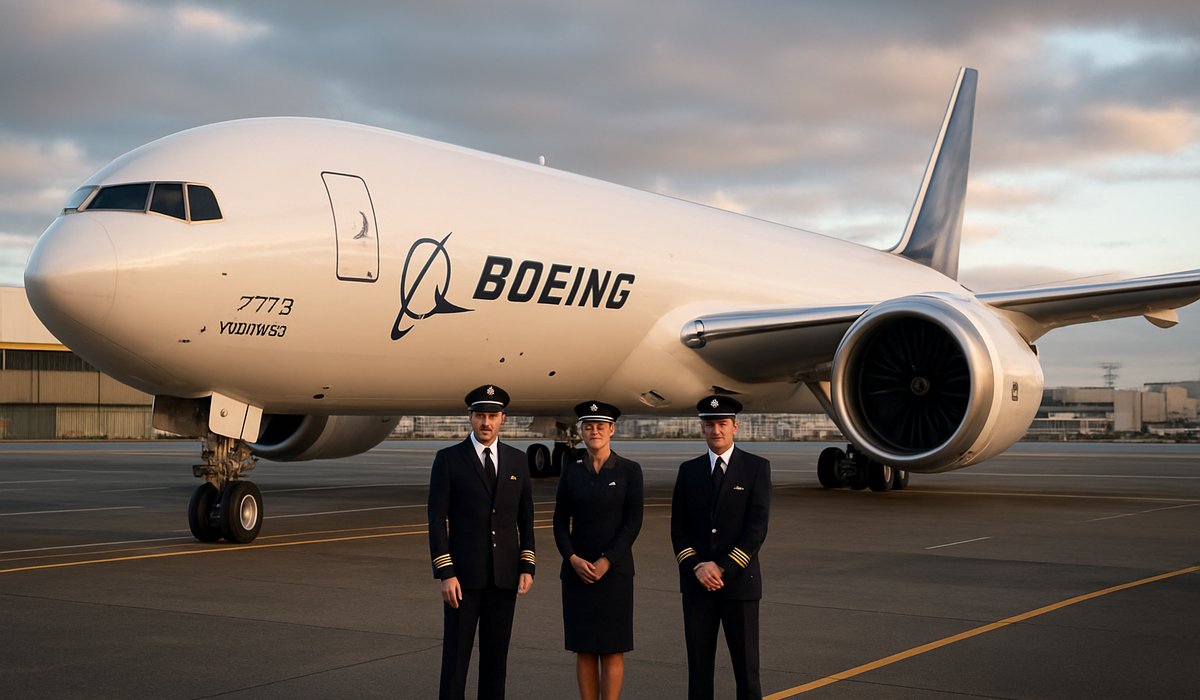
Image generated by AI
Boeing Unveils First 777-8 Freighter as Cargo Aviation Enters New Era
The aerospace manufacturer reaches critical production milestone with wide-body freighter designed to reshape global air cargo operations
Historic Rollout Marks Turning Point for Boeing's Cargo Strategy
Boeing has achieved a significant production milestone with the inaugural rollout of its 777-8 Freighter from its Everett, Washington manufacturing facility, signaling the aircraft maker's renewed commitment to the lucrative cargo aviation sector. The wide-body freighter—a dedicated cargo variant of Boeing's 777X family—represents a watershed moment for the company as it seeks to recapture market share in an increasingly competitive cargo market dominated by Airbus and regional competitors.
The newly revealed aircraft will now progress through a comprehensive battery of pre-delivery procedures, including engine integration, rigorous ground testing protocols, and a series of test flight operations before entering commercial service. This transition marks a critical juncture in the aircraft's development cycle, as Boeing works to validate performance specifications and secure regulatory certification from aviation authorities worldwide.
The 777-8F: Designed for Premium Cargo Operations
The 777-8 Freighter is engineered specifically for long-haul cargo operations, combining the established reliability of the 777 airframe with advanced freight-handling capabilities. The aircraft arrives at a pivotal moment in aviation history, as global supply chain disruptions and e-commerce expansion have created unprecedented demand for dedicated cargo capacity. Airlines and cargo operators face mounting pressure to expand fleets amid sustained high jet fuel prices and evolving logistics requirements.
Boeing's entry into the dedicated wide-body freighter market directly challenges Airbus's A350 Freighter program and comes as the industry grapples with persistent aircraft shortages. The 777-8F's large cargo volume and fuel-efficient engines position the aircraft to command premium positioning within freight forwarding operations globally.
Industry Implications Amid Supply Chain Evolution
The rollout occurs against a backdrop of transformative change within aviation logistics. Since the onset of geopolitical tensions that have constrained fuel supplies and driven jet fuel costs to volatile levels, cargo operators have prioritized fleet modernization to enhance fuel efficiency and reduce operational expenses. Boeing's new freighter offering promises to deliver significant cost-per-ton advantages through improved fuel consumption and extended range capabilities.
The successful progression of the 777-8F development underscores Boeing's determination to stabilize production operations following recent quality control challenges that have impacted its commercial reputation and delivery schedules across multiple aircraft programs.
Frequently Asked Questions
What is the Boeing 777-8 Freighter and what makes it unique? The 777-8F is a dedicated cargo variant of Boeing's 777X family, designed specifically for long-haul freight operations. It combines proven 777 reliability with modern freighter capabilities and fuel-efficient engines to optimize cargo transport economics.
How does the 777-8 Freighter affect jet fuel costs and airline operations? The aircraft's advanced engine technology delivers improved fuel efficiency, directly reducing per-ton fuel expenses for cargo operators. This helps offset volatile jet fuel prices while improving overall operational profitability for freight carriers.
When will the 777-8 Freighter enter commercial service? Following its rollout, the aircraft will undergo extensive testing and certification procedures. Commercial entry typically follows 12-18 months of rigorous validation testing.
How does this aircraft compete with Airbus freighters? The 777-8F targets the premium wide-body cargo segment, directly competing with Airbus's A350 Freighter program. Boeing's larger cargo volume and superior fuel economics provide competitive advantages.
What does this rollout mean for Boeing's aviation market position? The 777-8F production milestone demonstrates Boeing's continued investment in commercial aviation innovation and signals confidence in recovery despite recent operational and reputational challenges.
Related Travel Guides
Flight Delay Compensation Guide 2026
Understanding Airline Route Changes
Airport Security Process Updated (2026)
External Resources
Disclaimer
This article is for informational and educational purposes only. It does not constitute legal, financial, or professional advice. While we strive to provide accurate and up-to-date information, travel policies, regulations, and conditions change rapidly. Always verify information with official sources before making travel decisions. Nomad Lawyer makes no representations about the accuracy, reliability, completeness, or suitability of the information provided. Readers should consult qualified professionals for advice specific to their circumstances. The views expressed in this article are those of the author and do not necessarily reflect the views of Nomad Lawyer.
Kunal K Choudhary
Co-Founder & Contributor
A passionate traveller and tech enthusiast. Kunal contributes to the vision and growth of Nomad Lawyer, bringing fresh perspectives and driving the community forward.
Learn more about our team →