
Spain and Germany Lead 2026 European Groundhopping Surge as Football Tourism Hits €585 Billion
Spain and Germany are transforming football stadiums into primary travel destinations, driving a massive shift in European sports tourism as 'groundhopping' becomes a mainstream holiday trend.

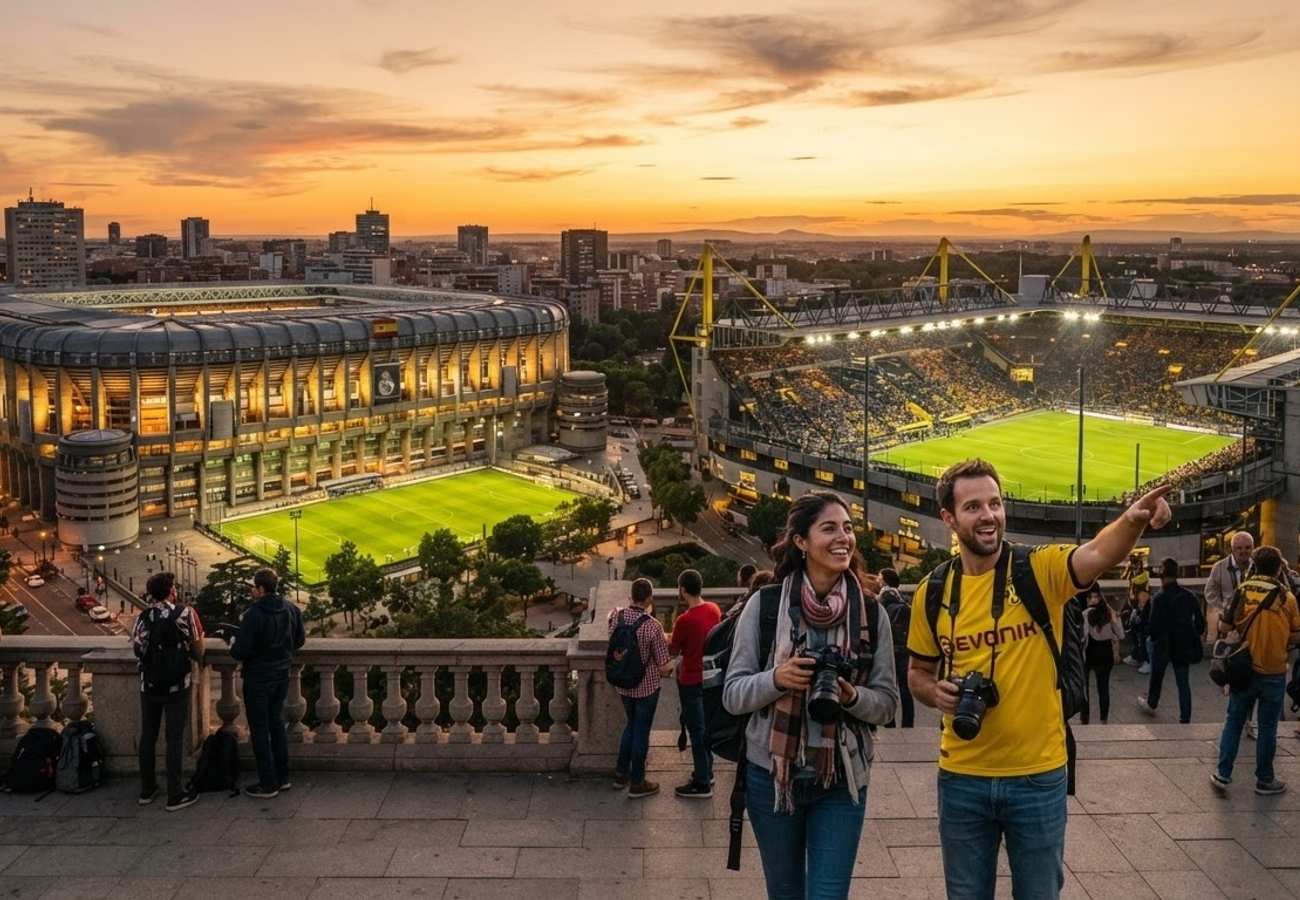
Image generated by AI
Football is no longer just a 90-minute event; it is now a primary driver for continental migration. In 2026, "groundhopping"—the act of visiting as many different stadiums as possible—has evolved from a niche hobby into a powerhouse of the European visitor economy.
The shift is most evident in Spain and Germany, where iconic sporting venues are being repositioned as year-round cultural landmarks. By integrating stadium museums, interactive tours, and local gastronomic experiences, these nations are converting sports fans into long-term tourists.
The Economic Engine of European Sports Tourism
The rise of groundhopping is not an isolated trend but a segment of a massive global economic shift. Sports tourism now accounts for approximately 10% of all global tourism, creating a sophisticated ecosystem of transport, hospitality, and retail.
In the European Union, the impact is substantial. With over 6 million jobs directly linked to sport and 2.3 million tourism businesses benefiting from the influx of fans, the sector serves as a vital pillar of the EU's GDP. Furthermore, European institutions are leveraging this trend to combat "overtourism" and seasonality, using match schedules and museum openings to distribute visitors across different regions and times of the year.
Market Indicators for Sports Tourism (2026)
| 2026 Market Indicator | Official Figure/Finding | Impact on Groundhopping |
|---|---|---|
| Global sports-tourism market | Approx. €585 billion | Groundhopping is a key driver of this massive economy |
| Share of global tourism | Around 10% | Sport is now a primary motivator for international travel |
| EU jobs directly linked to sport | More than 6 million | Creates a massive employment base for the visitor economy |
| EU tourism businesses | About 2.3 million | Spending flows into local food, lodging, and transport |
| EU tourism employment | About 12.3 million | Supports the broader European tourism ecosystem |
| EU tourism contribution to GDP | Around 10% | Tourism remains a fundamental economic pillar |
| 2026 Sports tourism trend | Growing branch of EU tourism | Recognized by EU institutions as a priority segment |
| Key tourism opportunity | Reduce seasonality/overtourism | Spreads visitors across diverse destinations and seasons |
Spain and Germany: The New Epicenters of Football Travel
Spain has successfully transitioned its stadiums from match-day venues to permanent attractions. The official tourism platform now markets stadium tours as essential visitor experiences. High-profile venues such as the Santiago Bernabéu, Spotify Camp Nou, San Mamés, Mestalla, Ramón Sánchez-Pizjuán, Reale Arena, and Cívitas Metropolitano offer trophy rooms and interactive displays that attract tourists even when no game is scheduled.
Germany follows a similar trajectory, blending deep-rooted football identity with local culture. In cities like Dortmund, the experience extends beyond the pitch, integrating the legendary fan culture with the city's industrial heritage and local gastronomy.
The Italian and British Models of Stadium Hopping
Italy has taken a more structured approach to the trend. Through Italia.it, the country promotes dedicated multi-stop itineraries that connect major grounds via rail. This curated journey includes:
- Milan: San Siro (a true pilgrimage site with comprehensive tunnel and locker room tours)
- Turin: Allianz Stadium
- Rome: Stadio Olimpico
- Regional Hubs: Venues in Bergamo (Gewiss Stadium), Udine, Genoa, Florence, Bologna, Bari, and Reggio Emilia.
Meanwhile, Britain remains a premier destination due to the sheer density of its footballing map. London, in particular, serves as an urban groundhopping hub. A single city break allows fans to visit the grounds of Arsenal, Chelsea, Tottenham Hotspur, Fulham, and West Ham United, as well as the national stadium at Wembley. VisitBritain continues to promote both the glamour of the Premier League and the authentic atmosphere of non-league football to attract diverse traveler profiles.
Transforming the Travel Experience
The evolution of groundhopping signifies a change in traveler behavior. The modern football tourist no longer flies in for a single match; they build comprehensive itineraries around football heritage.
By combining a stadium visit with city sightseeing, architecture tours, and local dining, these travelers extend their stay and increase their spend per visit. This transition from "fan" to "tourist" is precisely why national tourism boards in Britain, Italy, Spain, and Germany are now aggressively promoting their sporting infrastructure.
The football pitch has officially become the new gateway to European cultural exploration.
Related Travel Guides
Disclaimer
This article is for informational and educational purposes only. It does not constitute legal, financial, or professional advice. While we strive to provide accurate and up-to-date information, travel policies, regulations, and conditions change rapidly. Always verify information with official sources before making travel decisions. Nomad Lawyer makes no representations about the accuracy, reliability, completeness, or suitability of the information provided. Readers should consult qualified professionals for advice specific to their circumstances. The views expressed in this article are those of the author and do not necessarily reflect the views of Nomad Lawyer.
Kunal K Choudhary
Co-Founder & Contributor
A passionate traveller and tech enthusiast. Kunal contributes to the vision and growth of Nomad Lawyer, bringing fresh perspectives and driving the community forward.
Learn more about our team →